


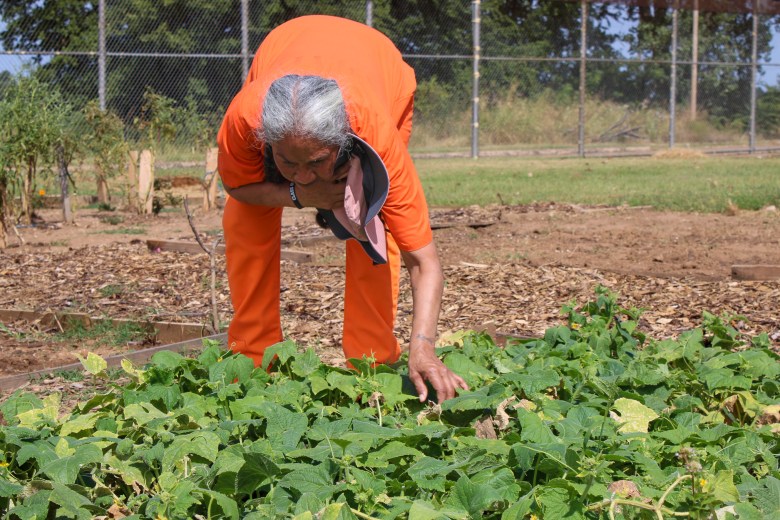
TAFT — A patch of land stands separate from the community garden within the confines of the Eddie Warrior Correctional Center for women. It sprouts vegetables and fruits from seeds descended from plants in the homelands of the Muscogee and Cherokee nations.
It cultivates the Three Sisters Indigenous agriculture system of corn, beans and squash. The seeds also produced potatoes, tomatoes, kale, peas, sunflowers and gourds — to name a few plants — in the past year.
Women tend to the food with Native American traditions and a purposeful approach to ensure the purity of the lines, said Lashay Rhodes, a Comanche citizen who oversees the garden. She also participates in the Indigenous Women’s Club and Tribal Council at the prison.
“It’a an honor, a true blessing, to tend to these 100-year-old seeds,” Rhodes said. “I’m being trusted with these seeds and to grow food for our community. I love telling people about what we do. It’s exciting, and I’m going to share with everyone what I learned.”
The Indigenous garden is part of the Women in Agriculture program, where women at Eddie Warrior produce more than a ton of fresh produce each year to feed their fellow inmates and collaborate with a Tulsa nonprofit. A three-minute drive down the road, Taft’s all-male Jess Dunn Correctional Center also features an Indigenous garden.
Muscogee and Cherokee officials donated the seeds earlier this year with assistance from Jonathan Hook, a Cherokee Nation citizen with a doctorate in Native American history who serves as president of the Intercultural Partnership Council. He volunteers at Eddie Warrior to support Indigenous programming.
“I’m really proud of our Native women who have the garden. They put so much work in on that,” Hook said. “It is a big effort with tribes to have heirloom traditional seeds protected as much as possible. To tribal members, there is a lot of information about the seeds and why those are important.”
Tribal heirloom seeds are open-pollinated, traditional plant varieties that are bred, nurtured and passed through families and nations for generations. Each plant holds a name, language and history rooted in the tribe’s culture. Often, these seeds carry a migration story, emphasizing a theme of resiliency.
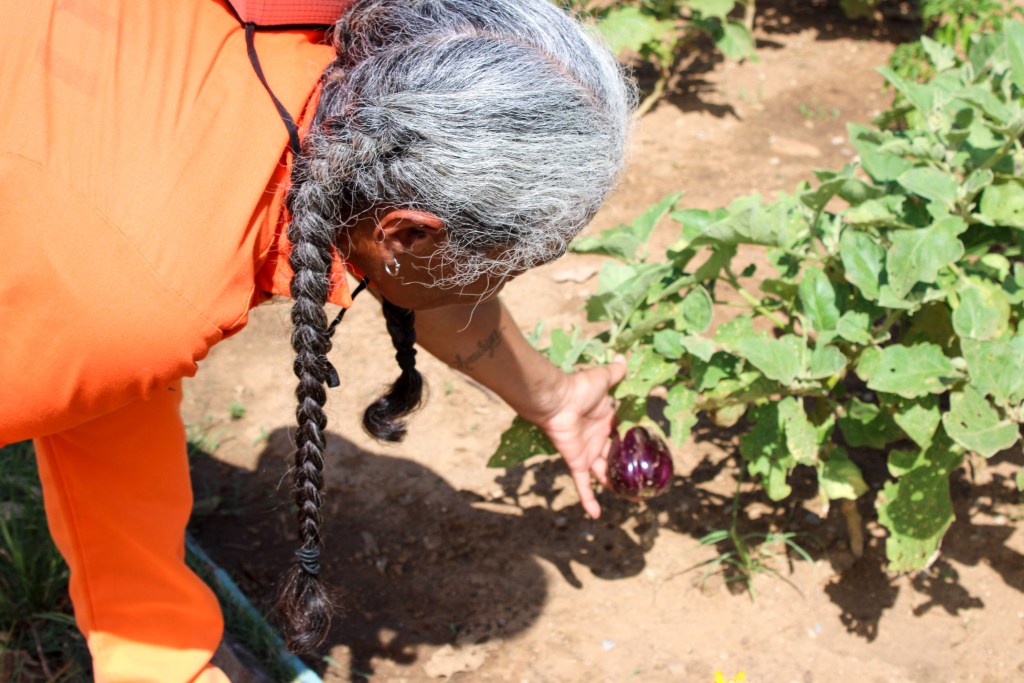
Individual Cherokee citizens have also donated seeds and other materials to support the Indigenous garden program, Hook said. Recently, the Eddie Warrior women provided a bag of produce to Hook, who then gave it to Cherokee Nation Principal Chief Chuck Hoskin Jr.
“He appreciated the gesture and said he respected the work they were doing,” Hook said. “The chief was happy the nation could support the program.”
Taima Young, who is Otoe and Osage, says that when she was growing up, her family’s main food source was a nearby dollar store. She had some family members who lived on rural land, but she last spent time there as a child. She didn’t learn agriculture.
Now Young describes growing methods, weather effects, plant varieties and recipes for the food. She swears by a simple vinegar and spice concoction for the cucumbers.
“It’s about food sovereignty — the right to grow my food to sustain my family,” Young said. “As long as I have the resources and know how to grow food, I will be self-sufficient.”
In the prison’s Indigenous garden, Young learned how to harvest seeds from the grown plants for future planting.
“One plant can produce hundreds of seeds,” she said. “I can tend to my family to be self-sufficient and not go hungry.”
News decisions at the Tulsa Flyer are made independently of our board members and financial supporters. Read more about our editorial independence policy here.