


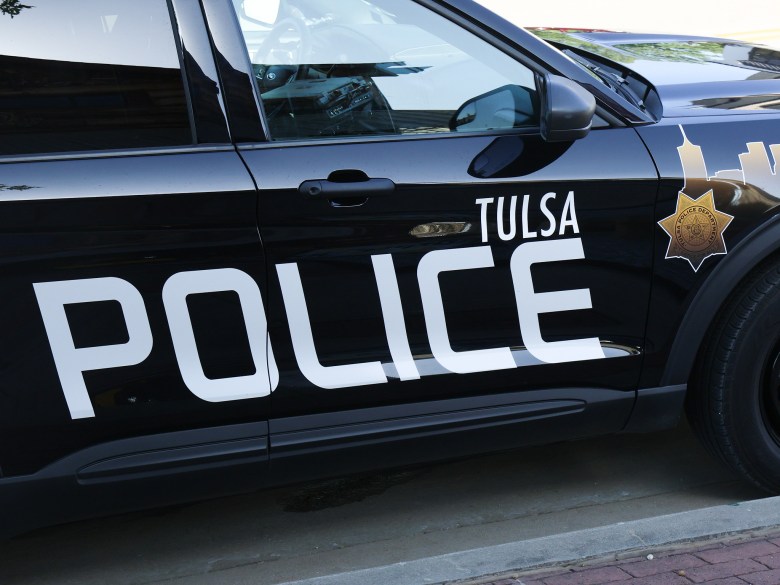
As elected officials and business leaders push toward making Tulsa the “drone capital of the world,” the Tulsa Police Department will soon operate unmanned aircrafts of its own.
Using $775,000 from the Tulsa Police Foundation, the department will create a three-year pilot program with five Skydio drones to explore the technology’s public safety use. Tulsa City Council unanimously approved the donation during a Nov. 18 meeting.
The program includes “docks, software, maintenance and warranty, drone pilot certification, and handheld remote devices” for TPD drone pilots, according to the agenda item. Drones will be piloted from TPD’s Real-Time Information Center and respond to calls involving a victim, a missing person or if an officer has stopped a car but does not have backup yet, among other incidents, says Capt. Shane Tuell.
“I don’t know if we’re going to limit the kind of calls that they go to, in that respect, but we’ll definitely be trying to get all of the higher priority calls and do a triage of officer and citizen safety first,” Tuell said. “Then the nature of the call will be very important so that we get there in a timely fashion to make sure we got eyes on the scene for good information and intel.”
However, TPD will not use the drones to patrol, Tuell said.
“We think that causes big issues into potential violations of individuals’ privacy,” Tuell said. “You’re going to be going over areas where, if you have no business looking down with a camera, you shouldn’t be looking down with a camera — like residences and things like that.”
While other police departments across the country, including the Oklahoma City Police Department, operate “drone as first responder” programs, TPD does not intend to have drones respond to calls ahead of officers, Tuell said.
However, there may be times an officer is not available nearby, and TPD deploys a drone to get an aerial view of an incident before an officer responds, Tuell said. An example is a suspected home or car break-in, he said.
As Tuell envisions it, dispatch would be able to tell the caller: “We do have the drone over your house right now, and everything seems to be OK.”
“So, until they actually get to see an officer, which is what they want, at least they have a first-responding service overheard that says everything is safe in your area,” he said. “We don’t see any heat signatures, we don’t see anything they should be concerned about and we’ll stay until an officer arrives.”
TPD is taking steps to ensure the department’s drone use is transparent with the public, Tuell said. All drones will record audio and video from the moment of takeoff, and cameras will remain pointed toward the sky until they arrive at the location, he said.
Unlike some of its counterparts in other cities, Tulsa’s drones will not use a voice component to communicate with callers. They do include a parachute and a spotlight component, Tuell said.
Additionally, TPD is developing public-facing dashboards for Tulsans to see how these drones are being used, Tuell said. One online dashboard will split out the different types of calls drones are responding to by percentages and whether a drone responded to a call before an officer. Another dashboard will show the drone’s flight patterns during a call — on a delay.
“Once we integrate these things fully, you’ll be able to go onto a public dashboard to see the actual flight pattern of each drone as it flew. It will show the nature of the call, the duration of the flight and the actual pattern,” Tuell said.
The technology should be deployed by February or March, and public information forums will be held prior to the program rollout, Tuell said. Part of the donation from Tulsa Police Foundation is earmarked for public information and outreach, he said.
“When you integrate technology like this, we believe the public needs to know exactly what’s being used for, how it’s being used and where it was used,” Tuell said.
Because the donation did not require a budget amendment, council approved it as a mayor’s item. That meant the funding did not go through a first and second reading. If police want to extend the drone program beyond three years, the department would go through a typical council ordinance process.
News decisions at the Tulsa Flyer are made independently of our board members and financial supporters. Read more about our editorial independence policy here.
