


This article is a part of Snapshot: Food, a collaborative journalism project between Tulsa Flyer, The Oklahoma Eagle, The Frontier, KOSU, La Semana and Focus Black Oklahoma exploring how Oklahomans put food on the table.
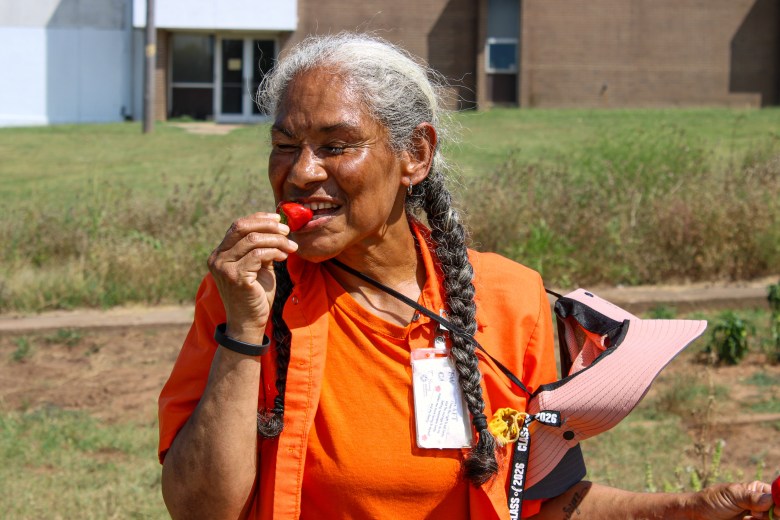
TAFT, Oklahoma — Brandy Hunt exudes self-confidence as she walks through the prison garden, pointing out the ripening cantaloupe, picking some okra and explaining how the drought hurt the tomato crop.
The garden has a peaceful vibe as incarcerated women toil in the soil in near silence. Even on 100-degree days wearing prison-issued, orange long pants and full-sleeve shirts, the women smile as they tend to the plants.
“We can come here, enjoy nature and what God has given us,” Hunt said. “I feel a sense of accomplishment and responsibility. It’s humbling working out here. I was prideful (when I arrived), and this makes me want to do more.”
Hunt is one of the leaders of the community garden at Eddie Warrior Correctional Center in Taft. The women raise more than a ton of fresh produce a year, helping to expand the prison menu with healthy options and starting a farm-to-table collaboration with a Tulsa catering nonprofit.
The roots of the garden were sown several years ago. It took off in 2024 with an official launch of its Women in Agriculture program that enlarged the garden to nearly an acre and brought in educators from the Oklahoma State University Extension Office Master Gardener program.
Women use rudimentary tools to prepare the earth and maintain the plants. They are given specific responsibilities within the garden and nursery and work full days.
At least once a week, about 250 prisoners at the facility are served food grown and prepared on-site. That includes salads of arugula and turnip greens with tomatoes along with vegetables like peppers, carrots, brussel sprouts, asparagus and okra. They’ve made watermelon salsa and grown berries.
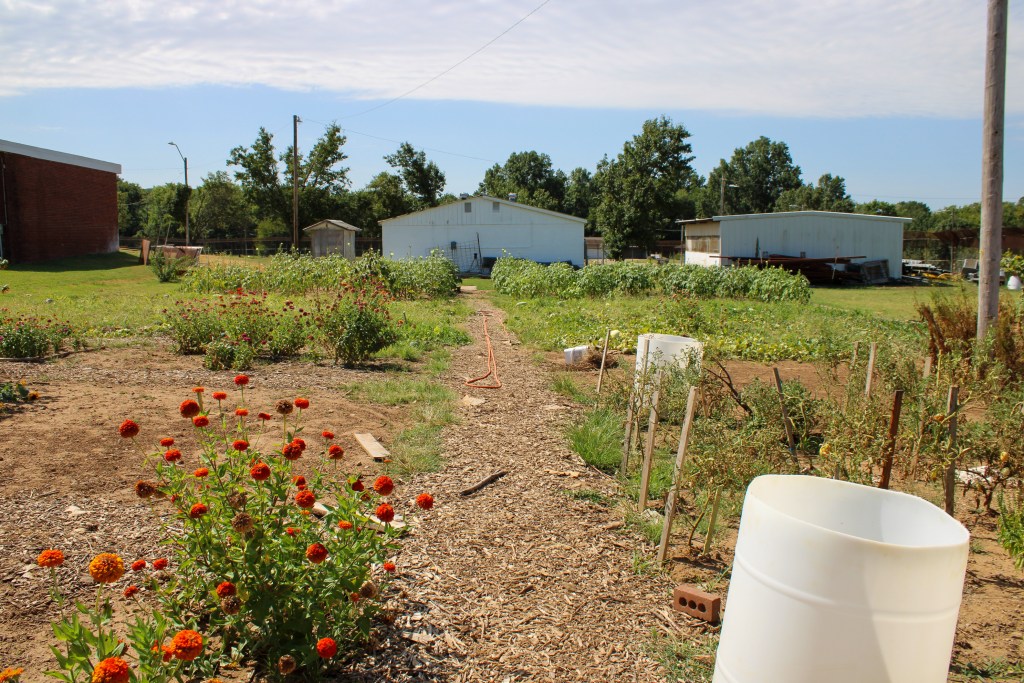
Women in the Eddie Warrior Correction Center in Taft created and maintain a garden that feeds their community at least once a week. It also has a partnership with the Tulsa catering company Carabelle’s that serves its produce. Credit: Phina Franklin / Prison Journalism Project 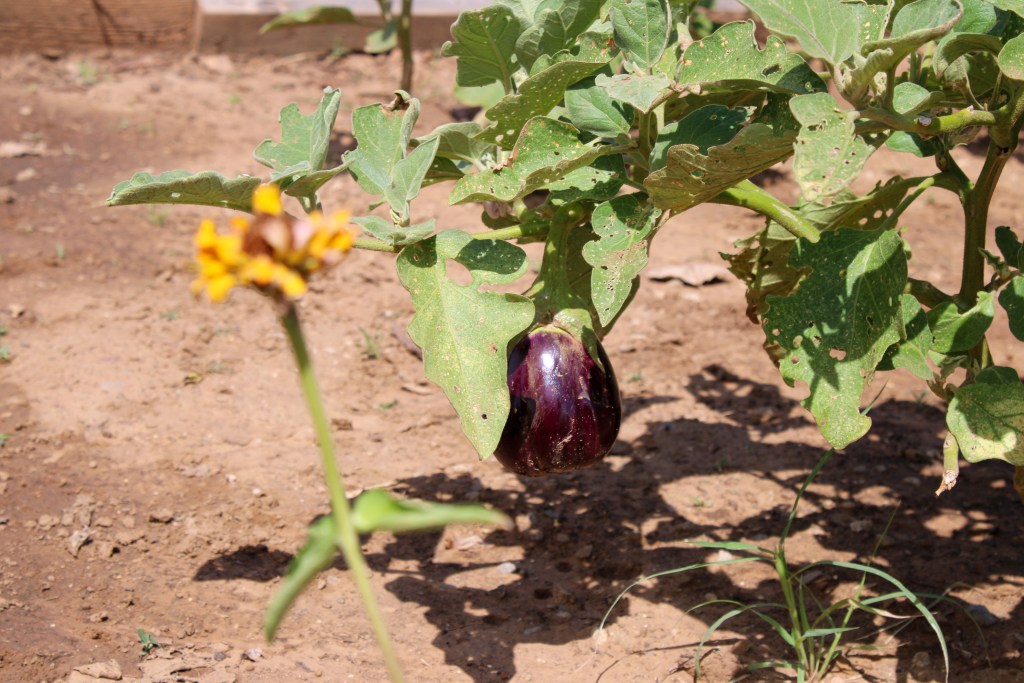
Women in the Eddie Warrior Correction Center in Taft created and maintain a garden that feeds their community at least once a week. It also has a partnership with the Tulsa catering company Carabelle’s that serves its produce. Credit: Phina Franklin / Prison Journalism Project 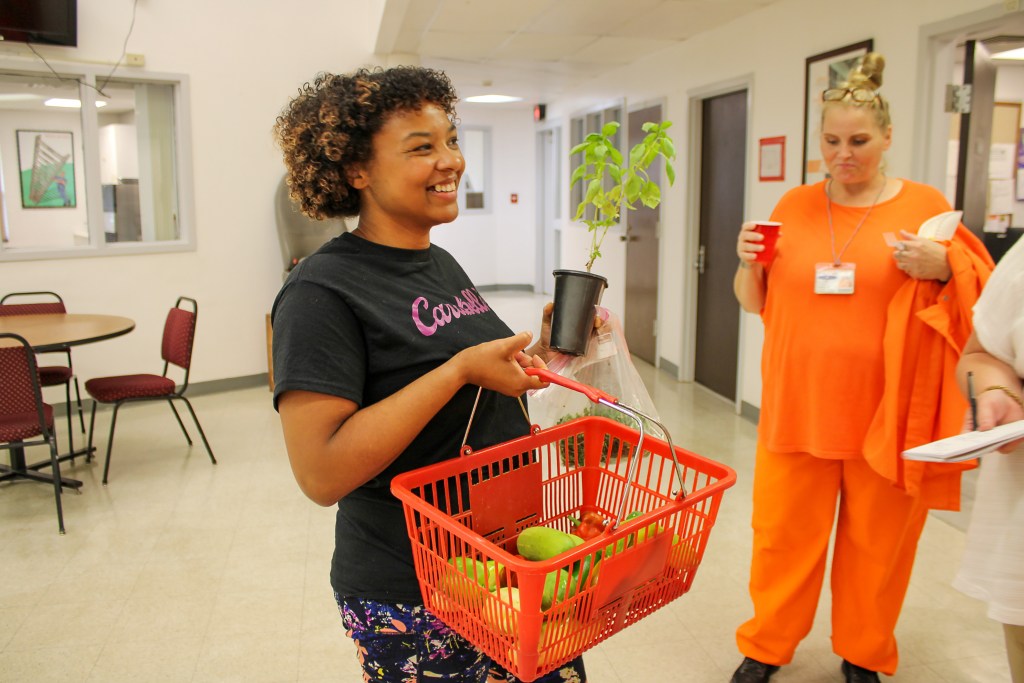
Women in the Eddie Warrior Correction Center in Taft created and maintain a garden that feeds their community at least once a week. It also has a partnership with the Tulsa catering company Carabelle’s that serves its produce. Credit: Phina Franklin / Prison Journalism Project 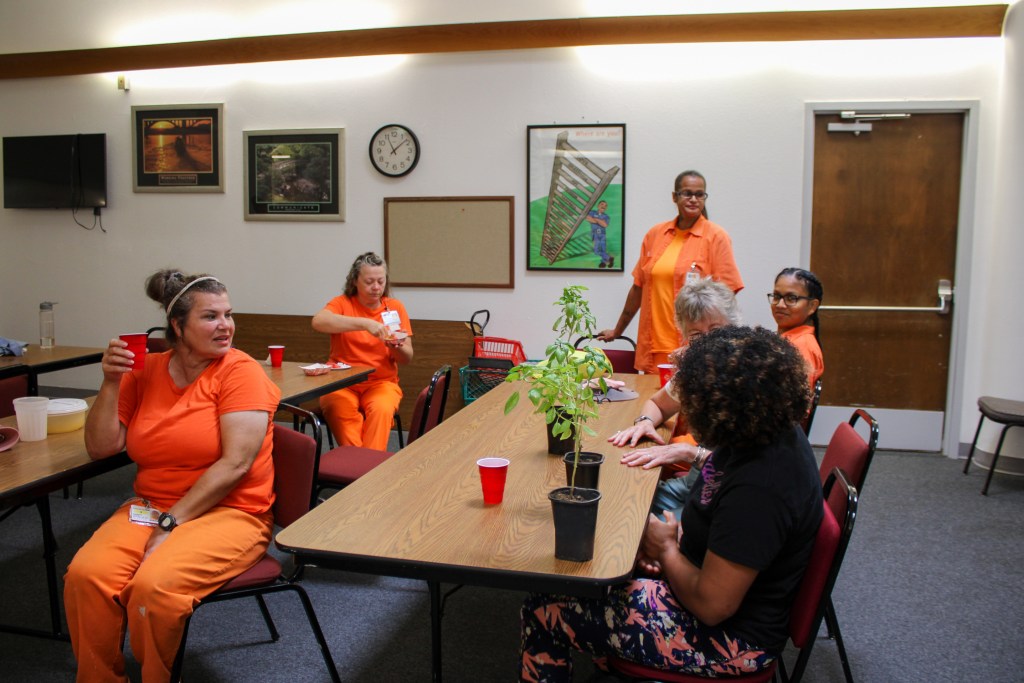
Women in the Eddie Warrior Correction Center in Taft created and maintain a garden that feeds their community at least once a week. It also has a partnership with the Tulsa catering company Carabelle’s that serves its produce. Credit: Phina Franklin / Prison Journalism Project 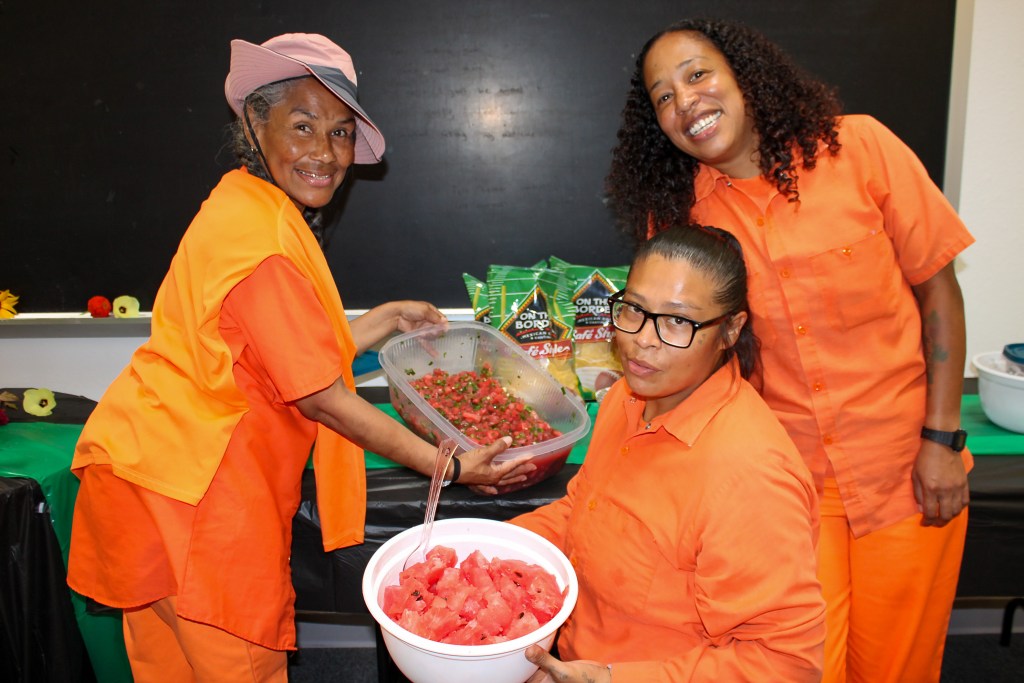
Women in the Eddie Warrior Correction Center in Taft created and maintain a garden that feeds their community at least once a week. It also has a partnership with the Tulsa catering company Carabelle’s that serves its produce. Credit: Phina Franklin / Prison Journalism Project 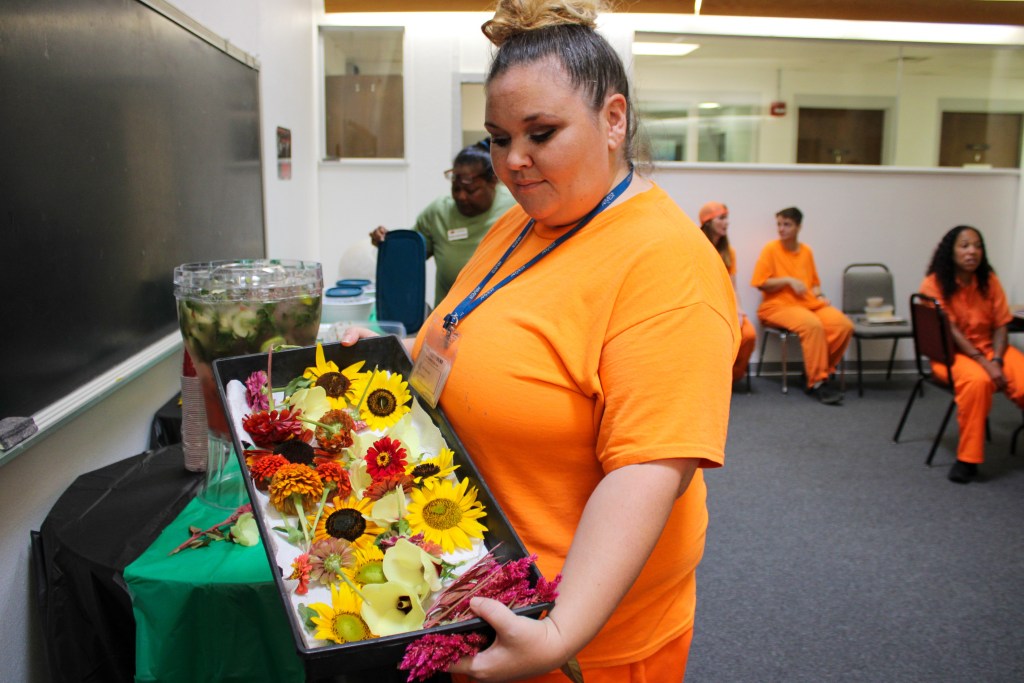
Women in the Eddie Warrior Correction Center in Taft created and maintain a garden that feeds their community at least once a week. It also has a partnership with the Tulsa catering company Carabelle’s that serves its produce. Credit: Phina Franklin / Prison Journalism Project
Participant LaShay Rhodes finds fulfillment in raising a seedling and turning it into a meal to feed her community.
“It’s been the most freeing experience, even in a place where you don’t have much freedom,” Rhodes said.
Tulsa nonprofit catering business Carabelle’s Legacy incorporates the fresh produce into its offerings. It has featured microgreens, edible flowers, herbs and vegetables in various dishes that fuse soul and Indigenous meal traditions.
“It’s better,” said Carabelle’s co-founder Maria Morris. “It’s like colors coming to life. When you are tasting fresh-grown food, it expands your culinary palette.”
Morris established and named Carabelle’s in honor of her daughter, who died in a 2018 house fire. That tragedy led to addiction, homelessness and incarceration. In recovery, Morris returned to her culinary training to work as a barista, then cook.
Eventually, she was offered a kiosk at Legacy Plaza and grew that opportunity into a nonprofit catering business. She began a partnership at the Eddie Warrior prison to fold its garden varieties into her menu. Some items are featured in local cafes, such as desserts at She Brews Coffee, 1 N. Lewis Ave.
Five years ago, she launched a culinary training program for formerly incarcerated women. Many of her trainees have had their hands in the prison community garden. Of the 19 who have completed the training, none have re-offended.
“This is an integral part of our program,” Morris said. “We are incorporating what they grow in their garden into our dishes. It felt like a natural connection.”
Women in Agriculture participants often share recipes and get inspiration from “America’s Test Kitchen” or “Milk Street” on OETA. They plan their plots based on the kind of food to serve — baked potatoes with herbs, a variety of salads, eggplant parmesan, cucumbers seasoned with oil, vinegar and salt and pepper.
The experience shifted the idea of patience and self-sufficiency for participant Taima Young.
“I learned what it is to be humble,” Young said. “You want quick gratification. You learn humility — you want something, but the reward comes later. And, what is coming you know will be good.”
Volunteers providing guidance and education have been transformative to many of the women.
“We don’t believe in ourselves, but they believe in us,” Young said. “They put their faith, time, effort and energy to help us believe in ourselves. They want to instill something in us that we can use when we leave.”
News decisions at the Tulsa Flyer are made independently of our board members and financial supporters. Read more about our editorial independence policy here.