


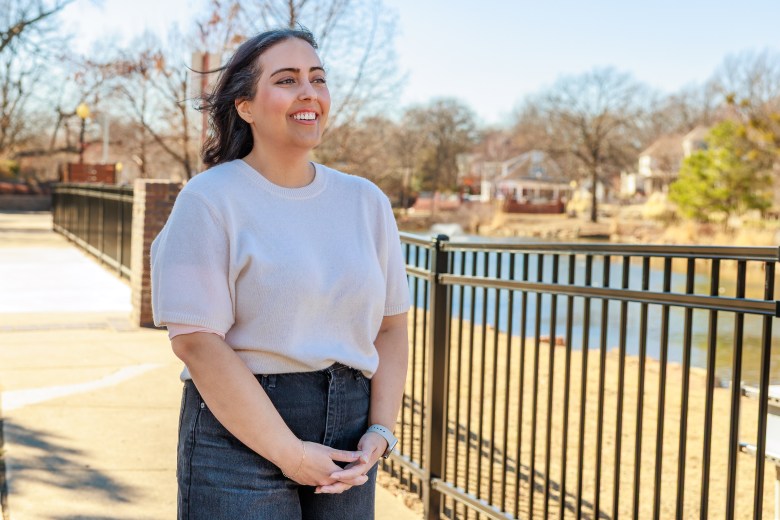
The shape of Tulsa fits into a silhouette drawn by Shagah Zakerion and her zest for life, beauty, love and justice. She expected much of a city she championed and cherished.
Tulsa was made stronger — and cooler — by her touch, according to the people who loved her. Now, the city will continue to feel her legacy through a philanthropic foundation based on her advocacy and activism.
On Nov. 2, after fighting blood cancer for more than two decades, she died at age 39. Instantly, city leaders and institutions mourned.
Zakerion wasn’t one thing but, instead, a multi-faceted force of ideas and action. She served as executive director of Tulsa Young Professionals, co-founded the Tulsa Film Collective with filmmaker Sterlin Harjo and others, and was a leader in the Lobeck Taylor Operating Foundation.
She was a nonprofit executive, leadership coach, public relations specialist, organizer, advocate, philanthropist, arts lover and influencer. Her best description was “Chief Everything Officer.” She even got ordained to marry some friends.
Union Public Schools mourned her death, writing “she was a strong role model for our students on the importance of staying connected, returning to mentor students, speak at district events and participating in issues she felt were important to the Union community.”
Magic City Books stated the world “will be noticeably dimmer” without her: “Shagah believed in a version of Tulsa and the broader community that didn’t exist for much of her life and was only truly becoming viable when she left us. But it’s that belief that set her apart. And now it’s up to us to deliver on the promise.”
Downtown Tulsa Partnership stated she “brought wonder and curiosity into every room.” The American Cancer Society Action Network/Oklahoma wrote that she “spoke with purpose, conviction and deep care for others.”
Harjo referred to her as a “beautiful soul and friend,” and the Khalid Jabara Foundation stated she never gave up “on fighting for a kinder world.”
To celebrate her life, Tulsans are invited to “Shagah Palooza” at 6:30 p.m. Nov. 16 inside Cain’s Ballroom. Her family asks that people RSVP through the site ShagahZakerion.com.
“She said, ‘The Cain’s would be iconic,’” said her sister Sheyda Brown. “She wanted the city to party with her — the city she loved so much and poured so much into.”
Make a difference
Tributes to her are encouraging Tulsans to do the things Zakerion promoted.
Support a small business. Vote. Share a meal with a friend. Donate blood. See live music. Eat at a local restaurant. Hug a friend. Tell someone you’re proud of them. Watch an independent movie. Thrift before buying from box stores. Don’t complain. Do an act of kindness.
“She wanted Tulsa to be a place that could attract the best talent, really vibrant artists, musicians and young people,” Brown said. “She believed in Tulsa and Oklahoma to be an inclusive and resilient place and she dedicated a whole lifetime to that.”
Zakerion arrived in the U.S. as an infant when her parents, Fred and Pary Zakerion, left Iran in 1989. The family, which included her two siblings, ran restaurants including Pita Place Mediterranean Grill.
She graduated in 2006 from Union. That year, she became a naturalized citizen and got her voting card — a right she promoted throughout her life. She was the honorary chairwoman of the inaugural Madam President fundraising event of the League of Women Voters.
At age 17, Zakerion was diagnosed with myelodysplastic syndrome, which is a type of cancer preventing healthy blood cells from developing in bone marrow. She went through three transplants and more than 700 transfusions over the course of 22 years and three states.
She chronicled this journey through videos and interviews. She taught others to advocate for themselves in their hospital rooms and on bigger stages. She testified before Congress about her experience.
Zakerion’s concern about making a kinder world extended to her work as a board member on the Khalid Jabara Foundation. She represented the organization three years ago in Geneva to speak to the United Nation’s human rights committee about hate crimes.
Legacy continues
Before her death, she worked with her family to create the Shagah Zakerion Foundation to continue her work. It has three areas of focus: direct support to cancer patients leaving home for care, advocacy for patients and policy work, and projects in Tulsa art, music, museums and film.
A poppy is placed prominently in the foundation’s designs. It’s a reference to her name — Shagayech, or Shagah in Farsi.
“It’s a symbol of resiliency. It can flourish in the harshest of environments,” said her sister Shirin Zakerion. “It is a symbol of hope. When you plant a seed, you hope for a better life. It was no mistake that my parents named her that. It’s fitting.”
Her sisters say there were plenty of opportunities for Zakerion to leave Tulsa. But, she stayed.
“It was the people who loved her that kept her here and improving the lives of every Tulsan,” said Shirin Zakerion. “Shagah was love.”
News decisions at the Tulsa Flyer are made independently of our board members and financial supporters. Read more about our editorial independence policy here.