


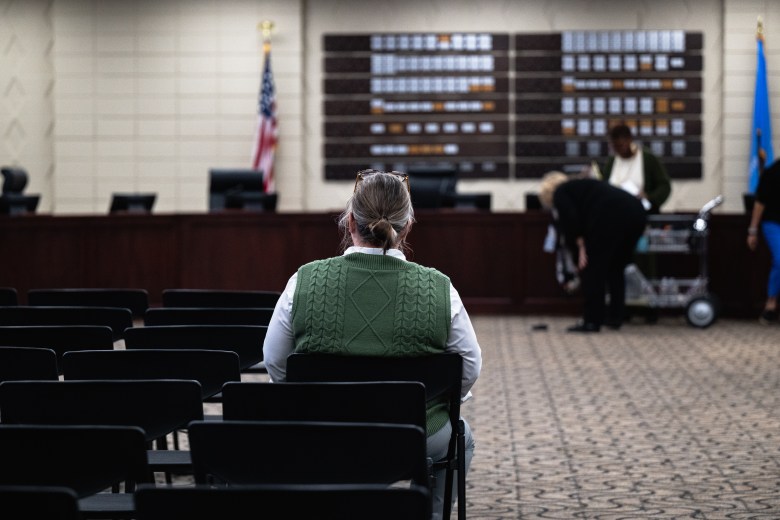
On this, most Tulsans agree — the decision to close 17 Tulsa Public Schools campuses wasn’t an easy one.
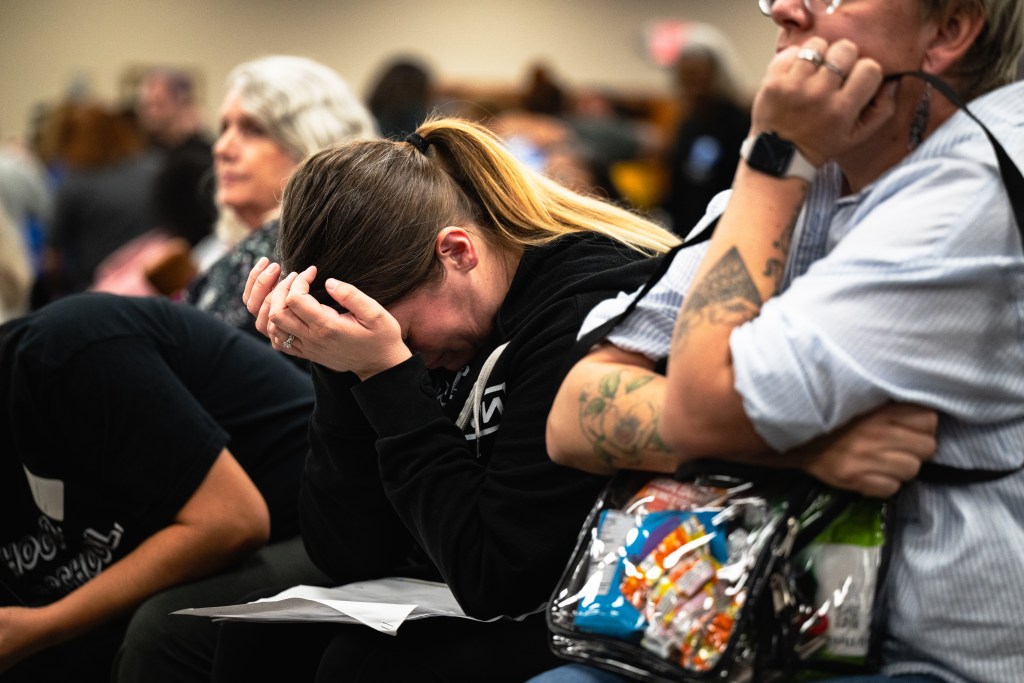
In the face of a shrinking student population and a persistent financial deficit, the board voted Monday to close more than a fifth of its campuses next year. The closures are expected to save $11.1 million alone, in addition to further cuts to the TPS central office. Reactions rolled in from across the city Tuesday.
“Did I know that it was coming down the pipe, and did I assume that it was going to get voted on the way it did? Yes,” said Amber Dawn Turner. “However, it still stings, as a local parent and as a teacher.”
Turner is a teacher and parent at Felicitas Mendez International, a magnet elementary school that will now move into Anderson Elementary and absorb students from two other sites. Even after four weeks of listening sessions, she doesn’t believe TPS really took the community’s concerns to heart. What she wants now is transparency.
“I want to know what’s next. What’s next for my fellow teachers, librarians, parents and things like that,” Turner said. “I did not feel confident in what they laid out last night.”
The decision will impact nearly 5,000 students by cutting 10,000 available seats across the state’s largest district. The 17 campuses will close their doors in May.
“Hoover community, we have felt such an outpouring of love and support these past few weeks. Thank you for all you do to support our school every day,” wrote Hoover Elementary Principal Kari Tapley on Facebook. “While the board’s decision tonight is difficult, we remain committed to giving your students the best we can every day of this year!”
The Peary Elementary PTA also took to social media Tuesday, reminding families the school’s focus remains on its students.
“Peary has been more than just a school. It has been a place where friendships have been made, memories have been created and generations of families have grown together,” its post reads. “Our Peary community holds a special place in our hearts, and that will never change.”
The advocacy of students and families at Thoreau Demonstration Academy was celebrated by the district even as the board voted to close the south Tulsa magnet program, wrote Principal Gwendolyn Drumm.
“We are so proud of our students,” Drumm wrote on Facebook. “We also want to let you know that Thoreau will remain Thoreau for the remainder of the school year. Your student will continue to receive the very best that we have to offer from our staff. We aren’t done yet.”
The district shared more details on the closures at last night’s board meeting, but more is on the horizon. Here’s what we know so far.
There were few clear, cut and dry decisions when selecting schools for closure or consolidation, Sean Berkstresser, the district’s chief strategy officer, said Monday night.
Sites were selected for closure based on student enrollment, population projection, the quality of facilities and geographic location, he said. All 17 schools had fewer than 400 students enrolled last year filling less than 65% of their building capacity. None are projected for enrollment increases in the next several years, according to the district.
The individual cost of running each building was not a primary factor, according to administrators. Board members requested a site-by-site accounting of potential savings, which was delivered Monday. In all, the district expects to save $2.6 million initially by closing the sites.
“This is just the point where there’s very difficult tradeoffs that Tulsa Public Schools has to be considering right now, and combining nearby east Tulsa schools fills buildings that have room to spare, and it creates many more cost efficiencies,” Berkstresser said of closing Dolores Huerta Elementary. “These buildings will just cost less to run in the future.”
The average operating cost saved by closing each site is around $344,000, according to the district’s cost projections shared with the board. That does not include other savings in staffing changes or utilities. The majority of costs at each building will remain as students move to new sites.
Bond dollars, federal and state funding will follow students to their new sites.
“When schools combine, their federal funding combines too,” said Erin Armstrong, the district’s chief learning officer. ”That gives a school leader more room to invest in the roles that directly serve and support our students. This could include reading specialists, additional teachers or social workers.”
Several sites were spared, even with similarly low enrollment, due to their proximity to new development or larger capacity for receiving students.
TPS has repeatedly said the closures will lead to more consistent offerings across the district. This year, 6,119 students at 21 schools do not have dedicated art or music teachers, Superintendent Ebony Johnson noted.
“When you have 78 sites, you give them as much as you can, and then you put as much as you can in the sites that are struggling the most,” Johnson said Monday. “What could it look like for us to have a smaller footprint and we give more of an equitable set of supports for all of our school sites?”
Families at affected schools still have choices between new placements and other campuses across the district.
TPS says it’s building a “lookup tool” for families to enter their home address and see their new school placement right away. The enrollment period opens in January and administrators have pledged open houses at receiving sites.
The effects of closures on student achievement was a concern for board member Kyra Carby, who voted in favor of the district’s proposal. Monitoring outcomes is warranted, administrators say, in areas of mental health and behavior too.
The accommodations and services for students in special education are legally required to continue. According to TPS, it has reviewed the individual action plans for each of the 682 special education students at impacted schools to continue their services without interruption.
In an email to special education families ahead of the vote, Johnson directed questions and concerns to Khalilah Jones and Dee Hendrix as the district navigates closures.
“As we work through the placement and program planning process, we will take these relationships, student needs, program requirements and family feedback into consideration,” Johnson wrote.
While closures can bring long-lasting impacts for students, TPS says it hasn’t seen evidence that students affected by previous closures grew at a different rate than others.
“And I know it is so difficult to go through these periods, and we don’t have evidence suggesting that kids were any worse off in reading or math outcomes years later,” Berkstresser said.
Limits on student-to-teacher ratios will not change with the proposal, though some have expressed concern that class sizes will increase with fewer schools. Board members have suggested the district track its class sizes as schools close next year.
Unlike other districts navigating similar financial challenges nationally, TPS is not planning on layoffs.
It expects $8.5 million in staffing savings primarily through attrition. Tasha Johnson, the district’s chief of staff, said 212 net positions will be impacted, though typical attrition rates will absorb most of that loss.
For teachers at closing schools, she added, the district will launch a “comprehensive support plan” with employee meet and greets, placement matching and hiring support.
“Our goal is for as many staff members, team members, to continue doing what they do well, that’s serving our students and our families within new communities,” Tasha Johnson said.
Leaders at the district’s labor associations are pushing the district to thoughtfully approach staffing transitions for the more than 5,000 employees at TPS.
“This is an opportunity to do what is right and just. Let’s prioritize the well-being of our teachers so that they can focus on our students and families,” said LeeAnne Jimenez, Tulsa Classroom Teachers Association president. “This is an opportunity to provide mentoring and support, to create time and space for the necessary planning work to provide the scaffolds and enrichment our students are craving.”
Nancy Leonard, president of the district’s support staff union, asked for clarity on next steps for cafeteria, janitorial and maintenance staff affected by the change.
“We are asking for honesty, fairness and respect. We have always shown up for Tulsa’s children. Tonight, we ask you to show up for us,” Leonard said. “We are united, we are watching and we are not going anywhere.”
Several speakers at Monday’s meeting criticized the district’s rapid timeline for announcing and voting on closures. One speaker, Ken Malloy, called the decision an “institutional earthquake.”
“You announce a proposal in late September to close nearly a quarter of the district’s public schools, and you expect the public to digest it, evaluate it and participate meaningfully before today, Oct. 19,” Malloy said. “Are you kidding me? This is the meaningful public participation? It’s a race to the finish line.”
The district has been cutting costs for well over a year, beginning with outside vendor contracts, then central office layoffs and sales of surplus property.
It received an external report on central office reductions in March that recommended school closures come next. The district’s long range planning committee began to meet over the summer and discussed previous closures, according to records requested by the Flyer. In July, the board directed the district to deliver a plan that would cut $12 million.
The possibility of school closures was not publicly announced until Sept. 8, and the list of schools being considered was shared Sept. 21. Principals at affected schools were formally told Sept. 20, and staff were informed hours before the next day’s board meeting.
“An October decision provides a significant planning advantage for the district compared to a decision made later in the school year,” Ebony Johnson said Monday. “We want enough time and need enough time in order to plan appropriately so that for the 2027-28 school year, there is no change in service for those students.”
By making decisions early, Johnson said, the district is able to tackle any accreditation needs with the state department of education and plan staffing transitions, construction projects, school bell or transportation adjustments, among other factors.
Transportation changes are still in the works, though TPS expects the average ride time for busing students will remain similar next year.
Families will be asked to register for transportation services during the enrollment window “to make our routing more effective and efficient,” said Joe Jennings, the district’s chief operations officer.
TPS is currently working with an outside vendor, HopSkipDrive, to prepare for next year and expects it will need to add additional routes or change start some times for elementary schools so kids aren’t walking in the dark.
After a meeting between education leaders and city staff, the City of Tulsa publicly committed to support TPS with transportation services it can control, including walk hazards, crossing guards, public transportation signage and sidewalks.
City Councilor Laura Bellis also took to social media Tuesday. Councilors previously met with leaders of several districts about how they could support students.
As a teacher previously impacted by closures, Bellis said she’s “very interested” in supporting the district as it closes schools and hopes the transition is made intentionally.
“We absorbed staff, students and the culture was really significantly challenging because no one had that in mind about what happens when you combine neighborhoods and communities and have staff members who loved where they used to be,” Bellis said.
Most closing buildings do not have specific plans for next year.
Thoreau Demonstration Academy will be repurposed for district use, potentially as another teaching center. Greenwood Leadership Academy will house the district’s S.O.A.R. program for elementary students in need of additional behavioral or emotional support, and Anderson Elementary will become the new home for Felicitas Mendez.
Board policy mandates community involvement if a school site is sold after closure.
Before selecting a bid on a closed campus, the board must “ensure that community-desired property use is identified using community input.”
While other surplus properties have been sold to businesses supporting charter schools, TPS officials have said they hope the next slate of closed buildings are used for housing, childcare and community centers.




News decisions at the Tulsa Flyer are made independently of our board members and financial supporters. Read more about our editorial independence policy here.
