


In six weeks, Tulsa Public Schools administrators must present a plan for improving its financial health to the board — and the public. Ahead of the October deadline, the Tulsa Flyer dug into enrollment levels across district schools.
On average, student populations across TPS filled 65% of the “total capacity” at their schools last year. A dozen neighborhood elementary schools saw rates below 50%, according to TPS data requested by the Flyer. Simultaneously, most magnet schools saw fill rates at 84% and above.
Superintendent Ebony Johnson faces an Oct. 19 deadline to decide how she’ll reduce the district’s operational deficit by $12 million. There is no guarantee that school closures or consolidations will be part of the district’s remedy, though some board members believe it is a real possibility. A third-party report commissioned by the district explicitly recommends closing schools with “chronically low enrollment.”
“Any specifics would probably not be good because there (are) no specifics at this time. But what I can tell you is we have too many sites,” said board member John Croisant. “There are a few sites that just aren’t very full, you know, 40%, 50% as far as building usage. That said, we are also needing to cut.”
Lower enrollment doesn’t mean a school is up for closure. TPS has not announced official plans to consolidate, just to discuss the district’s “school site footprint.” District leaders have already made several rounds of cuts in other areas this year, including central office staffing and contracts with vendors.
“If we are looking at a potential for any consolidations, which, you know, seem like a real unfortunate but realistic option, then I think the things that, as a board member, I really hope are focused on are how we get to a place with greater equity,” said board member Stacey Woolley.

Over the next few weeks, TPS is hosting several community meetings about its future and “navigating changes for the 2027-28 school year,” according to a district announcement. One set of events will be informational and others will ask attendees to share their priorities for district resources.
“Tulsa Public Schools is planning responsibly for the future so every student, in every neighborhood, has access to a well-resourced school experience,” reads the district announcement. “With an unwavering focus on student success, TPS must make thoughtful, long-term decisions that protect what students need most to thrive academically, socially, and emotionally.”
“This will not be done in a vacuum,” said board vice president Calvin Moniz. “… There will not be a vote taken without communication and feedback from the public.”
Where to learn more about TPS’ future, priorities
TPS Planning Information Sessions:
- 5:30 to 6:30 p.m. Sept. 9: Wilson Teaching and Learning (2710 E. 11th St.)
- 5:30 to 6:30 p.m. Sept. 18: Education Service Center (3027 S. New Haven Ave.)
TPS Community Information Sessions:
- 5:30 to 6:30 p.m. Sept. 29: Martin Regional Library (2601 S. Garnett Road)
- 5:30 to 6:30 p.m. Oct. 6: Bronson Brookside Library (4607 S. Madison Place)
- 5:30 to 6:30 p.m. Oct. 8: Parent Resource Center (525 E. 46th St. N.)
- 5:30 to 6:30 p.m. Oct. 12: Central Library Downtown (400 Civic Center)
- 5:30 to 6:30 p.m. Oct. 14: Zarrow Regional Library (2224 W. 51st St.)
‘Magneting out’ of neighborhood schools
On a site-by-site basis, students fill the total capacity of district schools at rates between 37% and 98%, according to TPS data.
Total capacity measures the total number of teachers, staff, students and visitors that can be inside at any given time. According to district spokesman Kyle Boone, TPS does not keep records of how many students each campus was built to educate at once.
The district caps its total capacity rating at 85% of what each building can truly hold “to meet both current and future educational needs while avoiding the operational challenges of overcrowded campuses,” according to a statement from Boone.
TPS officials denied Flyer requests to speak with principals at schools with especially high or low enrollment levels. The district also did not fulfill requests to speak with operations or enrollment staff members about district footprint planning.
If using the 100% capacity rating, 27 TPS schools had student populations filling less than half of their campus capacity last year.
Sunshine David is president of the Spartan Court neighborhood association. Four generations of her family have lived in the northeast Tulsa neighborhood near Hamilton, Mitchell and McKinley elementary schools. To David, the shrinking size of the neighborhood and changes to quality of life there are linked to low enrollment at its schools.
Her own kids “magneted out” of the neighborhood to Will Rogers College High School, using the district’s transfer options to attend schools.
“All of my kids graduated from Rogers (High School). They’re three generation Ropers, we’re happy, we love that,” David said.
Hamilton’s 302 enrolled students made up 40% of the building’s total capacity last year. Two miles south, Mitchell’s 340 students made up 51% and McKinley’s 425 students made up 55%.
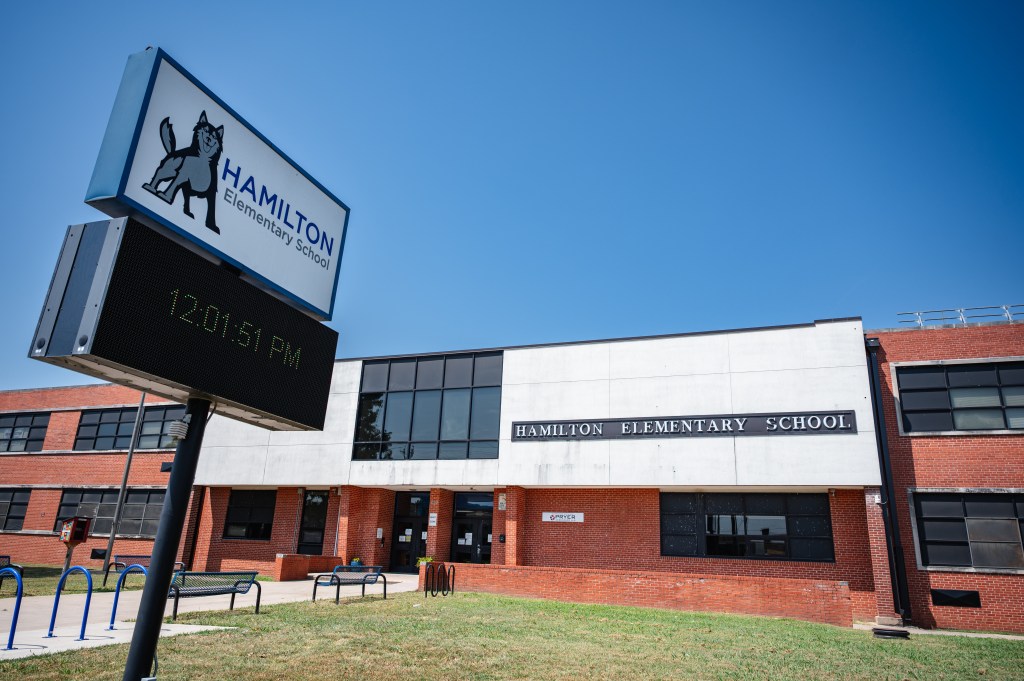
David’s neighborhood scored 0.4 out of 5 on the city’s 2026 neighborhood conditions report, facing widespread community struggles in economic development and transportation. There are only six or seven families in David’s neighborhood who’ve stayed as long as she has.
“I’m the only one that actually came back and purchased my house,” David said. “Most of (them) had never left, most of them just outlived their parents and all that. But what’s happening is once they die off — nobody wants to live in the neighborhood anymore.”
Just down the street from David, Toni Nolan never considered neighborhood schools. She started her kids in Mayo Demonstration Academy, a magnet elementary. Her son, Khadyn, just started at the Booker T. Washington High magnet and she plans to send her daughter, Khloe, to Carver Middle School, another magnet program.
“I did look at the school system, the report on them and if the grade was … C or below, it was a no go,” said Nolan.
Several highly-enrolled schools at TPS last year are magnet programs, but two neighborhood elementary schools — Council Oak and Lindbergh — had student populations nearly at their total capacity cap, at more than 97% full.
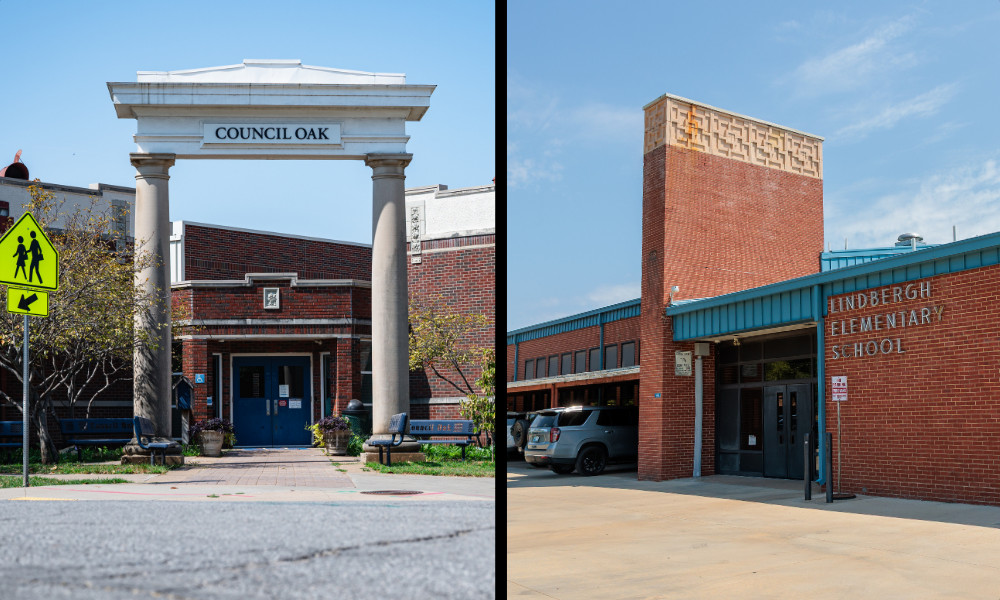
Croisant has taken note of how popular magnet campuses have become.
“No. 1, usually you have to do the lottery to be able to get in, and then most of those schools stay pretty full with students,” Croisant said. “Whereas, you know, we’ve got some local community schools that are not. And so I do think we need to be making sure we’re streamlined.”
It’s not just one thing that draws families away from neighborhood schools, David said. But the magnet option is a big part of it in her corner of Tulsa.
“Of course we’re always going to opt out, that privilege is always going to make us want to opt out into a better education,” David said. “And we just take what we can get.”
Not all magnet schools see the same levels of enrollment. Thoreau Demonstration Academy, a magnet middle school in south Tulsa, had a student population of 336 last year — less than 50% of total capacity — after an enrollment drop.
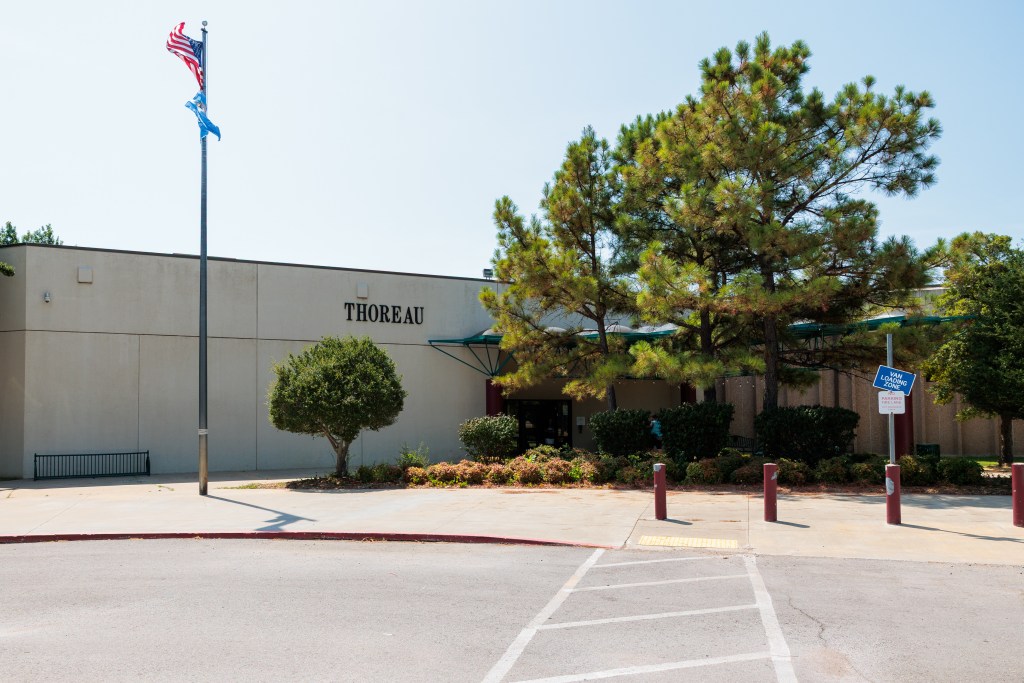
For Jasmine Esparza, the smaller size was a benefit for her oldest son, Raudell. He’s now a 10th grader, but Thoreau helped him find his passion, something Esparza hopes will happen for her youngest, Joaquin, who just started sixth grade.
It would be “devastating” if it closed, Esparza said, especially now that it’s becoming a family tradition to send students to the school.
“I still have nieces and nephews that their plan is to come here just because it’s more of a focused school on students, you know, smaller classes,” Esparza said.
‘What’s best for kids’
The district has repeatedly said everything is on the table for reducing its operational deficit.
If closures or consolidations are included, TPS needs to consider how an empty building could impact the neighborhood, Woolley said. If there’s a chance some schools may need to serve a sizable population in a decade, she added, that needs to be taken into consideration too.
“So not only looking at are we closing schools but what might go there to keep it from becoming a blight on the neighborhood, because the last thing we want to do is negatively impact areas of town,” Woolley said.
Transportation challenges that may come with consolidation is another factor for Croisant, as are bond dollars previously invested in each building.
“So it is definitely a kind of a wait and see what the proposal is,” Croisant said. “Then weigh it versus what the community’s values and what the feedback is for it, is it going to improve outcomes or not?”
Moniz says he wants to take a “holistic approach” when Johnson’s plan comes before the board, considering building conditions, operating cost and community impacts in an effort to break the cycle of structural problems.
“My hope is that we look at the next 10 to 15 years and that a Tulsa Public School Board 10 to 15 years from now can look back at the decisions that were made in 2026 and be grateful that the board administration were willing to make difficult decisions necessary, that were able to put the district on stronger footing,” Moniz said.
Regardless of whether closing or consolidating schools ends up on the table, all three board members agree the community needs to be part of the discussion.
When put before the public, the district’s proposal should not be about debating “whether or not we need to close buildings” but about improving the district long-term, Woolley said.
“If our true intent is to, you know, not just save money, but to truly create a more equitable system within our district in our town,” Woolley said, “then we’ve got to have our conversations not about what feels good or what about we like the best or any of those things, but truly about what we can do what’s best for kids.”
News decisions at the Tulsa Flyer are made independently of our board members and financial supporters. Read more about our editorial independence policy here.
