Oklahoma wasthe only stateto settle an opioid lawsuit with Purdue Pharma before the company filed for bankruptcy in 2019. The unique $270 million deal established an independent foundation focused on addiction research and treatment in Oklahoma.
Seven years later, its leaders are building office and laboratory space in Tulsa.
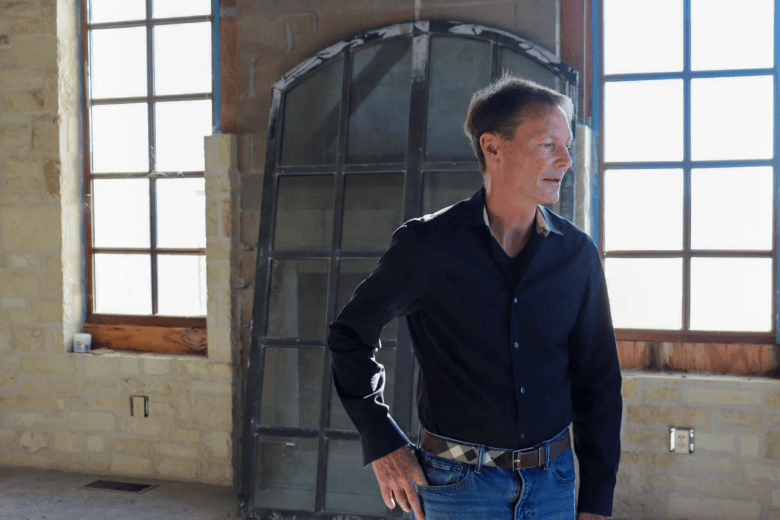
“When we have our grand opening, I want you to come back, and I want you to tell people, ‘They’re doing exactly what he told me,’” said Don Kyle, motioning to the construction site around him in September. The building had no electricity and light streamed though its open windows.
Kyle, a former Purdue Pharma researcher, is the CEO of the National Center for Addiction Studies and Treatment, which received nearly $180 million from the settlement to promote “addiction studies, treatment and education.”
In his nearly five years as NCAST’s CEO, Kyle has accepted few requests to be interviewed, despite speculation about his foundation’s use of the money.
“We don’t have any secrets. We’re not trying to make money off of things. We don’t have any shady deals with anybody, anywhere,” he said. “I’m showing you our building in the most raw form because I want you to see that we have a home, and we’re going to fix it up.”
Oklahoma filed a lawsuit against Purdue and other companies for their role in the opioid epidemic. The lawsuit argued the pharmaceutical giants were responsible for thousands of opioid deaths across Oklahoma, as well as the healthcare, law enforcement and treatment costs of the stateʼs addiction crisis.
NCAST is supposed to help address that crisis. Kyle is leading what he estimates to be a roughly $28 million buildout of NCAST’s new laboratory and office space, which he said will put the foundation on the national stage when it comes to addiction treatment and research.
NCAST lost its former headquarter when it split from the Oklahoma State University Center for Health Sciences in September 2025. It was a major departure for the foundation, initially described as an “adjunct to” and “part of” the university center in settlement documents.
Attorney General Gentner Drummond mediated the separation, which arose from disagreements about how to use the settlement funds.
“OSU-CHS will maintain its focus on direct clinical treatment, patient care and training the next generation of healthcare professionals to improve health outcomes of Oklahomans, especially for families affected by addiction,” Drummond wrote in a press release. “NCAST will continue its pursuit of research into non-addictive pain management drugs, more effective overdose reversal drugs, and human clinical trials aimed at validating new and improved treatments for patients in need in Oklahoma and across the nation.”
While associated with OSU’s Center for Health Sciences, NCAST sponsored the research of three PhD students, funded the OSU Addiction Recovery Clinic in Tulsa and created research collaborations between its employees and faculty at the university, Kyle said.
In the separation, OSU-CHS received $20 million and some lab equipment, and NCAST retained the $180 million fund generated by the lawsuit. The university is coordinating with lawyers to transfer an additional 20,000 experimental molecules and biosamples on pain management and addiction to the foundation from a separate 2019 deal with Purdue.
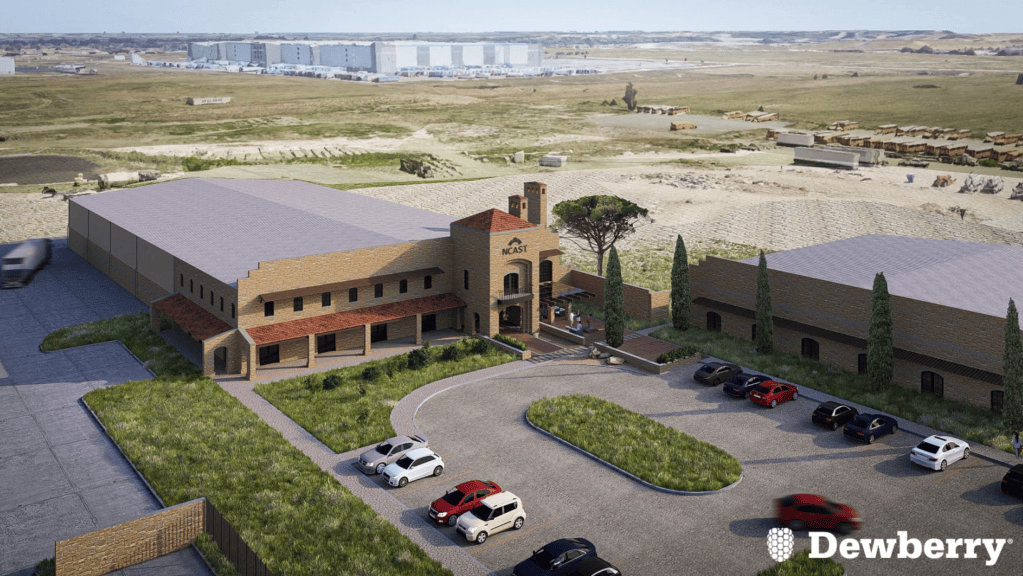
New laboratory space
Kyle said the separation gave NCAST a “fresh start.”
“When we were at OSU, everything we did was co-branded with OSU. So anything that we did was sort of a star on the OSU column, and that’s fine, but it doesn’t help us with our emerging national reputation,” he said. “For all of those kinds of reasons, we’ve been a little more invisible than we would have liked to have been, but it’s another day and going forward, we’re a wide open organization.”
He expects the foundation’s new space will be ready next year.
The quick turnaround is, in part, due to the decision to have the NCAST labs built off-site by an Iowa-based company, Art’s-Way Scientific, Inc. It will transport 16 pre-made modular laboratories to the site in early 2027, Kyle said.
“That turns out to be a really strategic thing for us because we don’t want to sit around waiting for years to finish this construction,” he said. “Because of the time acceleration and the lower cost, these modular laboratories are quite the thing, and so it’s a perfect match for us.”
Art’s-Way boasts delivery within 60 days of the date of order and promises buildings will last about 50 years. The company has built modular laboratories for the National Institutes of Health Cancer Research Center in Maryland and the University of Texas M.D. Anderson Cancer Center in Texas, according to its website.
The labs make up about $10.5 million of the total renovation cost and will include a vivarium, or animal research facility, according to Kyle.
Even though its building is still coming online, Kyle said, NCAST is not dormant, though it has operated in “more of an external experimental model.” The foundation has access to lab space at the University of Arizona, with which it has a working agreement, and other contract labs.
NCAST has 17 employees, whom Kyle described as a “world-class group of neuroscience folks that came to Oklahoma from all over the world, from some of the most prestigious institutions around the world to be part of what we’re doing.”
Though the foundation itself is a nonprofit, the employees are hired and paid through a separate company under the foundation’s umbrella, meaning their salaries aren’t subject to the same public reporting requirements.

Research and development
NCAST’s mission is defined by the opioid settlement with Purdue. The document says the foundation must improve the lives of Oklahomans and those across the nation affected by pain and substance use disorders through “research, education, prevention and treatment.”
Kyle said those four tenets still guide their work.
He is particularly interested in finding new non-addictive alternatives to opioids and opioid antagonists that rival naloxone. He also sees those goals as a way for NCAST to generate revenue by establishing intellectual property through research and development that can be sold to pharmaceutical companies.
“We don’t plan to compete with pharma companies,” he said. “We intend to create science-backed, high-quality opportunities that we can present to pharma companies, then negotiate deal terms that will bring NCAST up-front payments, success milestone payments, and royalties in the future.”
Thus far, Kyle said the foundation has only spent the earnings made on the original settlement, which was put into investment accounts. According to a 2024 tax return, NCAST had about $201 million in assets at the end of that fiscal year.
Along with running in-house research, Kyle said there will be other efforts to hold true to the ethos of the founding agreement. The foundation is in the early stages of forming collaborations with treatment clinics in the state that would agree to participate in clinical trials or be evaluated by NCAST researchers.
“The best role for NCAST is not to just open another clinic because we can, but to evaluate the clinics that are there and try to figure out, what can we do to improve the care they give, the tools they have or the opportunities that they can offer to their patients?” he said.
The settlement that created NCAST was intended to do more than provide a short-term response to the opioid crisis. Kyle said he wants the foundation to build something that endures, and will improve addiction care in Oklahoma for years to come.
“The opioid problem has been around for a long time,” Kyle said. “We’re not going to solve that problem in the next five years … And we’re not going to do it by ourselves. We need collaborators and we need a long runway.”
This article was originally published by KOSU. You can see the original story here.