


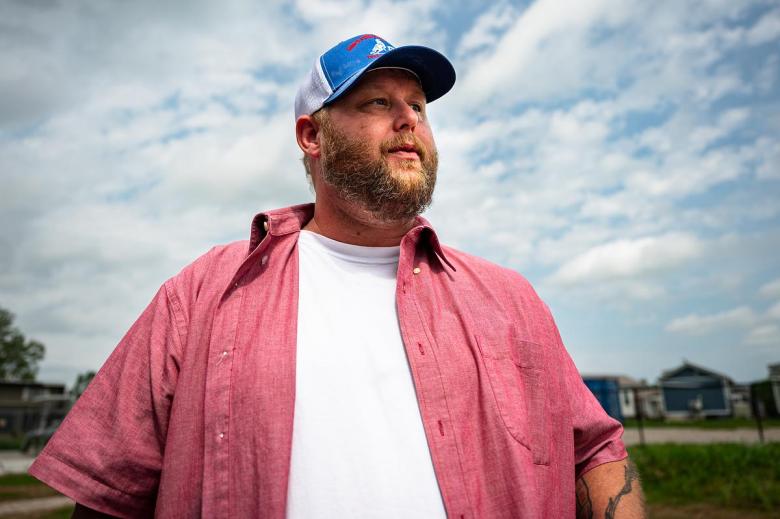
A sprained ankle turned into an opioid addiction for Michael Coatney about 20 years ago. The same companies that conspired to hook him on the drug now pay his salary as a support specialist with Eden Village, a tiny home community in west Tulsa that opened in December 2024 to provide permanent supported housing for people who have been chronically homeless.
The very people harmed by deceptive practices of opioid manufacturers, distributors and retailers are being restored through settlement funds from class-action lawsuits against those companies. The irony isn’t lost on the beneficiaries.
“It sounds cheesy, but it’s coming full circle,” Coatney said. “What else could I be doing? If that settlement money was going to go somewhere, this is where it was supposed to go.”
Eden Village, located at 1153 S. 61st W. Ave., received a two-year, $140,000 Tulsa County grant from an opioid settlement fund to pay for case workers, equip and train residents with the overdose-reducing drug naloxone and reach 100% participation in referrals for behavioral health.
Residents — or neighbors as they are called — have often spent decades trapped in addiction and years on the streets. They pay no more than 30% of their income to live there and get daily support from social workers and therapists.
Coatney has been in their situation, hooked on opioids after rolling his ankle at work. That addiction slowly worsened into homelessness and prison time. Now sober for a decade, he works as a peer counselor around addiction and homelessness. He started in street outreach teams at Family & Children’s Services and joined Eden Village three months ago.
“This is the only thing I was ever meant to do,” Coatney said. “There’s just no other therapeutic value for the peer-care level that works quite the same. In this position, I can act as a bridge to therapy, to medical adherence, to housing and to everything else we do.”
During his daily rounds, he came up on two 50-something women walking a little terrier named “Wookie” and have a tendency to finish each other’s sentences and laugh at inside jokes.
Leann Greer was prescribed the opioid Lortab after a C-section 40 years ago. Her doctor wrote a 90-day prescription for the drug and refilled it multiple times. Once that ended, she bought pills from other people who had a prescription.
“I got addicted right off the bat,” Greer said. “It made me feel better.”
The escalating opioid usage led to family alienation and life on the streets. She shrunk to 89 pounds and was taken to the 12 and 12 treatment center where she got sober. But finding an affordable living situation with daily support became nearly impossible.
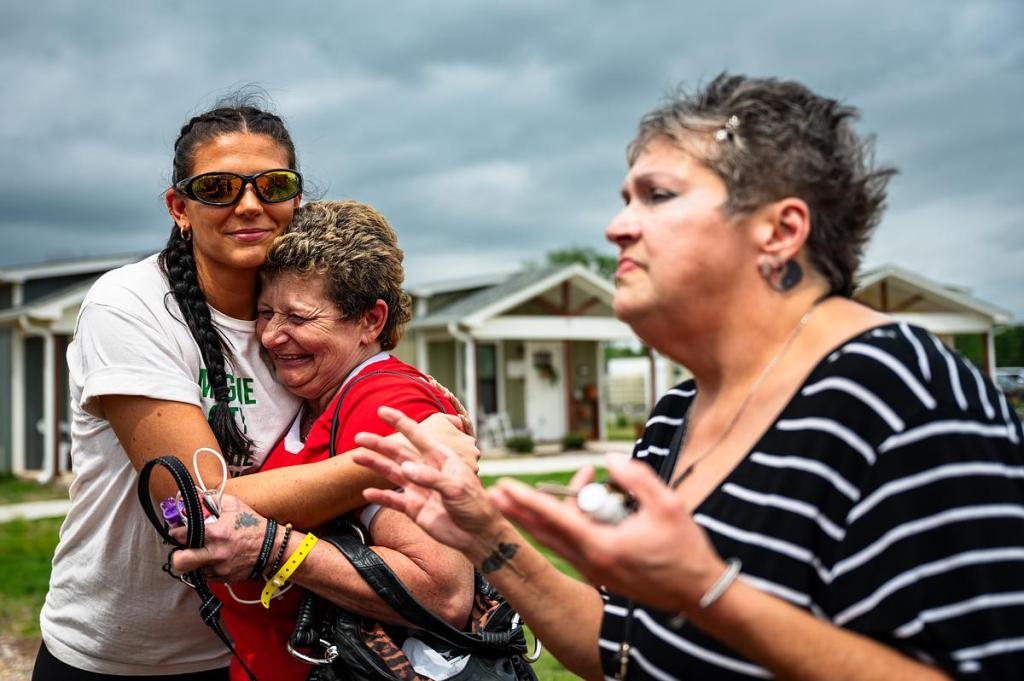
“I’ve been through everything, and God gifted me this place,” Greer said. “I’m going to be here forever, and I’m going to help out however I can.”
Greer’s friend Angela Moore said her addiction began with a ruptured appendix and morphine treatments as a teenager that evolved into opioid usage. She says her father had substance abuse problems and believes there is a genetic connection.
Both women are on a medication for opioid use disorder and say it has nearly erased their cravings. Case managers make sure they keep their doctor’s appointments.
But their paths to recovery have not come without challenges. When Moore relapsed a few months ago, Greer contacted the Eden Village case managers to get her help immediately, which included a dog foster placement.
“If she was somewhere else, they would’ve kicked her out,” Greer said. “They wouldn’t have loved her and supported her like here. Our little tiny homes means we are a community, and I’m proud of it. You have to have love, support and forgiveness to keep the bad out.”
Opioid settlement funds are designated specifically to address opioid addiction, from prevention to recovery.
The largest amount of opioid settlement funds comes through the Opioid Abatement Board at the Attorney General’s office. It has awarded $30 million in grants in two years. However, several municipal and county governments across the state secured similar settlements.

Tulsa County began receiving funds by 2024 and in September issued its first round of three-year grants ranging from $100,000 to $600,00 for a total of $4.5 million. The funds are held in an interest-bearing account, earning about $15,000 a month on the principal. The county will continue to receive settlement funds for another 13 years, but the investment should make the grant-making ability extend years beyond that, says Robert Harmon, the county’s opioid funds grant administrator.
“This was a long-term problem and needs a long-term solution,” Harmon said. “We want to build and strengthen the infrastructure of recovery in Tulsa County. We want to decrease the stigma on mental health services and have safe places for people to get help.”
The county also received about $1.3 million from the state’s opioid abatement program in the past two years. Much of that money has gone to mental health and alternative courts.
“Though we have county money on three-year grants, we rely heavily on state funds to get at programs we cannot. When individuals with substance use disorder need to get clean, their needs include so many things. You realize recovery is a roller coaster and not a straight line,” Harmon said.
The first round of grants was guided by a community assessment conducted by the Tulsa nonprofit Healthy Minds Policy Initiative, which specializes in mental health public policy and research. The fund was overseen by a 15-member committee that was similar to the group administering COVID-19 relief dollars through American Rescue Plan Act grants.
The next grants will be awarded in 2028 by a committee with more addiction experts, physicians and social workers, Harmon said. Other county grants awarded pay for programs like Narcan distribution, expansion of housing and treatment services to people recovering from opioid addiction and better tracking of opioid needs through 211 and the sheriff’s emergency calls.
Disclosure: Healthy Minds Policy Initiative has been a financial sponsor of the Tulsa Flyer. News decisions at the Tulsa Flyer are made independently of our board members and financial supporters. Read more about our editorial independence policy here.