


The Tulsa County Sheriff’s Office is expanding its work with U.S. Immigration and Customs Enforcement from the jail to the streets. The sheriff signed a new 287(g) agreement in July that gives certified officers the authority to conduct immigration enforcement.
Tulsa County Sheriff Vic Regalado told the Flyer Tuesday nine deputies have been certified since he signed the 287(g) Task Force Model agreement July 7. Those include all six deputies who make up the Drug Interdiction Unit, which targets traffickers and crime rings, and three task force officers assigned to Homeland Security investigations.
“Their responsibility is assisting and conducting investigations into drugs, narcotics investigations, guns and criminal organizations — things like that,” Regalado said. “During the course of their investigations, they come across and come in contact, more often than not, with individuals who are here in the country illegally committing these crimes.”
Regalado said he does not plan to have more deputies certified, including those on patrol.
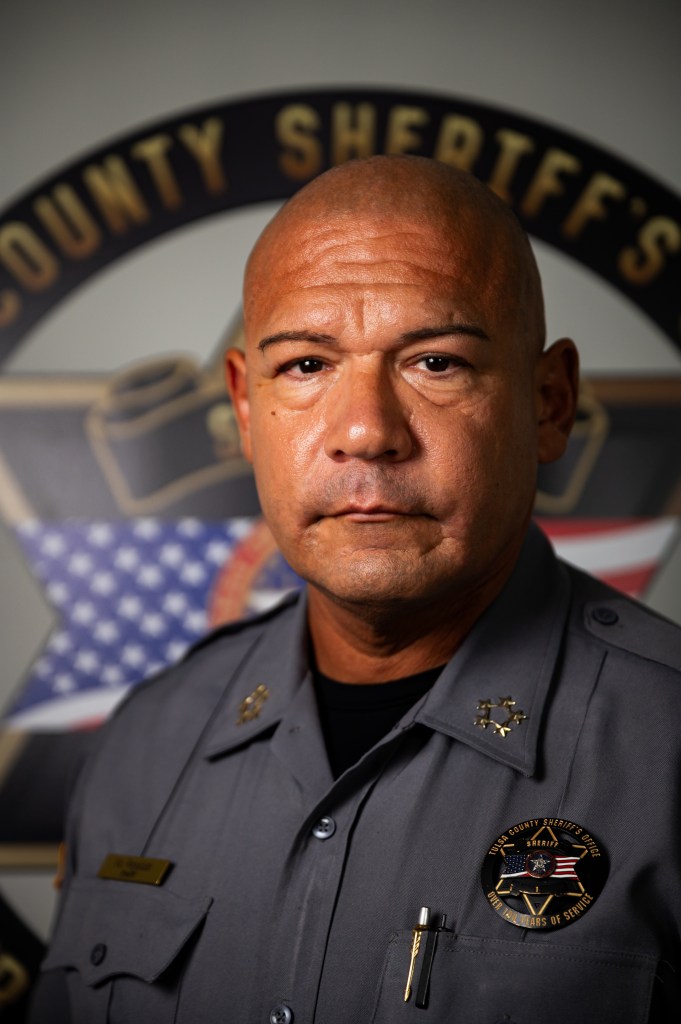
“Our patrol deputies do not have this type of certification or authorization, and I don’t see changing that ever,” Regalado said.
The new partnership follows a trend across Oklahoma, which receives the second-largest share of federal incentive funding from partnerships with ICE, according to The Oklahoman. The Flyer has requested all financial incentives, material incentives and resource reimbursements provided to Tulsa County by the Department of Homeland Security and ICE.
Michelle Brooks, a spokeswoman for Mayor Monroe Nichols’ office, said he was “not made aware” of the new agreement with ICE, but the mayor’s focus on public safety in Tulsa and not immigration enforcement “still stands.”
The sheriff’s office, which operates the David L. Moss Criminal Justice Center, has held a Jail Enforcement Model agreement with ICE since June 2020, according to the federal agency’s list of law enforcement agencies participating in the 287(g) program.
The Jail Enforcement Model allows detention officers to conduct immigration screenings on every person booked into the jail. However, nonprofit organizations and immigration attorneys say the Task Force Model poses the most danger to immigrant communities.
The nonprofit Immigrant Legal Resource Center, which provides legal training, resources and advocates for immigrants’ rights, published a policy brief in June calling the Task Force Model “the most expansive and harmful 287(g) agreement available” and arguing it has led to civil rights abuses.
Weeks before signing, Regalado said he had ‘no’ plans for new ICE agreement
On June 9, 28 days before finalizing the Task Force Model agreement with ICE, Regalado told the Flyer in an interview for an unrelated story he had no plans for additional 287(g) agreements beyond the 2020 model in place at David L. Moss.
“Our mission’s a little different on the local and state level law enforcement. We still have to answer calls for service. We don’t have the ability to say, ‘well, you’re not here illegally so we can’t help you.’ So, we still have to respond to our immigrant neighborhoods and provide police services,” Regalado said in that interview.
“If we stopped doing that — and I’ve seen it happen in the early ’90s when there was very little communication between law enforcement and our immigrant communities — what we saw was crime rise in those communities, especially domestic violence, robberies and things like that.”
Regalado added that if the Tulsa County Sheriff’s Office is linked with enforcing federal immigration law, “then people aren’t gonna call.”
“But I do, again, support what ICE does, and that’s a whole different conversation as to why,” Regalado said in June. “But for us, our part is the 287(g) program, which exists within the walls of the jail only.”
In a phone interview with the Flyer Tuesday, Regalado said the Task Force Model agreement was not on his radar during the June interview. He also clarified that he believed the question was asking about “apprehensions” and reiterated that patrol deputies will not be picking people up on removal orders.
“We had been talking about apprehensions and things of that nature,” Regalado said Tuesday. “To which I’ve stated time and time again — from our patrol standpoint — we would not be involved in that.”
The Tulsa County Board of Commissioners approved the agreement with ICE by a unanimous vote July 6. District 1 County Commissioner Stan Sallee was the sole commissioner present. District 2 Chief Deputy Mark Vancuren voted yes on behalf of Commissioner Lonnie Sims, while District 3 Chief Deputy Darren Gantz voted to approve on behalf of Commissioner Kelly Dunkerley.
Under the agreement, law enforcement personnel are authorized to perform a variety of functions, subject to limitations. Some of those functions include the authority to interrogate anyone believed to be in the country illegally and make warrantless arrests of those entering or living in the U.S. without legal permission.
City jail closure puts county in position to play greater role in enforcement
With the Tulsa Municipal Jail now closed, local immigration attorney Elissa Stiles of Rivas & Associates said people detained at the David L. Moss Criminal Justice Center, also known as the Tulsa County Jail, are at “great risk if they don’t have status or if ICE doesn’t think they have status.”
Nichols closed the municipal jail in late July after our partners at The Frontier published an investigation into seven deaths at the facility.

Now, arrestees facing charges in Tulsa — whether it’s for public intoxication or a murder charge — will be booked into David L. Moss and screened for citizenship status due to the county’s Jail Enforcement Model agreement with ICE. Previously, people booked into the municipal jail were not subject to immigration screenings.
“The way I see a lot of my clients going into ICE detention is through David L. Moss,” Stiles said. “And a lot of instances, it’s for something extremely minor, such as on suspicion of not using a turn signal or having a broken taillight.”
While minor violations like these would have previously resulted in detention at the city jail, the closure means those charged with misdemeanors and ordinance violations must be taken to the county jail and undergo immigration screenings.
“Usually, the prosecutor’s not going to do anything about it. There is often not even a case filed over it, but that (booking) itself is enough to trigger the ICE hold and put the person in ICE detention,” Stiles said.
Detention officers at David L. Moss will hold detainees even after they have been ordered released or paid a bail amount if ICE places a hold, Stiles added. She tells clients to keep up with maintenance on their cars to minimize contact with law enforcement.
“Making sure that your lights aren’t out, that your windshield’s not broken, that your registration is up to date and you don’t have any issues with the maintenance of the car,” Stiles said. “Because that can often be a reason for being pulled over and then eventually taken into the jail, and then to ICE custody.”

District 2 City Councilor Anthony Archie, who took office at the same time as Nichols in 2024, expressed concern about how the municipal jail closing might impact immigration enforcement in Tulsa during an Aug. 6 candidate forum with challenger Aaron Bisogno.
“There needs to be some clarification about those who are taken into custody and put into the county jail — will there be engagement with ICE in that regard?” Archie asked.
Other local law enforcement agencies with 287(g) agreements
Beyond the Tulsa County Sheriff’s Office, several other law enforcement agencies in the Tulsa metro have signed Task Force Model agreements with ICE under 287(g) this year:
- Bixby Police Department since April 30;
- Bristow Police Department since June 15;
- Catoosa Police Department since Aug. 11;
- Chelsea Police Department since March 6;
- Collinsville Police Department since April 22;
- Creek County Sheriff’s Office since April 17;
- Drumright Police Department since Aug. 7;
- Kiefer Police Department since April 29;
- Mannford Police Department since June 12;
- Mounds Police Department since April 13;
- Oologah Police Department since July 3; and,
- Rogers County Sheriff’s Office since May 31.
Not all Oklahoma officials are on board with the agreements. Facing community pushback, Oklahoma County commissioners declined to adopt a Task Force Model agreement proposed by the sheriff Wednesday.
Tulsa Flyer visual journalist Milo Gladstein contributed reporting to this story.
News decisions at the Tulsa Flyer are made independently of our board members and financial supporters. Read more about our editorial independence policy here.
