

From making an annual festival more culturally authentic to offering a citizens police academy in Spanish, Broken Arrow leaders have thrown their support behind resources in recent years to support the city’s growing Latino and Hispanic community.
The most recent census data shows 12% of the city’s 125,000-strong population identify as Hispanic or Latino. That’s nearly double the number reported in 2010, when the city’s population was 6.45% Latino.
Its partnerships have begun to reflect the population changes. Broken Arrow City Council unanimously approved an Aug. 3 resolution to become a Sister City with Rincón de Romos, Mexico — its first sister city in the country.
“Finalizing our new Sister City agreement is another exciting step in strengthening those relationships, and I’m especially looking forward to visiting Rincón de Romos in September and continuing to build on that partnership,” Mayor Debra Wimpee said in a statement.
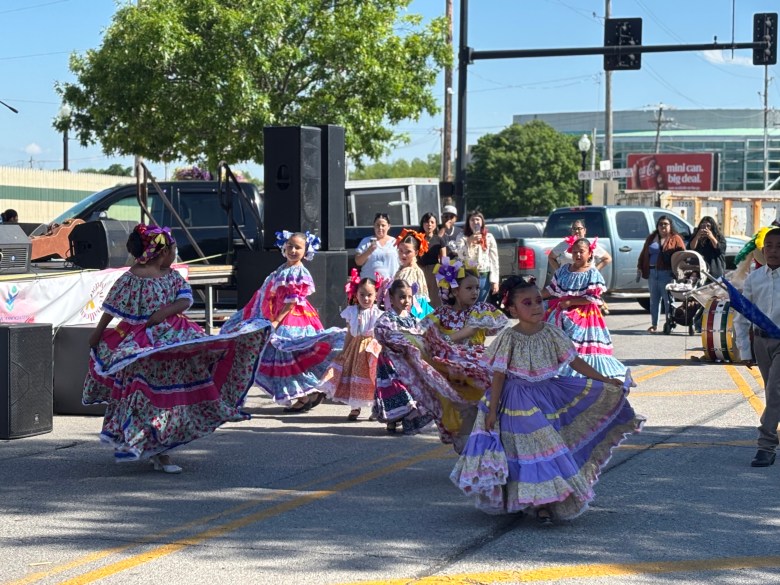
The mayor says she’s proud of programs like the Citizens Police Academy en Español, which helps build relationships and trust between Broken Arrow’s Spanish-speaking residents and law enforcement, as well as Fiesta de Mayo, which gives the entire community an opportunity to come together and celebrate Hispanic culture.
“Broken Arrow is growing and becoming more diverse, and I believe that makes our community stronger. I’m excited about where we’re headed and the relationships we’re building along the way,” Wimpee said.
A new Sister City agreement
The Sister City idea came from community leaders Margarita Vega and Francisco Treviño, according to Wimpee. The married couple is behind Fiesta de Mayo, the annual festival celebrating Hispanic culture with food, music, dancing and vendors in the Rose District.
“With our growing Hispanic population in our city, which is one of the largest growth populations, it just did seem like it was a perfect time and perfect fit for our communities to be a partner,” Wimpee said during the Aug. 3 City Council meeting.
Rincón de Romos, in northern-central Mexico, is a city in the state of Aguascalientes, Mexico. The area is characterized by its scenic landscapes, including mountains and valleys, which are popular for outdoor activities like hiking and picnicking, Treviño said.
“There’s a growing industrial sector, particularly in manufacturing and food processing, contributing to the local economy. That is something we’ll be focusing on,” he said.
Sister City programs allow for economical, cultural and educational connections between the U.S. and international cities. It is Broken Arrow’s first Sister City in years.
According to the Tulsa World, Broken Arrow had a Sister City with La Ceiba, Honduras, in 1991.
Treviño said the then-mayor of Rincón de Romos visited Tulsa about three years ago, which put the Sister City idea in his head. He approached Broken Arrow leaders about their interest and was told they would “love” to discuss the idea.
Two years ago, Treviño visited Rincón de Romos. When the city’s then-mayor died a few days later, Treviño thought the idea could die with him.
About a year and a half later, the new mayor Erick Muro Sánchez reached out about restarting the potential partnership. He soon met with Wimpee.
“I won’t lie to you, I was left surprised because the theme was to begin a relationship as Sister Cities and talk about it, but she quickly said — in less than five minutes — ‘Let’s do it,’” Treviño said in Spanish.
From there, the Sister City agreement headed to the Mexican consulate of Oklahoma City and the Broken Arrow City Council for approval.
“There’s a lot of people from Rincón de Romos and Aguascalientes in Tulsa, and there are people living in Broken Arrow too,” Treviño said.
Treviño said the Sister City partnership allows for intercultural exchange, such as student and teacher immersion programs.
That exchange is already beginning. Delegates from Rincón de Romos visited BA recently, and City Manager Michael Spurgeon said BA officials will go to the new Sister City in September.
“I can tell you having worked in a community previously that had a Sister City program with a community in Germany, that is now, I think, closer to 50 years in the making, and it is very vibrant,” Spurgeon said. “It is a program that really engages the community in many different ways.”
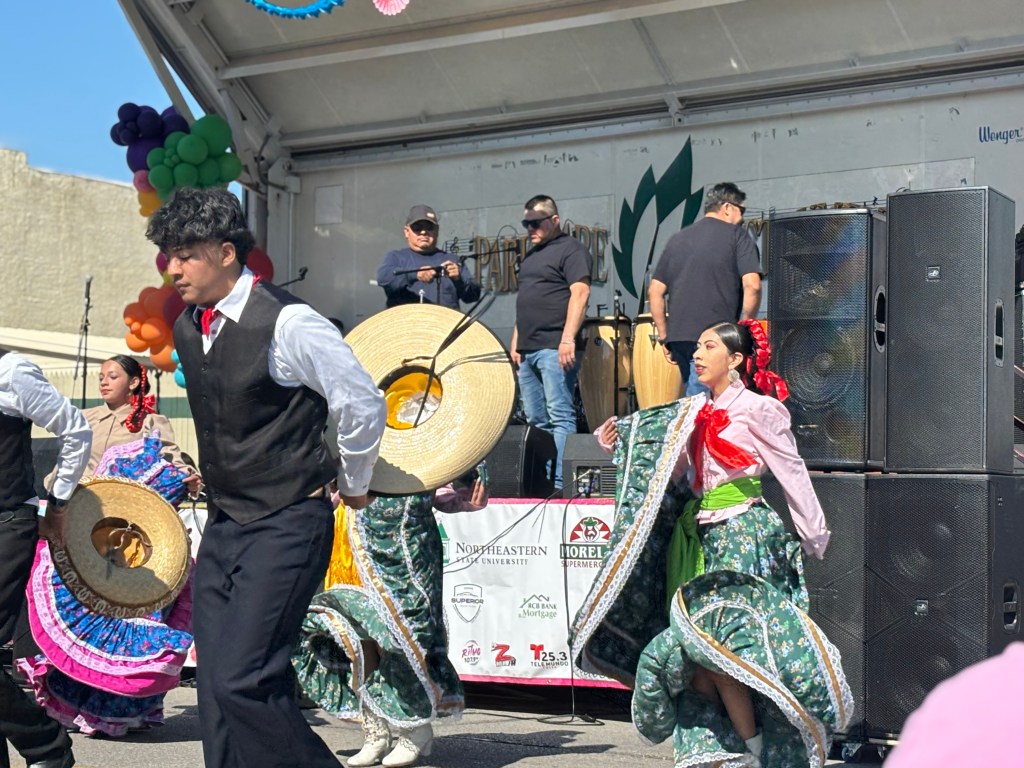
Fiesta de Mayo marks five years celebrating Latino, Hispanic cultures
The Broken Arrow Chamber of Commerce hosted its last Cinco de Mayo in 2018. Then the city took on the annual event in 2020 with plans to revamp it, but the COVID-19 pandemic put everything on hold. In 2021, Broken Arrow hosted its first Fiesta de Mayo.
Brent Brassfield, the city’s business retention and development coordinator said leaders wanted a more culturally authentic experience. That’s when Vega and Treviño got involved to reshape the celebration and find the right vendors and performers.
The critical change was expanding the festival to include all Latin and Hispanic cultures.
“Cinco de Mayo, quite frankly, is an American event,” Brassfield said. “One thing that we really emphasized with them from the beginning was making it culturally authentic.”
Vega said it’s grown to be one of the largest Latino festivals in Oklahoma.
“The whole intent for the city of BA was to let people know that BA was there, what it had to offer, and most importantly that they felt welcome,” Vega said. “Every year more and more people come and not just Latinos. You have a mixture of everything there and that’s really really cool to see.”
Bringing citizens police academy to Spanish speakers
The Broken Arrow Police Department graduated its fourth ”Academia de Policia para Ciudadanos en Espaňol,” or Citizens Police Academy in Spanish, in July. The academy is an eight-week course to learn how the department operates. That includes patrols, K-9 units and forensics.
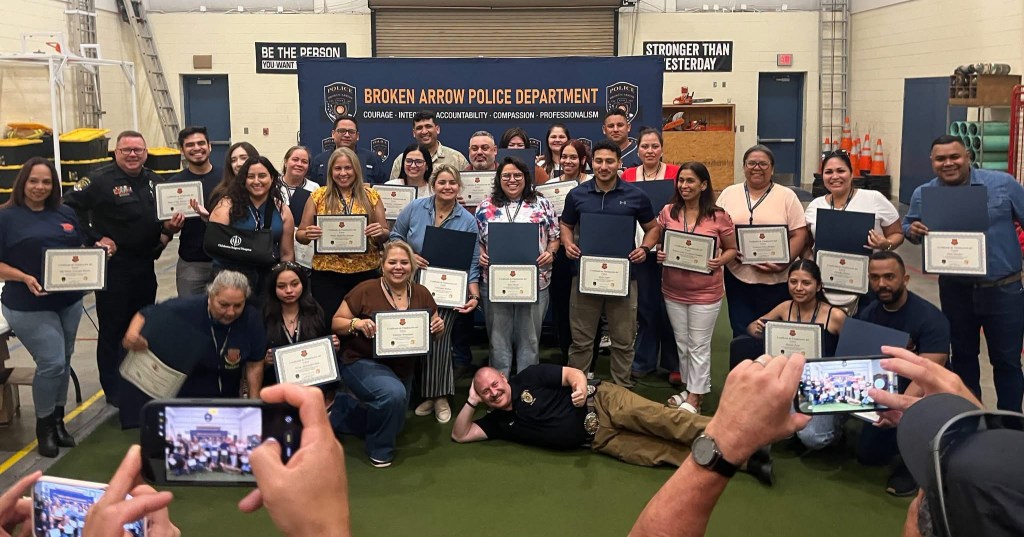
The academy is hosted every two years for any Spanish-speaking person living and working in Broken Arrow who is 18 or older and passes a criminal background check.
When Officer Mike Peale was applying for his current role to become a public affairs officer, the department was already envisioning a multi-language Citizens Police Academy.
“If you put multiple languages in one room with multiple translators, I just saw that as a recipe for disaster,” Peale said. “So I pitched the idea, ‘Hey, let’s do something for one language, with one interpreter, and let’s use the most prevalent non-English speaking demographic in Broken Arrow,’ which of course is Spanish.”
One change Peale has heard from detectives is seeing more Spanish-speaking victims coming forward.
Jessica Reyes, a Latina influencer and Broken Arrow resident, said she heard about the program through social media. She wanted to learn more about what police do and how they communicate their programs and the lessons to others.
“I kind of feel like sometimes the community is afraid with everything going on to get close to the police,” Reyes said. “I feel like it’s a responsibility to be the voice for those that can’t, or are afraid to, especially with the platform that I have. I feel like Spider-Man.”
She thought the program would be boring but discovered it to be enlightening. Reyes said she views police officers as she would anybody else.
“They’re truly wanting to protect and serve the community,” Reyes said. “I feel like I got a better understanding of how they work, how they’re really, truly trying to help our community and kind of build the bridge between what people’s perspectives are of police officers.”
She recommends others take the course and consider taking the master’s Citizen Police Academy, an expanded course offered solely in English.
The existence of a Spanish language course shows that the Latino and Hispanic community is growing more every single day, Reyes said.
“I think it’s very fundamental that we’re not just in the community, but we become part of the community by attending these resources and programs that are out there,” Reyes said. “I feel like it’s important that we become part of it.”
Wimpee said she’s proud of the growing Hispanic community in Broken Arrow and the culture, traditions, businesses and families that continue to enrich the city.
“We’ve worked intentionally to build stronger connections and make sure every resident knows they are an important part of the Broken Arrow community,” she said.
This article was produced as part of a partnership between the Tulsa Flyer and La Semana, a Tulsa-based bilingual Spanish-English newspaper serving Latino communities in Oklahoma.
Francisco Treviño is a member of the community advisory committee for the Tulsa Flyer. News decisions are made independently of our board members and financial supporters. Read more about our editorial independence policy here.