


This article is a part of “Mental Health Snapshot,” a reporting collaboration between Tulsa Flyer, The Oklahoma Eagle, The Frontier, KOSU, La Semana and Focus Black Oklahoma on mental health and resources in Northeast Oklahoma.
All editorial decisions for this series are made by the participating newsrooms.
Major series support provided by: Healthy Minds Policy Initiative
Being transgender in Oklahoma is like walking in neck-deep water, hoping it will shallow out — but knowing it’s likely you’ll end up treading water. That’s how Grace Fallon sees it. It’s preparing for the worst and hoping for anything but.
Fallon is an Oklahoman by choice. She moved to Tulsa — a city she says is good at creating opportunities — for a new career as a data engineer in 2021. Since then, anti-trans rhetoric and legislation has ramped up in the state, she said.

“Things just seem to be getting worse and worse,” Fallon said. “I think there are periods of time in growth and in struggle … but the systems, which we design to protect each other, should not be the ones that cause harm.”
Bills impacting the LGBTQ+ community are making their way through the Oklahoma legislature, which wraps its 2026 session May 29. One prohibits state agencies from displaying a Pride flag or supporting Pride Month in any way, while another prohibits changes to sex on birth certificates. Several other anti-LGBTQ+ bills were proposed this session — including one seeking to expand bans on gender-affirming care from children to adults.
Republican Charles McCall, a former Oklahoma House speaker and gubernatorial hopeful, has also made anti-trans legislative efforts a core part of his campaign. A September 2025 ad featured the candidate taking a cleaver to a banana.
As of March, Oklahomans can no longer change the sex markers on state driver’s licenses to reflect their gender identities.
“We are forcing folks to live in a state where atrocious liberties are being taken to limit folk’s rights,” said Hailey Briggs, executive director of Tulsa’s Oklahomans for Equality (OKEQ), one of the state’s largest organizations serving the LGBTQ+ community. “It just creates this concern about access to physical care and safety, it creates more mental health struggles.”
Many of Tulsa’s trans advocates and allies say they are exhausted after years of organizing, worsening health care access and social safety. In another hostile legislative session, they’re focusing on what they can control.
“I think everyone just feels like it’s really not safe right now, because it just puts the big old target on our backs,” said Paully Steele, an artist and organizer in Tulsa. “But, me personally, I feel like this is the best time to be active because we need some kind of representation. We need some kind of visibility.”
‘A mental health crisis’
Anti-trans rhetoric comes up in every client session with Matthew Gibbons, a licensed clinical social worker. Gibbons, who uses both masculine and feminine pronouns, offices out of OKEQ in Tulsa and sees nearly all gender-diverse clients.
Gibbons’ clients are afraid of what’s coming next. Many are afraid to leave their houses or only feel safe at home. Those are fears he shares. Gibbons has noticed more stares from strangers in public spaces and more anger than ever before.

“They don’t teach us in grad school how to help a community of people that you are also a part of,” Gibbons said. “They don’t teach us how to help people or communities that are going through something like this, something where you don’t see an end in sight.”
Identifying as LGBTQ+ is not a mental disorder, according to the American Psychiatric Association’s most recent edition of Diagnostic and Statistical Manual of Mental Disorders, an internationally accepted guide for diagnosing mental health disorders. But studies show LGBTQ+ people deal with greater mental health stressors than cisgender heterosexual people.
The majority of transgender adults in the United States thought about suicide in 2023, according to a study conducted by the Williams Institute at UCLA School of Law. In 2024, more than half of Oklahoma’s trans and nonbinary young people considered suicide, according to the Trevor Project, a global nonprofit focused on suicide prevention in the LGBTQ+ community.
“If you hear over and over and over that you’re worthless, that you shouldn’t exist, we’re trying to eradicate you, that’s rough,” Gibbons said. “Well now the government’s saying that I shouldn’t exist, and my parents tell me that I shouldn’t be this way, and so then, what other option do you have, right?”
Steele, who uses feminine pronouns, has dealt with mental health crises and suicide attempts herself but is now seeing a gender-affirming therapist. Inconsistent access to estrogen therapy through SoonerCare has impacted her physical presentation and mental well-being.
“Sometimes you’re without your hormones and then you get messed up internally,” Steele said. “When your hormones are messed up it’s hard to really talk to people because you’re just fluctuating up and down — and so that’s really bad for the community itself because if we’re all dysregulated, how can we assemble and do anything?”
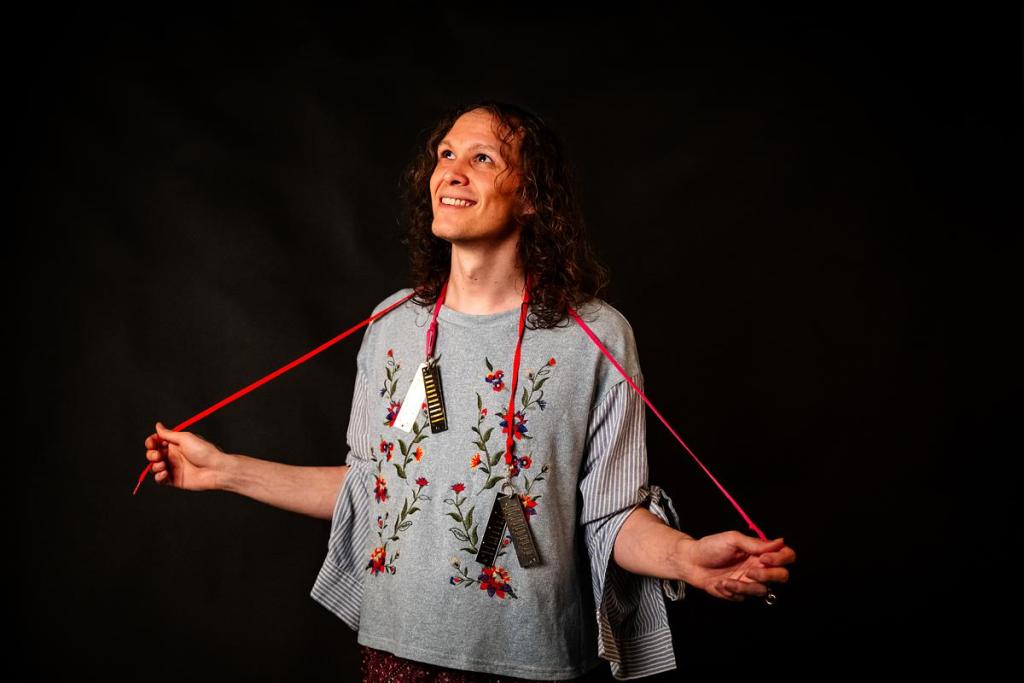
She affords her private provider by paying on a sliding scale — about $30 per weekly session. Steele is one of two clients who do so, but others are paying double or triple that rate. Even though it strains her budget, she says it’s worth it.
Limited access to affordable gender-affirming therapists is a widespread issue in Tulsa, according to Briggs at OKEQ.
“We are in a mental health crisis. There is not enough access to competent care — it doesn’t mean that it doesn’t exist, it’s just incredibly hard to access it,” Briggs said.
In the last year, more than 200 people have accessed OKEQ’s legal and mental health support and more than 400 were seen at the center’s health clinic, which primarily serves the trans and gender-diverse community. The center hosts 23 support groups and fields more than 50 calls a week from LGBTQ+ people across the state looking for resources.
But OKEQ is operating on a tight budget with just more than $1 million a year — refusing any federal grant support.
“A lot of queer people are living in a very hostile environment in Oklahoma, but if you scale down to the micro — what are their homes like? Their schools? Their places of employment?” Briggs said. “If we can make those spaces more affirming, that goes such a long way.”
‘Menaces of joy’
Trans youth face the same issues other teenagers deal with, says licensed professional counselor Kyle deVries, but stigma and bullying can intensify those psychological struggles.
“What teenager doesn’t feel isolated, what teenager doesn’t have self-esteem issues, what teenager doesn’t feel like they don’t belong?” deVries said. “It’s really about how much support they have and how mean the other people around them are about it.”

Katie Powell is a lifelong Oklahoman who runs LGBTQ+ programming at Youth Services of Tulsa. Many of the students who attend YST’s programming for LGBTQ+ teens left the public school system “because the bullying is out of control,” Powell said.
YST is their socialization, their youth group, their school friends. When facing a hostile environment in Oklahoma, Powell encourages the young people she works with to “be menaces of joy.”
“If somebody wants to see you unhappy, and if somebody wants to see you suffer, how can we make them lose?” Powell asks participants. “We’re gonna be joyful because nothing pisses off your enemy more than you and your friends having ice cream and laughing and just being like, it’s not that serious.”
Powell knows firsthand what it’s like to grow up in a conservative Oklahoma family that didn’t — and still doesn’t — react well to her sexuality. But she’s also been out for 15 years, with a partner, job and supportive community in Tulsa.
YST’s LGBTQ+ hub is framed by the memory of Nex Benedict, a 16-year-old Owasso student who died by suicide in 2024 after being attacked by a group of classmates in a school bathroom. They experienced intense bullying at Owasso Public Schools, according to family and friends.
Benedict was a “sweet kid,” Powell said, and a fixture of Tulsa’s young LGBTQ+ community. Hanging in the center is a mural dedicated to Benedict’s memory along with a nonbinary pride flag covered in signatures with messages of support.
“We’re not afraid to talk about that, you know, we have these feelings for a reason — we have sad, bad, hard feelings for a reason, but that’s not where we live,” Powell said. “You can tell that they probably haven’t heard that before.”
Many of Powell’s participants don’t want to talk about statewide or national issues — they live them. Instead, they’re given space just to be kids, to play pickleball, to laugh, make friendship bracelets, to attend a LGBTQ+-friendly prom.
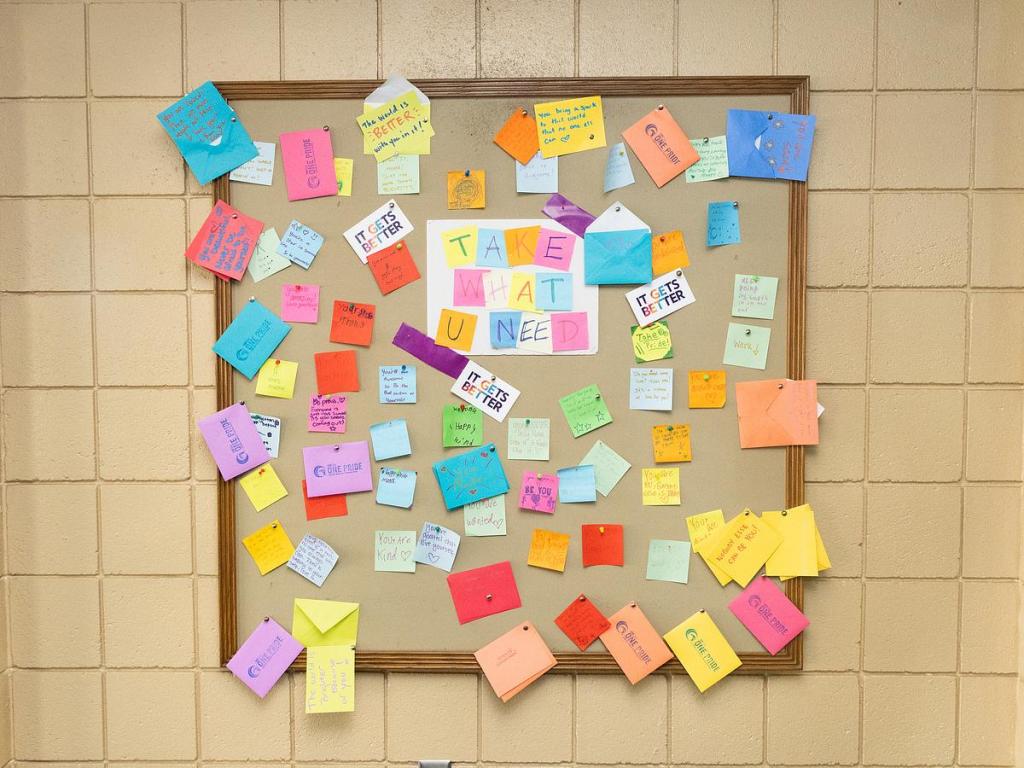
Even still, parents are scared for their child’s safety when they share a new or different gender identity. That’s understandable, Powell says. Several families Powell works with have moved out of Oklahoma — to northern states or out west to California — to give their child a safer environment.
“Like, is my child going to have this future that’s filled with struggle and strife because they’re trans?” she said. “There’s half a chance that they might, but what cuts that in half is familial support.”
‘Dance in the flames’
Fallon has attended 10 going away parties for trans loved ones who’ve moved out of Oklahoma in the last year.
She left Oklahoma too, returning to southern California for the first five months of 2025 and tried to regain her footing there. But a job opportunity brought her back to Tulsa. It’s her community, she said, but it’s bittersweet.
After President Donald Trump’s second inauguration, Gibbons bought a gun and thought hard about leaving Oklahoma. He’s stayed for those who can’t afford to leave Tulsa, much less the state.

“If we all leave, who’s left here to fight for those who can’t?” Gibbons said. “Someone has to be here to somehow bring some sense of safety to the community.”
Steele doesn’t have the means to leave Oklahoma but is focusing on creating joy around her. Through GENDER Magazine, her current outlet for LGBTQ+ art and advocacy, she is hosting a March 31 fashion show to honor Trans Day of Visibility.
“Reacting to our situations is valid, but we don’t have to dwell on them. We can review them, and then keep moving forward and still find joy,” Steele said. “We can just dance in the flames.”
Fallon said it’s exhausting to continue pushing to be seen as equally human, sharing the most vulnerable parts of yourself over and over again. But she’ll keep trying.
“The conversation you want to get to with folks who have the power to make change is ‘What is good for everybody?’” Fallon said. “What is good for trans people is good for everyone.”
Fallon hopes for a world where she doesn’t feel the need to watch the news while cooking breakfast. With her passport expiring at the end of the year, she wants to renew it safely and with her identity represented.
Fallon hopes people find it within themselves to be brave — even though she won’t be in Oklahoma with them. She plans to move out of Tulsa this spring.
Anna Colletto is the education reporter for the Tulsa Flyer.
News decisions at the Tulsa Flyer are made independently of our board members and financial supporters. Read more about our editorial independence policy here.
Additional series support by: Oklahoma Women in Technology
