


Supporters for a low-water dam between Jenks and Tulsa are a decade late and $90 million short. They still have the dream, but haven’t landed on where to get the dollars.
Officials representing Tulsa County, the City of Tulsa and the City of Jenks are rallying support to pool the remaining funds for the Tulsa-Jenks Low Water Dam, a project that voters approved a decade ago but has not started construction due to a significant funding shortage.
There is about a $90 million gap between the project voters approved in 2016 and available funding. Officials blame rising costs of materials and labor.
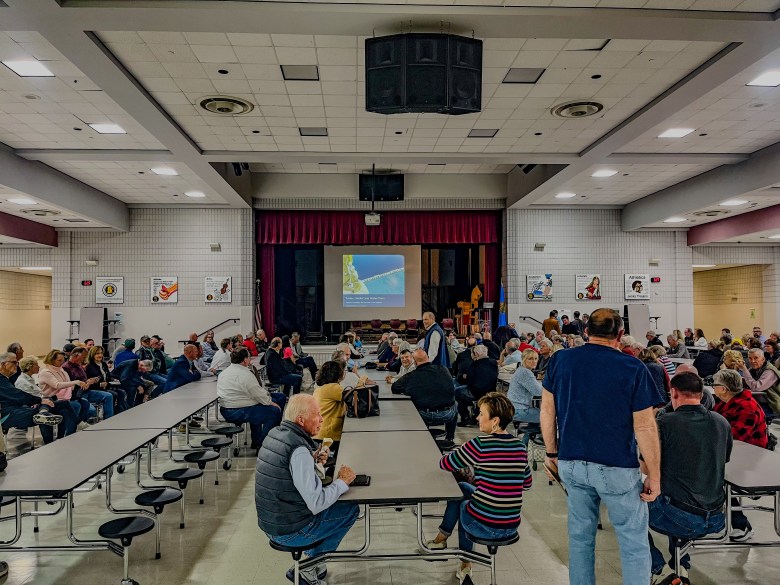
About 150 people, including more than a dozen state and local officials, packed into the Jenks Middle School cafeteria Nov. 9 to hear an update on the project, which would effectively create a four-mile lake in the Arkansas River between 71st and 103rd streets — about where the dam would be built. The lake would be 10-feet deep at its steepest.
The project voters approved also included public amenities such as parks, trails, pedestrian connections and playgrounds on both sides of the Arkansas River. One slide shown during the town hall showed a kayak dock at Vensel Creek.
Jenks Mayor Cory Box, Tulsa County Commissioner Kelly Dunkerley, Jenks Councilor Kevin Short, Jenks Vice Mayor John Brown and Tulsa City Councilors Phil Lakin, Jr. and Anthony Archie expressed urgency to find the dollars to make the project a reality — including seeking support from the private sector and state leaders.
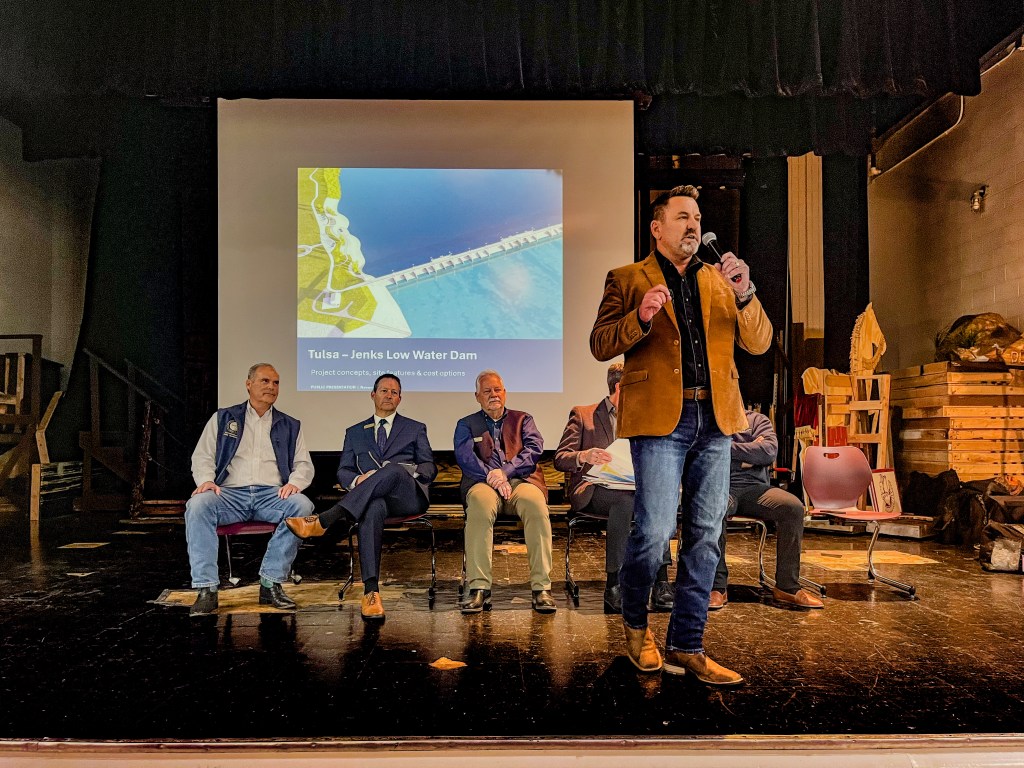
“Easily 20, 25 years we’ve been talking about this thing,” Box said. “Why am I here? I’d like to see us build it.”
Lakin, Tulsa’s District 8 councilor who represents a portion of south Tulsa, said the project needs to happen sooner rather than later. He said 5,000 of the 28,000 “yes” votes cast for the Vision 2016 economic development proposition came from his district. Plans for a Jenks dam began in the 1960s, he said.
“We’ve had plenty of stabs at this. This is our chance,” Lakin said. “We have to make this work this time.”
By the numbers
The City of Tulsa, City of Jenks, the Muscogee Nation and Indian Nations Council of Governments have pledged $105 million for the project:
- About $62.2 million from Tulsa’s portion of the 2016 Vision sales tax package
- About $28.7 million from Jenks:
- $16.7 million approved as part of the county’s 2016 Vision proposition
- $10 million from excess Vision funds
- $2 million from a RAISE grant from U.S. Department of Transportation
- About $8.2 million from the Muscogee Nation; and,
- A $6 million grant from INCOG
The project is still short at least $40 million. Here are the options officials are considering to get it done:
- $194 million: the original plan, includes amenities and pedestrian bridge
- $176.3 million: includes pedestrian bridge, no amenities
- $161.1 million: includes amenities, no pedestrian bridge
- $143.5 million: no amenities or pedestrian bridge
Dunkerley, who served as Jenks mayor from 2015 to 2017, said he was confident more funding is possible — if citizens have “the will” to do it.
“What I want to say is, the money is there,” Dunkerley said. “It’s a matter of getting a will to use it for this project.”
A source of possible funds mentioned at the meeting is the City of Tulsa’s excess economic development funds generated from the 2016 Vision Tulsa tax. Box encouraged people to contact Tulsa councilors about the project.
Lakin said the city has not finished collecting revenue from the 2016 package as it was a 15-year revenue bond. Councilors are balancing a lot of requests from constituents, he added.
“You guys can call as many city councilors as you want, but we have a collective responsibility to go around the City of Tulsa and take care of multiple things,” Lakin said. “There’s two other councilors in this room right now. They are not as focused, and they don’t need to be as focused, on the river as Anthony (Archie) and I do because they have their own interests and their own citizens who have their own interests.”
Lakin, CEO at the Tulsa Community Foundation, said he is willing to reach out to the private sector and state officials to complete the project.
“I’m willing to go call on anybody, whether it’s the private sector or the state,” Lakin said. “We have a governor-elect whose office has been at 71st and Riverside for the last 25 years. So maybe there’s hope, even within the state of Oklahoma, to find some money.”

Rendering shows the project’s public amenities on the east bank in Tulsa. Credit: City of Jenks Credit: Courtesy of City of Jenks 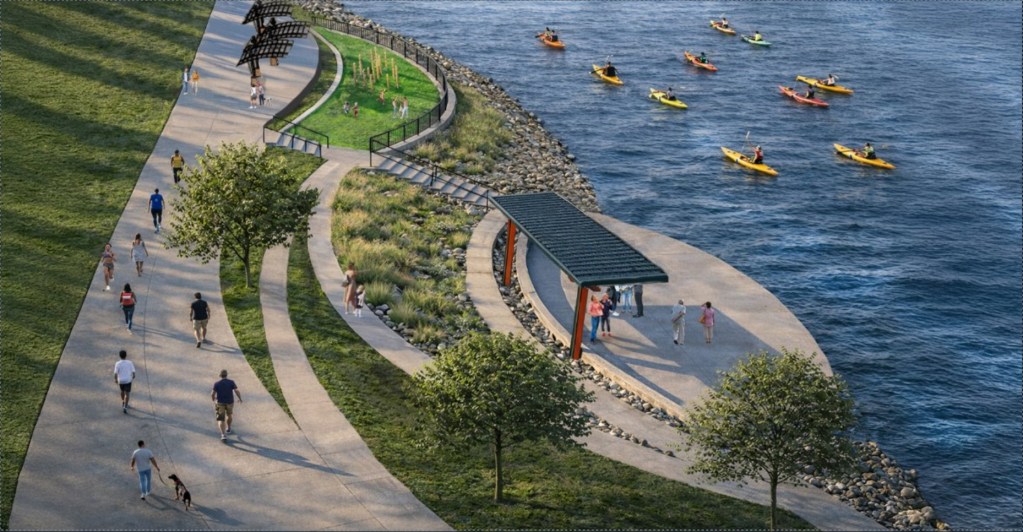
Rendering shows the project’s public amenities on the west bank in Jenks. Credit: City of Jenks 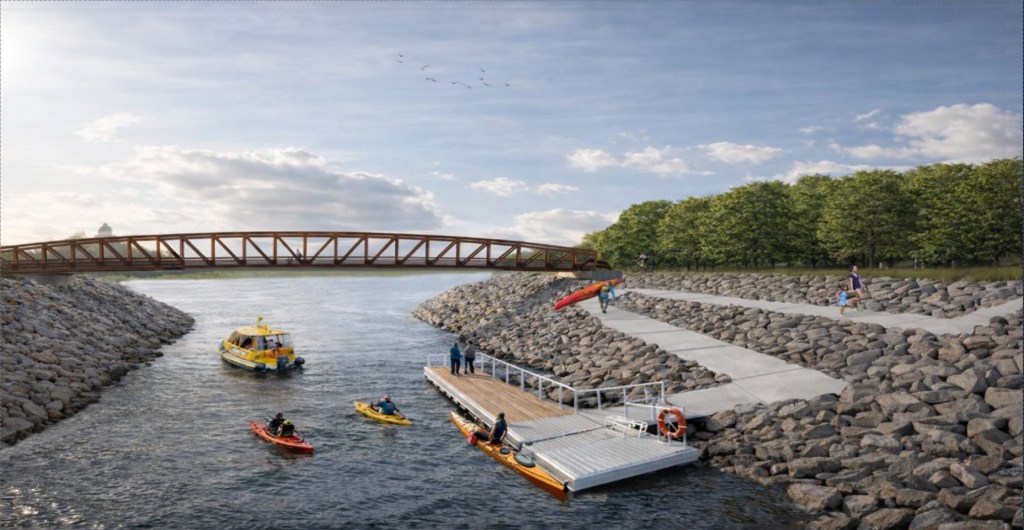
Rendering shows a kayak dock on Vensel Creek in Tulsa. Credit: City of Jenks
What happens if they ditch the dam?
If the project isn’t complete, some of the funds are already re-routed elsewhere, officials said Nov. 9.
Dunkerley, who wrote the Jenks portion of the Vision Tulsa ballot measure as mayor, said the Jenks’ funding is earmarked for other infrastructure projects in the city — should the dam fail to come to fruition.
For Tulsa, Lakin said the city would be required to reallocate $18 million to an operating and maintenance endowment for Zink Dam at 31st Street and Riverside Drive. Tayor and councilors could then divvy up the remaining funds between economic development projects along the Arkansas River.
Archie, who represents the council district where the dam would be built, said the parties are developing a steering committee for the project that will meet in early December.
“If this project is going to happen, like I said earlier, it’s going to be a partnership,” Archie said. “There is a gap, and I think the next step that we have is to try to expand the universe of folks that can help us bridge that gap.”
News decisions at the Tulsa Flyer are made independently of our board members and financial supporters. Read more about our editorial independence policy here.
