This article is a part of Snapshot: Food, a collaborative journalism project between Tulsa Flyer, The Oklahoma Eagle, The Frontier, KOSU, La Semana and Focus Black Oklahoma exploring how Oklahomans put food on the table.
Before oil was discovered in 1901, there was beef.
Before the art deco buildings, the aviation industry, the creation of the Tulsa Sound and all the roadside giants, there was beef.
In the years after the Civil War, Creek and Cherokee cattlemen — and intermarried white entrepreneurs — fattened cattle in the region to ship east, according to the Oklahoma Historical Society.
Among them was William Halsell, who drove cattle up the Chisholm Trail from Texas and made deals with the Cherokee Nation to use their lands along the way. Eventually he married Alice, a Cherokee, and in the 1880s they started a massive ranching operation along Bird Creek, which was then eight miles north of Tulsa near present-day Mohawk Park.
Before there was Woodward Park and development stretching to present-day Broken Arrow’s Lynn Lane, Creek citizen George Perryman operated a massive ranch of 60,000 acres. More than 3,000 head of cattle grazed across it, according to Tulsa Garden Center, which oversees the Woodward property. The vast ranch was known in the Tulsa area as “Perryman’s Pasture.”
At statehood, there were 10,015 head of cattle counted in the county. By 1935 the number had increased to 30,382 and to 55,000 in 1963. Then the decline started.
At the end of the twentieth century, ranchers held 25,000 head, according to OHS.
Tulsa County reported 11,475 head of cattle across roughly 40,540 acres of pasture and rangeland in 2022, according to the U.S. Department of Agriculture’s census.
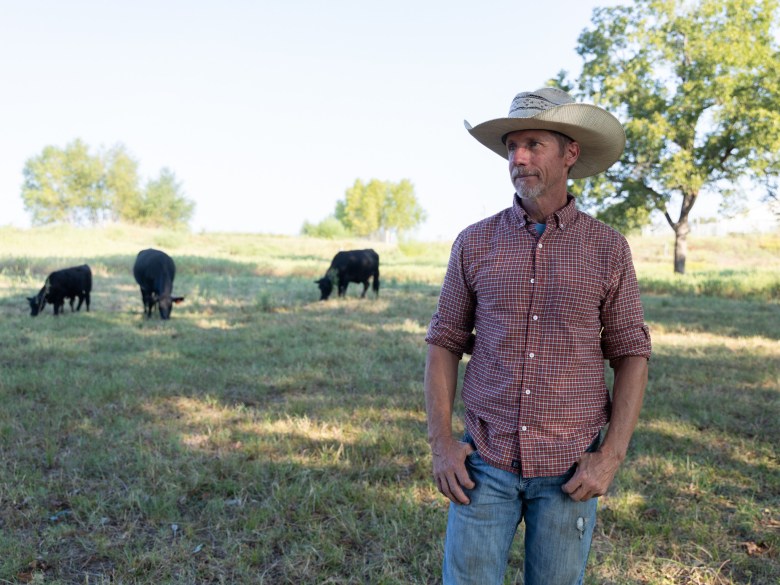
“The cattle herd in the U.S. is the lowest it’s been since 1950,” said Eric Perner, a longtime local rancher and CEO of REP Provisions. “It has dwindled, and we got to build the herd back. We got to build the herd back because beef prices are high, and it’s because there’s not enough animals on land.”
Beef used to be the economic driver in this part of the country. The proliferation of big-box stores and easier channels of distribution changed the industry.
Add in illnesses and diseases, climate change and divisive politics, and it has many folks again asking, “Where is the beef — and why does it cost so much?”
Northeastern Oklahoma is still home to meat producers, who are keeping those early-day traditions alive. The Flyer visited three local beef operations to learn how they’re finding success in putting meat on the table.
A business model collapse — a beef stick rebound

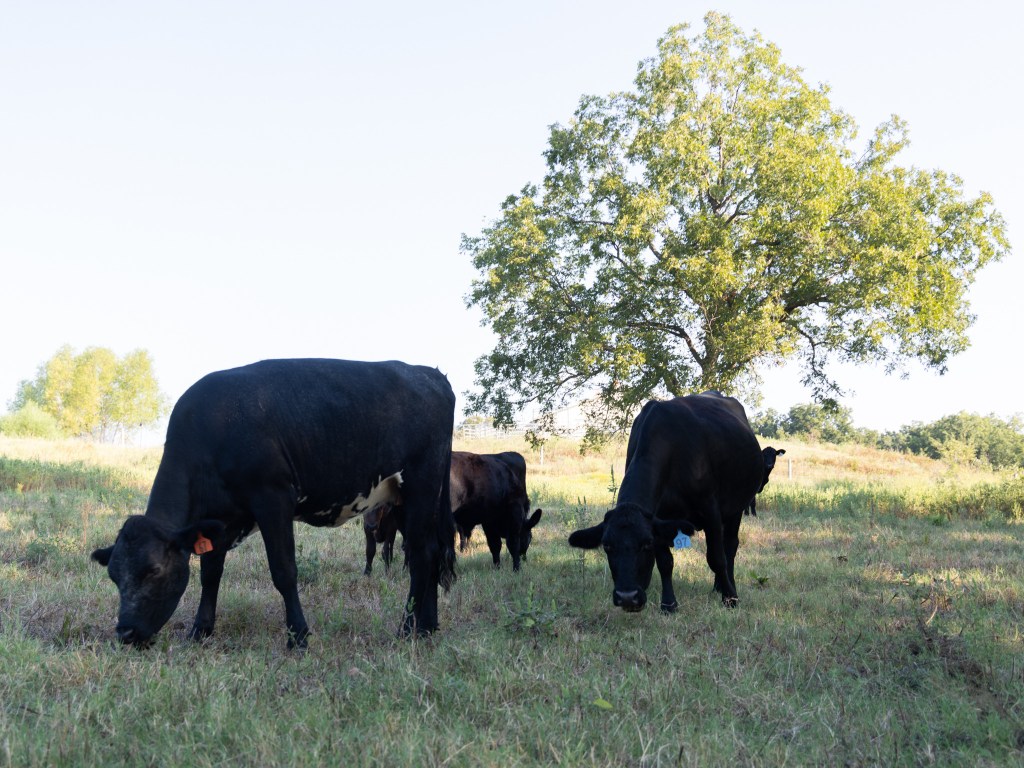
The sun rose just over an hour ago, and the 50 head of cattle on Perner’s Double P Ranch are already finding refuge in the shade as the mid-September morning quickly heats up.
The cattle chomps on the native grasses, including Bluestem, and goes on about their day. Soon they’ll be processed and shipped from a fulfillment center up the road in Bixby to homes in all 50 states, where there will be a burger or steak dinner for a family.
Twenty years ago, Perner and his father relocated their ranch operations from Broken Arrow to the 320-acre site in Mounds. In 2010, with grass-fed beef becoming popular, he started selling his beef directly to 10 customers in Tulsa.
A decade later he launched REP Provisions, a direct consumer business with big ideas of managing the land and animals in conjunction with the environment. REP’s beef sticks became the first popular product. Then COVID-19 arrived, and his business model collapsed overnight.
While many other businesses were shuttered and shortages were causing empty shelves, Perner stood in his prairie overlooking a valley and hills to the southeast covered in invasive trees. He reminded himself: “I believe there’s a way to grow healthy, nutritious food, create wildlife habitat and raise animals economically.”
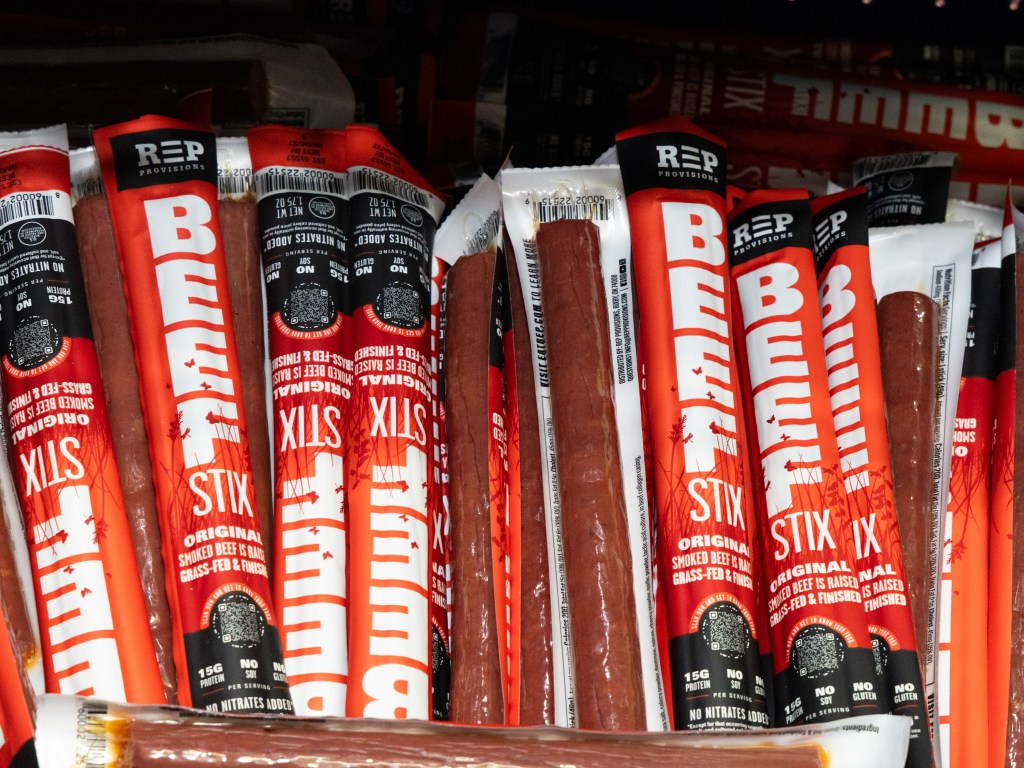
Perner pivoted to the frozen space out of necessity — and the business has grown every year since. Now, those popular beef sticks are back.
The beef and pork comes from his and three nearby farms in Oklahoma, while the prairie chicken comes from two north Texas farms. Overall, REP can have up to 10,000 head of cattle at any given time, with only up to 120 being at Double P.
“My network of farmers and ranchers that are doing the same methods I’m doing is growing, and I’m looking for more to join us,” he said.
Perner believes this business model is the way to change the American food system for the better. Each ranch in his network follows the same standards, such as undergoing rigorous scientific testing to measure soil health, sequestered carbon, water quality and overall biodiversity.
At Double P, Perner rotates cattle, pigs and sheep throughout different paddocks. The practice allows for grazing and feeding as the ecosystem does its thing. Perner boasts about the resurgence of the natural habitat, with some areas growing natural bluestem grass so tall it brushes the brim of Perner’s hat as he walks through it.
“Everything is forage here, and I reject all spraying,” Perner said. “I’m not organic-certified, but it’s an organic ranch. We don’t spray chemicals on our land.”

REP Provisions shares data from third-party testing of the health benefits of its meat, including the omega ratios, fats, proteins and more.
“There’s no transparency in where our food comes from,” Perner said. “You can look on a package and it can say ‘packaged in the USA,’ but it tells you nothing about where it was born, raised, fed out, and all this cheap, cheap beef is coming from other countries. Well, they may not share our same values.”
Perner believes REP is on the right path. They have more and more customers in every state. Most importantly, his land is showing new life in a return to the way it once was. All of his beef ranches have earned certification from the National Audubon Society as bird-friendly.
“They come out and do bird surveys every year, and when they were here this spring, they said they never counted that many different birds on any of the ranches yet to date,” Perner said. “That made me feel good.”

Feeding the tribe and their neighbors, too
Just south of the Tulsa County line, it’s the calm before the storm at Looped Square Meat Co. in Beggs.
Soon, the processing and retail facility operated by Muscogee Nation will be full of animals recently shown at area fairs. Then, the hooks will start filling with lots of deer later in the year.
On this day in mid-September, a group of employees clean a cow hanging from a hook. A few freshly cleaned carcasses hang off to the side awaiting further processing before being packaged and sold in the market located in the front of the building.
The cattle come from Muscogee Nation’s ranch a few miles away, where they are grass-fed and grain-finished without growth hormones nor any antibiotics along the way.
The problem is there isn’t enough beef to meet the demands of Muscogee citizens and other customers who shop at the market. Located at 3300 U.S. Highway 75, the shop is open from 10 a.m. to 6:30 p.m. Monday through Friday and 8:30 a.m. to 4 p.m. Saturday.
“We have to supplement because the demand is so high,” said Justine Schleve, plant manager. “We just don’t have enough cattle on the ranch. We don’t want to bring them in before they’re ready. Where we do supplement from, I have a letter of guarantee of where the cattle come from. They’re all slaughtered within the United States. No imported beef. I made sure of that.”
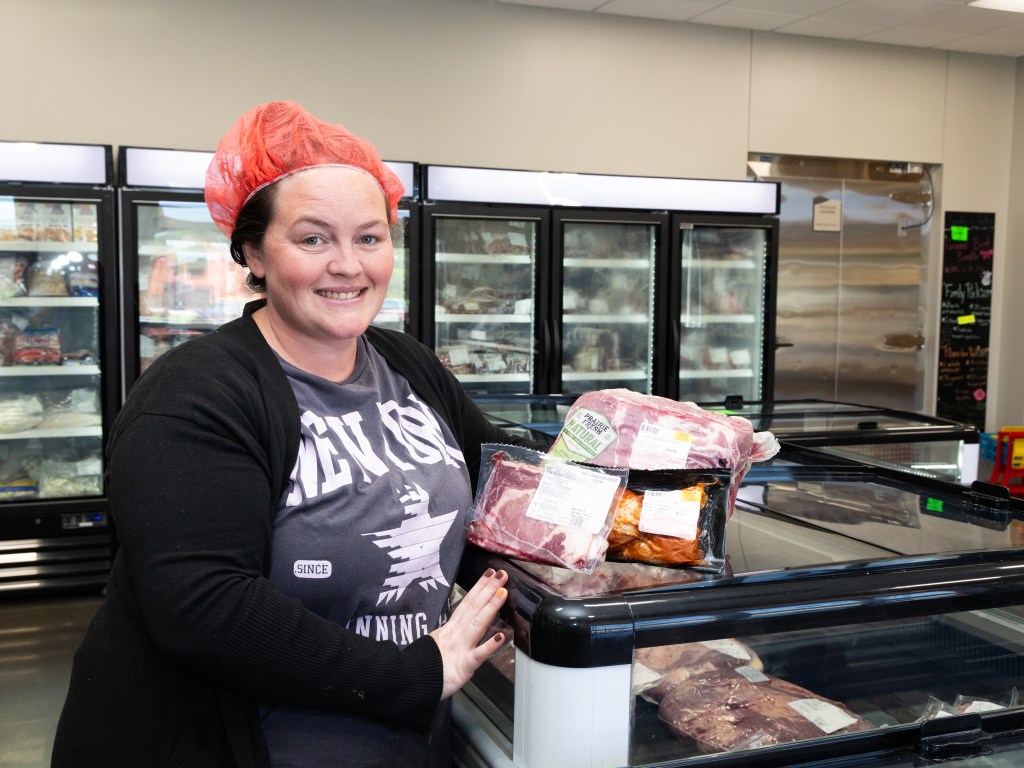
There are also letters of guarantee for the pork and chicken products sold in the market.
“We do all of our smoked products in-house,” Schleve said. “We’ve got our snack sticks, summer sausage, bologna and we make all of our bratwurst in house.”
Customers should anticipate spending a little bit more money per pound at Looped Square compared to the big box stores because the quality is better.
“We’re not injecting it with dyes to keep it nice and pink and red,” Schleve said. “There’s a lot of things we have to explain to the customers. They’ll come in and be like, ‘Oh, why is your meat brown or gray?’ and we’re like, ‘Open the package, and when you reintroduce oxygen to it, it’s going to pink right back up.”


The final few months of the year are the busiest in terms of meat processing. Those looking to have Looped Square do the job need to plan accordingly. Beef is processed weekly, but the line can back up. They do pigs once a month because they are more time-consuming with curing and smoking.
“We don’t do birds, but we do lamb and goats,” Schleve said. “They’re easier to squeeze in just because they are so little. We can usually get them in within a week or two.”
Schleve said that while they sell products directly to consumers and process animals for the public, Looped Square also provides assistance to other tribal nations.
“We do a lot of different food distributions for different nations, like Cherokee Nation, Comanche Nation and we’ve done individual tribal towns,” she said “If they get grant money, they’ll call us and be like, ‘Hey, we want to do this, this and this.’ We’ll deliver it to them, and they’ll do a food distribution.”
Every day is busy, Schleve said, and she goes home happy knowing she and her 22 employees helped feed folks in her community with high-quality, locally-sourced meat.
“It’s humbling to know where your meat comes from, and to be able to provide that clean product and be able to tell customers, I know where this came from. I can promise you, it’s clean,” she said. “It’s good for you, and I like being able to do that. You go to a grocery store, and they can tell you whatever they want. You don’t know where it came from.”
Word of mouth does wonders for Tulsa Beef & Provision
The sun has barely illuminated the downtown Tulsa skyline a mile to the west of Tulsa Beef & Provision, where employees walk the same streets and work toward the same goals as their predecessors 90 years ago.
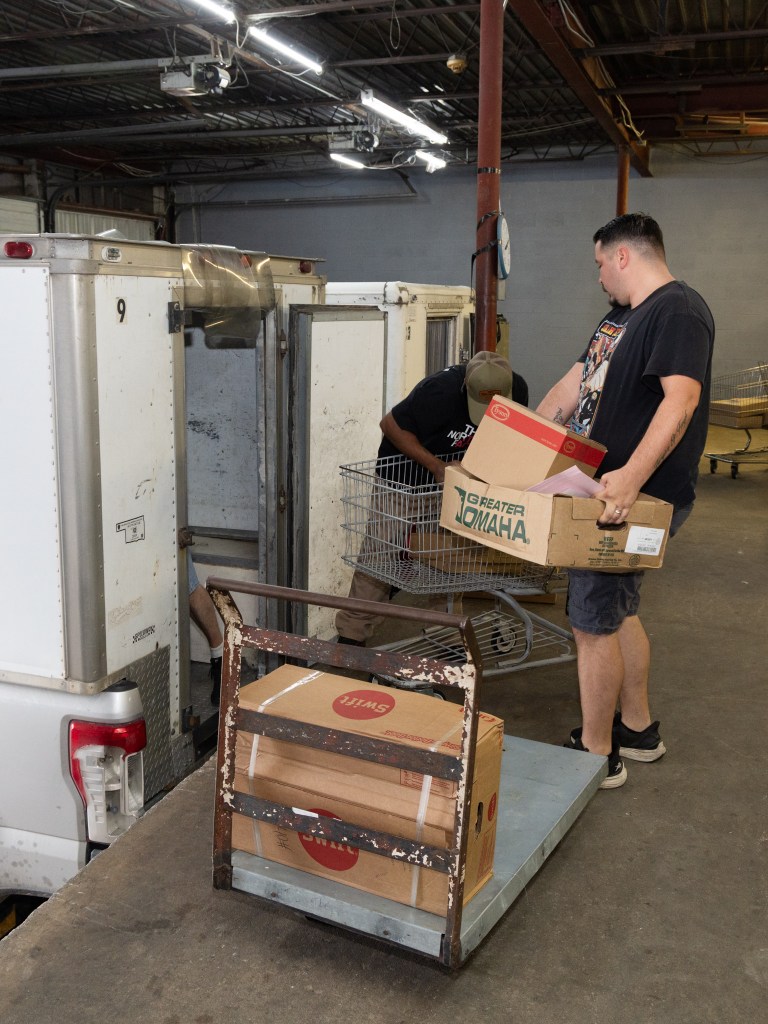
A small crew of three start their day by transferring boxes of frozen beef from shopping carts into a refrigerated truck that will travel across the city making deliveries to restaurants, churches and food trucks that rely on a service mostly conducted by word of mouth.
It’s a model that has worked since Jack Schlanger and Abe Fedman launched the business in 1935 at the corner of South St. Louis Avenue and East 7th Street. By the time the world was at war, the business was consolidated from a retail grocery store to a wholesale meat supply housed in a 20,000-square-foot building a block east at 1537 E. 7th St., where it still operates today.
For decades Tulsa Beef’s focus was solely restaurants, retail grocery stores and walk-in wholesale customers. Tulsa Beef bought whole sides of beef, broke them down into primal cuts and ground the trim until the late 1980s, when ownership changed and the focus shifted in an ever-changing market.
Workers stopped processing carcass cattle and focused on boxed beef, chicken and pork as well as a multitude of new provisions, including French fries, appetizers and fryer oil.
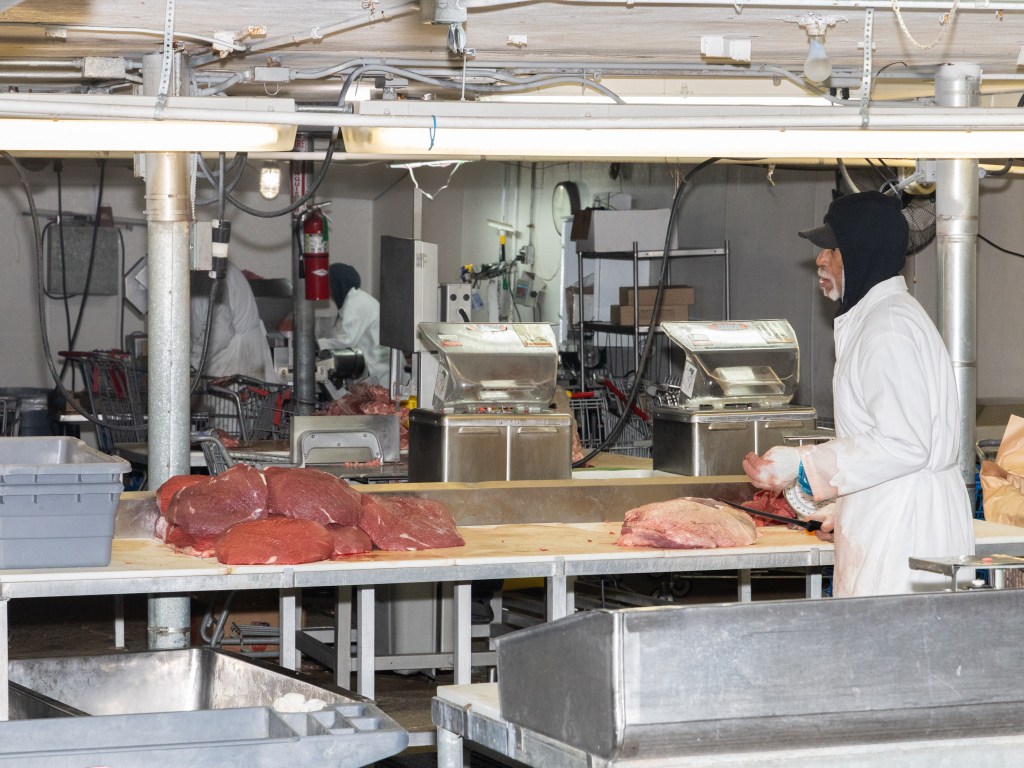
In the average year, Tulsa Beef delivers about 12 million pounds of beef. General manager Josh Barbee has watched the business change over his nearly 30 years with Tulsa Beef.
“When I first started, there were three of these places like this in Tulsa,” Barbee said. “There was Phoenix Meats, and then you had Hodges across town, and then there was Tulsa Beef, and now there’s just us owned by Larry Compston.”
Over the years local sourcing became rarer. It only continues at Tulsa Beef for specialities like wagyu beef from ranches out of Chelsea and Pryor. The company sources a majority of meat from major packers like JBS, National Beef and Greater Omaha Beef. Barbee said much of that beef originates in Oklahoma and across the region before being processed at one of the major packers.
“We don’t sell a bottom-tier product,” Barbee said. “That stuff’s out there. You can get injected stuff. You can get stuff that’s got other stuff in it to make it cheaper, but we just don’t do that. We put out the normal chuck and ground meat mixed with fresh steak trimmings daily.”

Barbee said Tulsa Beef can keep prices reasonable because they mostly do wholesale.
“We don’t put very much on top of it because we’re already doing the business, and so we try to offer the public a break where you can pay $5 for ground beef instead of $6.99 or whatever for good ground beef,” Barbee said.
The customer base expanded during the COVID-19 pandemic, when Tulsa Beef opened its doors for the first time to local customers. That business has stayed consistent as has the wholesale business, all without a jingle on a radio commercial or TV spots on local affiliates.
“We do quite a bit of business still really not advertising, just word of mouth and a little bit of Facebook stuff. That’s about it,” Barbee said.
What it all comes down to for Barbee and the rest of his employees is the mission to continue providing high-quality beef in an ever-changing industry.
“We could put out the cheapest stuff, but we don’t,” Barbee said. “The quality hasn’t changed since I started here. ‘Don’t send anything out that you wouldn’t want to feed your family’ is something we live by.”
News decisions at the Tulsa Flyer are made independently of our board members and financial supporters. Read more about our editorial independence policy here.