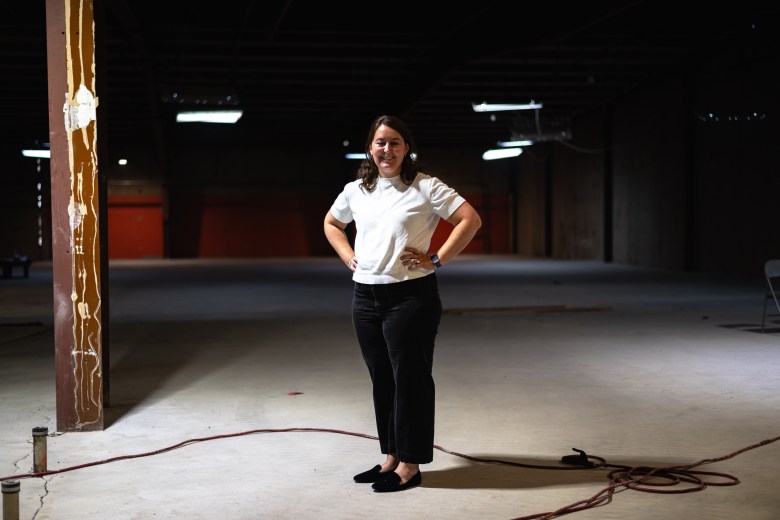
Next fall, small businesses and entrepreneurs will have a place to call home with the expected opening of east Tulsa’s business center. Now, the organization behind the project is hoping to bridge its funding gap.
Eastside Rise broke ground on the center, which spans nearly 15,000 square feet, in mid-October. The organization is asking the city to put $1.5 million of its surplus economic development dollars toward the project. City Council will vote Nov. 18 on where to send the funds.
“We’re excited at the possibility of further partnership with the City of Tulsa to turn this project into reality,” Luisa Krug, executive director of Eastside Rise, said in an email statement. “If approved, these additional funds will support the second phase of construction, expected to begin in early 2027. This will allow for the completion of the project, with the goal of opening in Fall 2027.”
Originally slated to open in late 2024, the center, now called Bank of Oklahoma Eastside Center for Entrepreneurship, will be a hub and launchpad to help address the struggles of east Tulsa business owners. They anticipate serving at least 250 entrepreneurs in the first year.
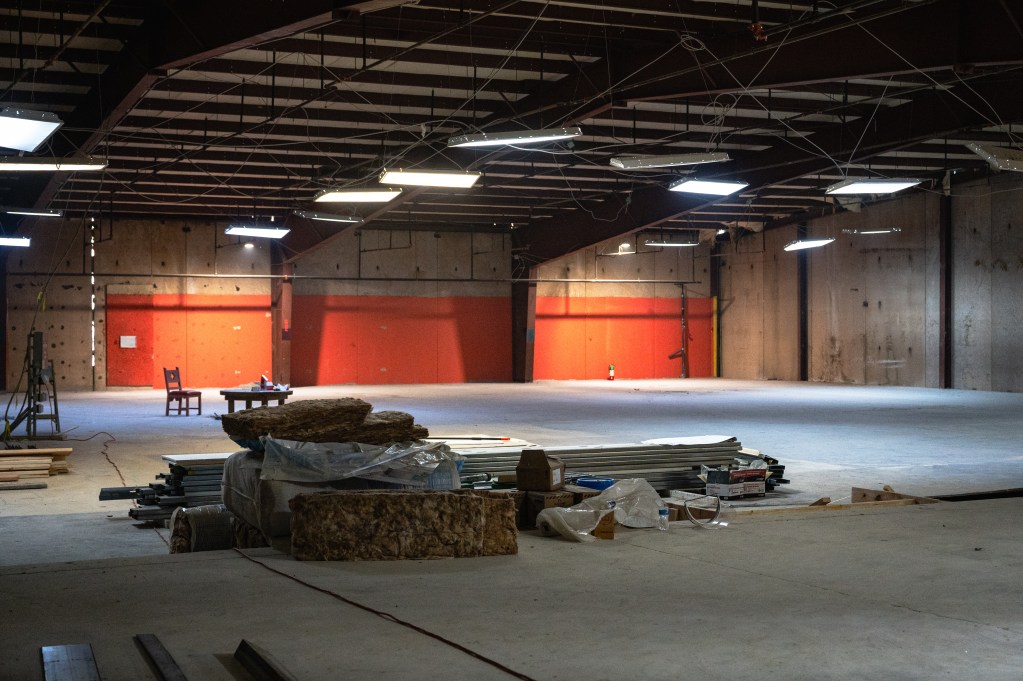
The future entrepreneurship center sits on the right side of Plaza Santa Cecilia, a Hispanic market at 2160 S. Garnett Road in the heart of the 21st and Garnett business corridor.
Plaza Santa Cecilia already features a handful of new things on its property, from a food truck park to one of three new Manna drone delivery bases on the east side. Small business owners believe the new additions are good for business, while some are still wondering what the latest project will entail for them.
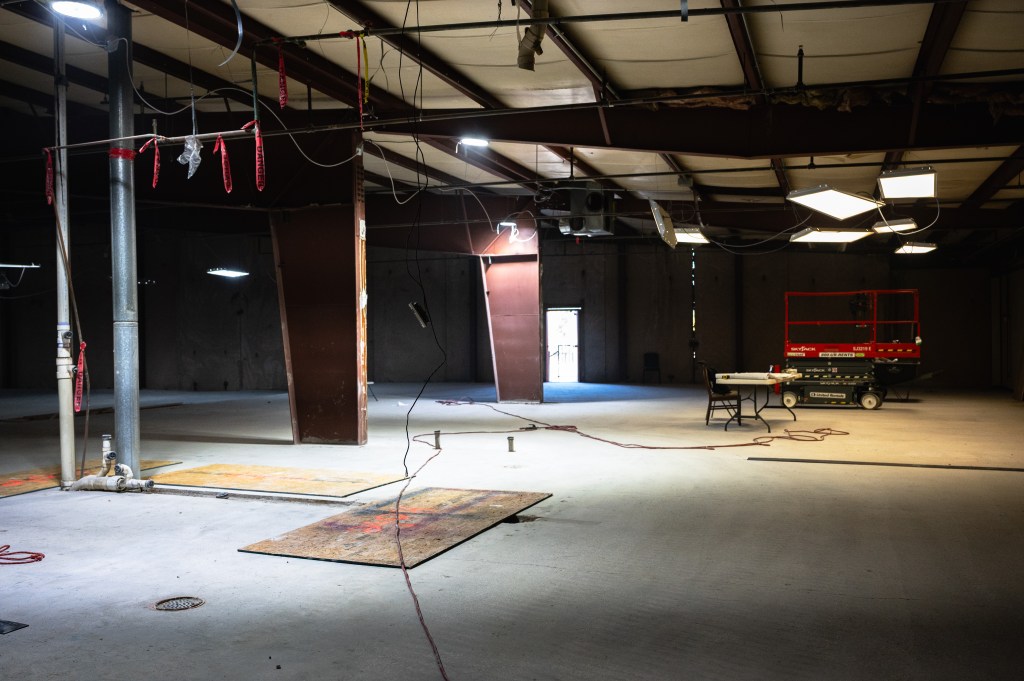
Phase one of construction is underway with improvements to the roof, HVAC system and utilities, Krug said. It is expected to be completed in January.
“The intention was always for this phase to be essentially making it like a shell,” she said. “So you’ll see the actual tenant improvement in phase two.”
The organization is working on funding commitments for the second phase, which includes building out interior walls, rooms and offices. Construction is anticipated to start in February and take an anticipated six to eight months to complete.
“We anticipate there will be a little bit of a (funding) gap because there’s always like procurement and all of that stuff, but we do have phase two committed,” she said.
Overall, the project costs approximately $5 million, split into the acquisition and the two construction phases, Krug told the Flyer.
The City of Tulsa, Tulsa County and George Kaiser Family Foundation contributed $2.52 million to the project. These funds were used for acquisition and renovation. Eastside Rise has added additional funders including BOK, Coretz Family Foundation, Hardesty Foundation and a private individual donor. Bank of Oklahoma invested $500,000 to help with the second phase of construction.
The City of Tulsa contributed $1 million of COVID-19 relief funds to the project, which means Eastside Rise must use the funds before the end of 2026 to meet federal deadlines. This portion will also be used for phase one renovations, and “will be fully expended before any required deadlines,” Krug said.
“Eastside Business Center,” sometimes referred to as the “21st Street Market Incubator” in city documents, was always a placeholder name, Krug said.
“It didn’t sound visionary, like that aspiration feeling that we wanted to evoke and what it means to be an entrepreneur in east Tulsa,” Krug said. “So we thought that was, you know, ‘center for entrepreneurship.’ While it is a mouthful, it really highlighted the growth that we want to see in our community and our small businesses and our entrepreneurs.”
Businesses inside the plaza will remain open throughout the construction period.
View from the inside
Isidra Gonzalez, owner of Durango Western Wear, sits at the main entrance of Plaza Santa Cecilia. Her business has been located at the plaza for seven years.
“In reality, I don’t know much,” she said. “I heard it’s going to be an incubator. That’s all. They haven’t passed out more information.”
She believes there needs to be more attention to the inside of the plaza to bring more customers. Her business has suffered a decrease in about 60% in sales since sightings of Immigration and Custom Enforcement agents across town, she said.
“I believe I’m back to how I was in my first six months of starting my business,” she said.
Jewelry Cruz, owned by Annie Cruz, is located near the active construction site. Like Gonzalez, Cruz doesn’t know much about the project, but she knows it’s meant to be a business incubator.
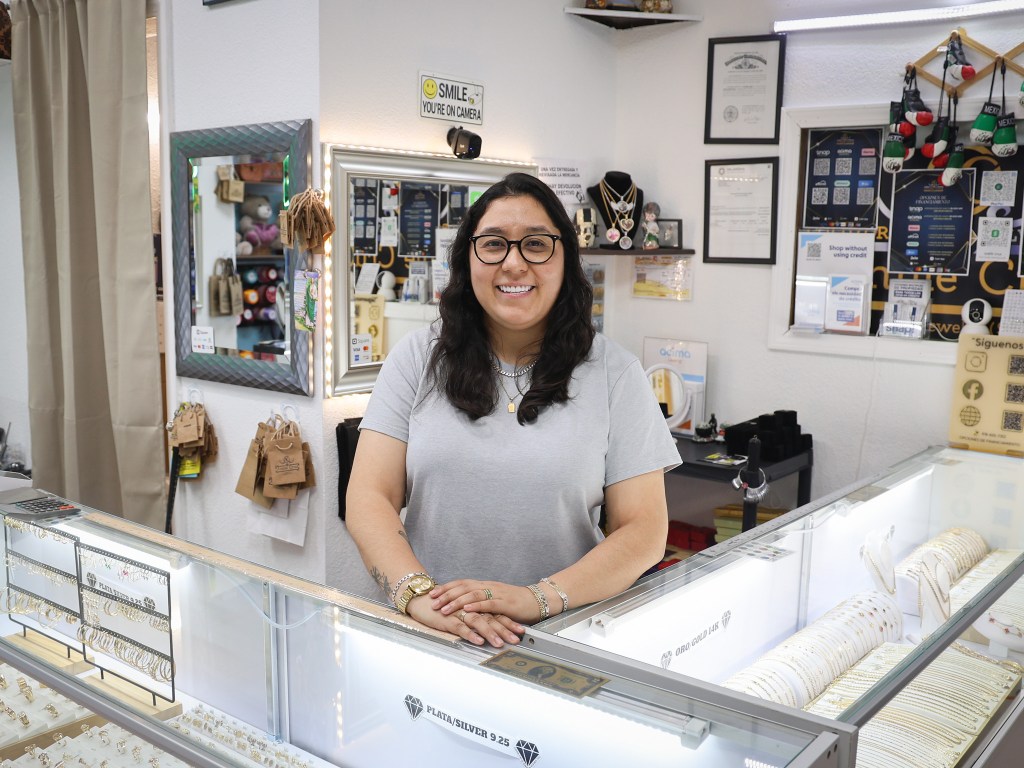
“That’s what it’s going to be all about, to help the small Hispanic businesses, or at least that’s my understanding,” she said.
Cruz believes the changes to the property help bring in more people to the area. The new incubator will bring new life to the plaza, from making it nicer to more illuminated, she said.
Eastside Rise will soon share an interest survey for small business owners to help determine program planning. Outreach will include learning about what people are most interested in, creating a focus group and more social engagement about the project.
“Even if you’re not going to be a person who comes and rents an office ‘cause you aren’t an entrepreneur today, I still think it’s really important to have investment in your own community,” Krug said. “I think it builds pride, it builds just like that feeling of this is an important place to someone.”
This article was produced as part of a partnership between the Tulsa Flyer and La Semana, a Tulsa-based bilingual Spanish-English newspaper serving Latino communities in Oklahoma.
Disclosure: Eastside Rise is funded by the George Kaiser Family Foundation. The George Kaiser Family Foundation has also provided funding for the Tulsa Flyer. News decisions at the Tulsa Flyer are made independently of our board members and financial supporters. Read more about our editorial independence policy here.