


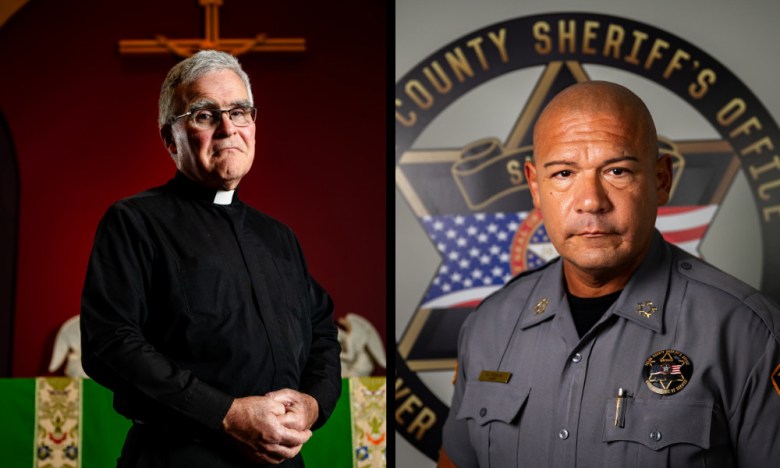
Sheriff Vic Regalado and Father Bryan Brooks, pastor at the Church of Saint Benedict, are two men of influence in Tulsa County. They live different lives — one enveloped in faith, the other elected to lead a law enforcement agency of more than 600. Both were brought together by the death penalty.
The men believe it is their duty to support families of victims but land on different sides of the aisle when it comes to executions. Regalado is in support of the death penalty, saying it is part of the criminal justice system and brings closure to the families of murder victims.
“You have to look at it from the victim’s standpoint,” Regalado said. “If somebody murdered my daughter, death wouldn’t be enough for me. I was hoping this closure would be enough for them and that they would be able to move on with their lives.”
Brooks is against the death penalty, consistent with the Catholic teaching that capital punishment is inadmissible in all cases. It comes from the values of right to life and human dignity.
Based out of Broken Arrow, Brooks has been on the prison grounds for more than 100 executions and participated as the spiritual adviser for four inmates during their executions at the Oklahoma State Penitentiary in McAlester.
“In spite of no matter how horrific the crime, we (the Catholic church) believe each person has that God-given dignity, and the state doesn’t have the right to take that dignity away,” Brooks said. “By carrying out executions, it is undermining the dignity of a human person. It becomes more like an act of revenge, as opposed to an act of protecting society.”
‘We pray for them by name’
The most recent Oklahoma executions were of Raymond Eugene Johnson May 14 and Carlos Cuesta-Rodriguez Aug. 13.
Regalado was a witness for Johnson’s execution. He was a Tulsa police detective in 2007 when Johnson killed his ex-girlfriend, Brooke Whitaker, and her 7-month-old baby, Kya, by striking Whitaker in the head repeatedly and setting both on fire. Cuesta-Rodriguez was convicted in the 2003 Oklahoma City shooting death of 43-year-old Olimpia Fisher.
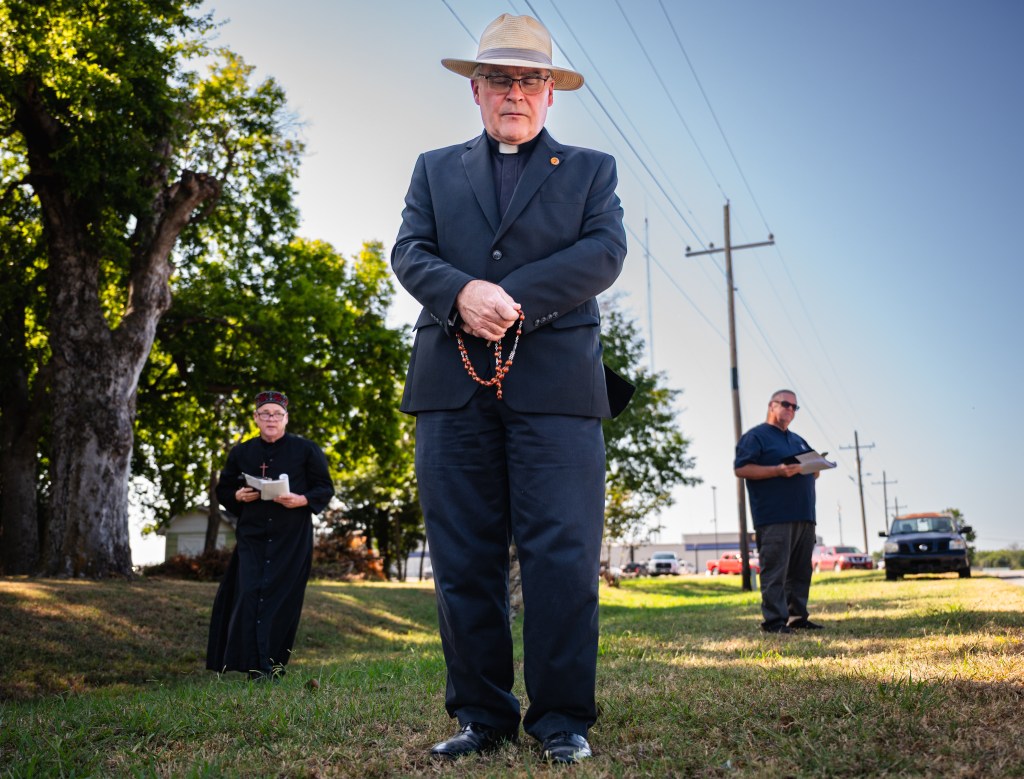
Brooks was present outside the prison for both executions. Before the 1.5-hour drive to McAlester, he began each day in silent prayer, naming the victims to preserve their humanity.
“It was a challenge for me to bring the light of Christ into that darkness, knowing the violence that was committed,” Brooks said. “God does not wish the sinner to die but that he wishes for the sinner to be converted and live.”
The execution process typically starts at 10 a.m., and witnesses are asked to arrive up to three hours early.
Regalado spent nine years as a homicide detective with the Tulsa Police Department and was the lead detective for Johnson’s case. On execution day, he arrived in McAlester at 8 a.m. The cops who worked on the case spent two hours in a small room reconnecting with the victim’s family.
“This one is probably in the top three worst cases I’ve had to investigate because of the sheer brutality of it,” Regalado said. “Not only that, but the carefree attitude he had in regards to talking about the murder when he confessed. This was an individual who did not care about these people. It was more about power, control, and when he lost it, he murdered them.”
About 30 minutes before Johnson’s execution, witnesses were led into a narrow, frigid witness room, where they remained in solemn silence. Later, Regalado said he was thinking of the victims’ family during those moments. Whitaker’s mother died before she could see justice for her daughter’s killer, Regalado said.
“It’s devastating, (Brooke’s) mother ended up dying before she could see justice handed out. With what feels like an everlasting appeal system, the family has to show up at these things, they have to be engaged,” he said. “With each engagement they’re having to relive what happened again, so it’s always casting a shadow on the family. That includes Christmases and birthdays where their loved ones will never be there. The reason why is they were brutally murdered.”
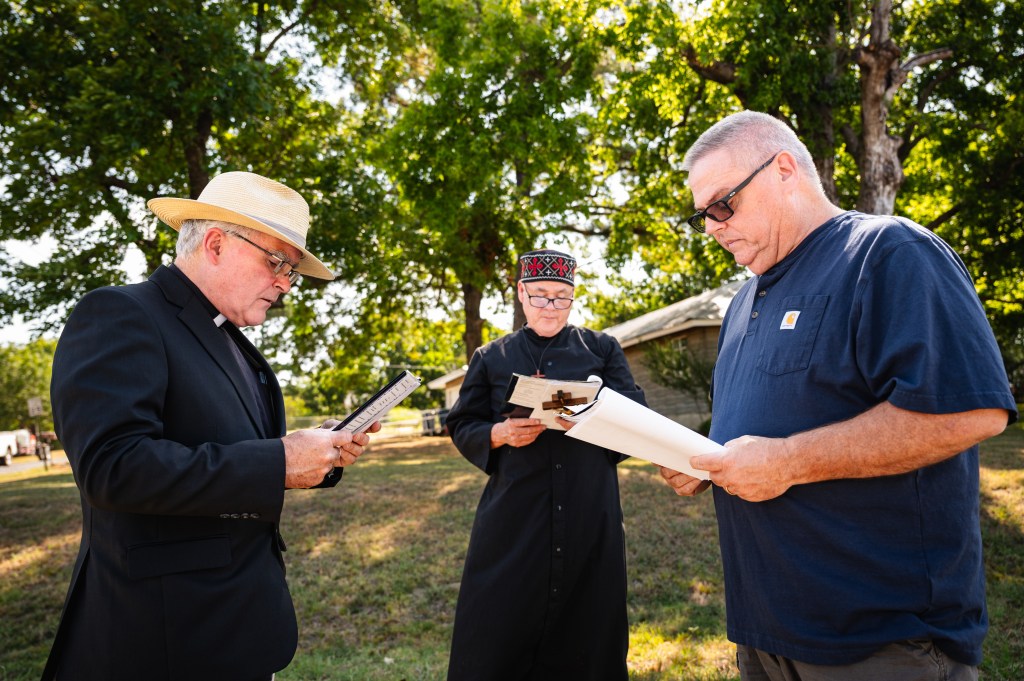
From left: Rev. Bryan Brooks, Danny Bishop and Stephen Dunbar pray during the Aug. 13, 2026, execution of Carlos Cuesta-Rodriguez at the Oklahoma State Penitentiary. Credit: Milo Gladstein / Tulsa Flyer 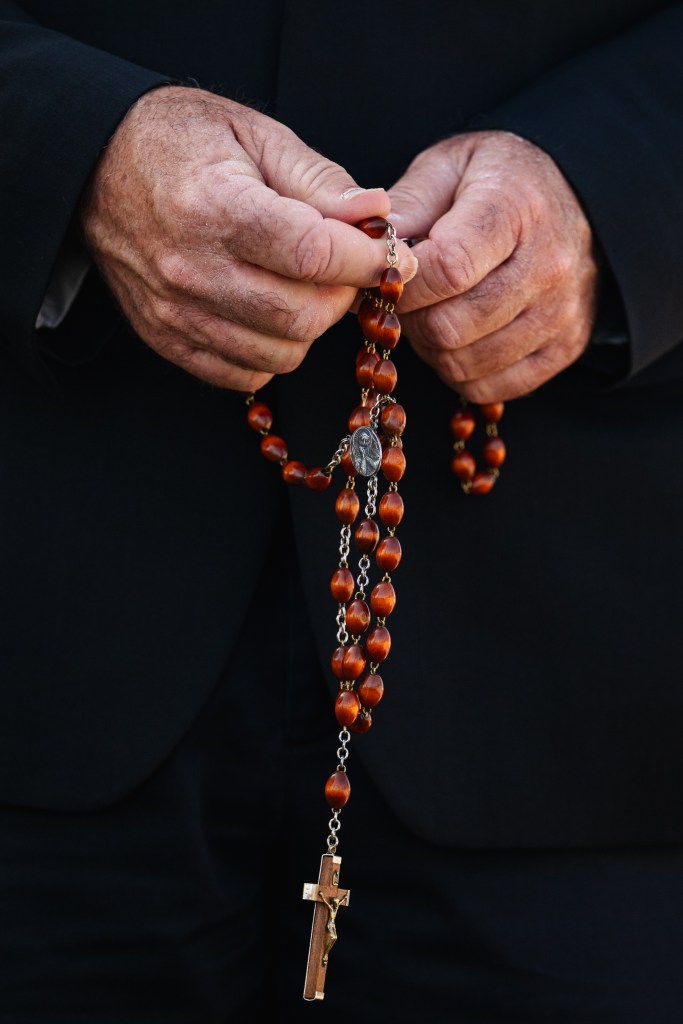
Rev. Bryan Brooks holds a rosary and leads the prayer vigil during the execution of Carlos Cuesta-Rodriguez at the Oklahoma State Penitentiary on Aug. 13, 2026. Credit: Milo Gladstein / Tulsa Flyer 
Rev. Bryan Brooks leads the prayer vigil during the Aug. 13, 2026, execution of Carlos Cuesta-Rodriguez at the Oklahoma State Penitentiary. “We pray that their souls will be at rest and received by the lord,” Brooks said. Credit: Milo Gladstein / Tulsa Flyer 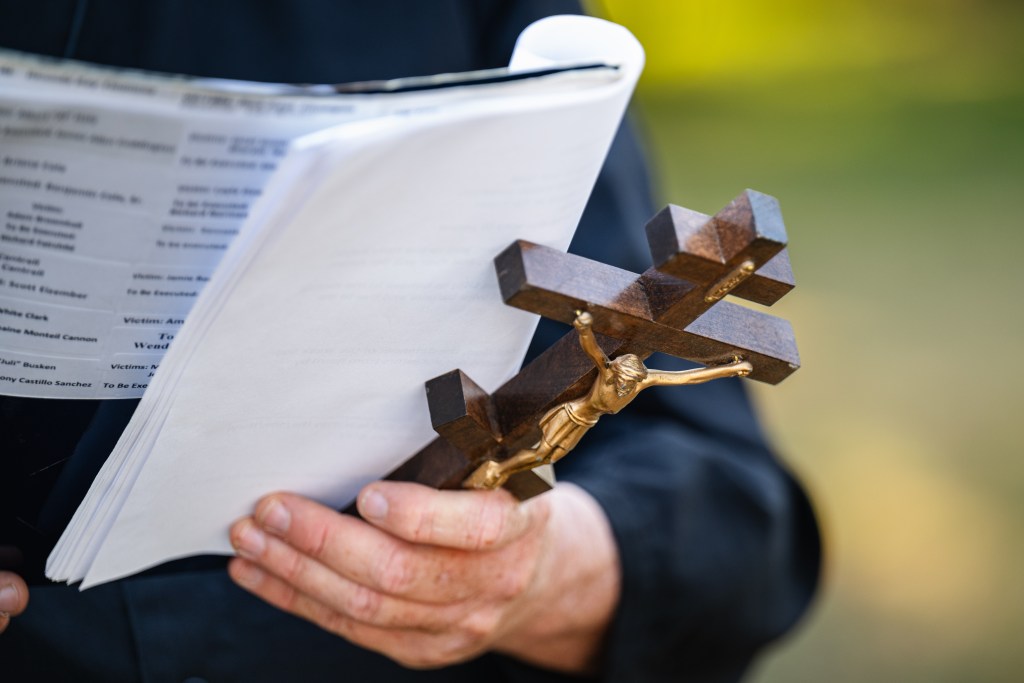
Danny Bishop prays during the Aug. 13, 2026, execution of Carlos Cuesta-Rodriguez at the Oklahoma State Penitentiary in McAlester. Credit: Milo Gladstein / Tulsa Flyer 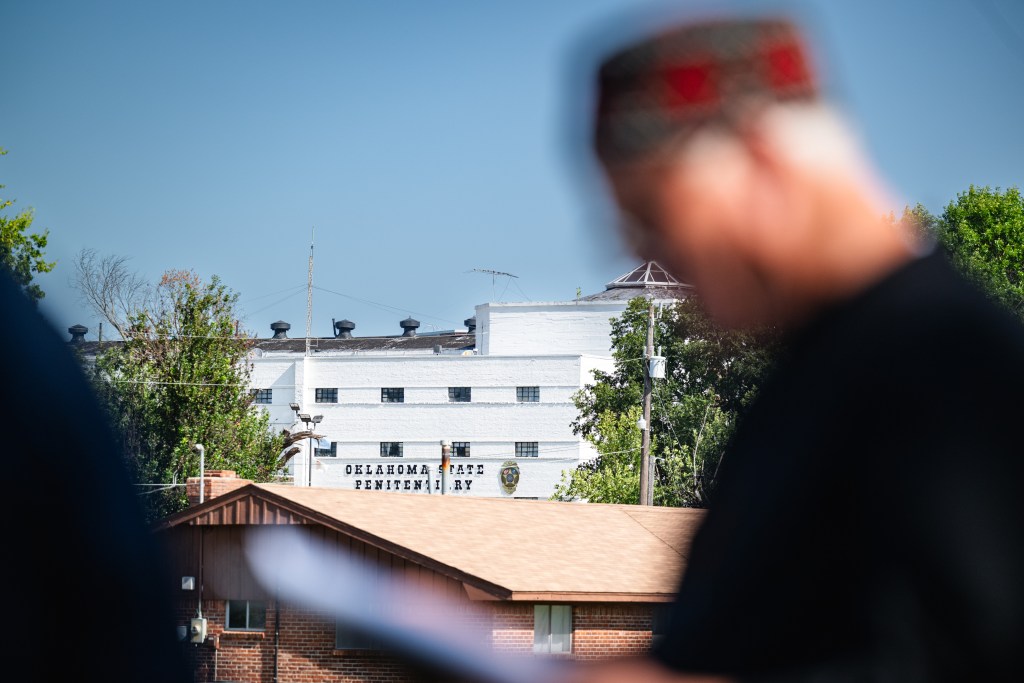
Danny Bishop prays during the Aug. 13, 2026, execution of Carlos Cuesta-Rodriguez at the Oklahoma State Penitentiary. Credit: Milo Gladstein / Tulsa Flyer 
Rev. Bryan Brooks holds a rosary and leads the prayer vigil during the Aug. 13, 2026, execution of Carlos Cuesta-Rodriguez at the Oklahoma State Penitentiary. Credit: Milo Gladstein / Tulsa Flyer 
Rev. Bryan Brooks leads the prayer vigil during the Aug. 13, 2026, execution of Carlos Cuesta-Rodriguez at the Oklahoma State Penitentiary. Credit: Milo Gladstein / Tulsa Flyer 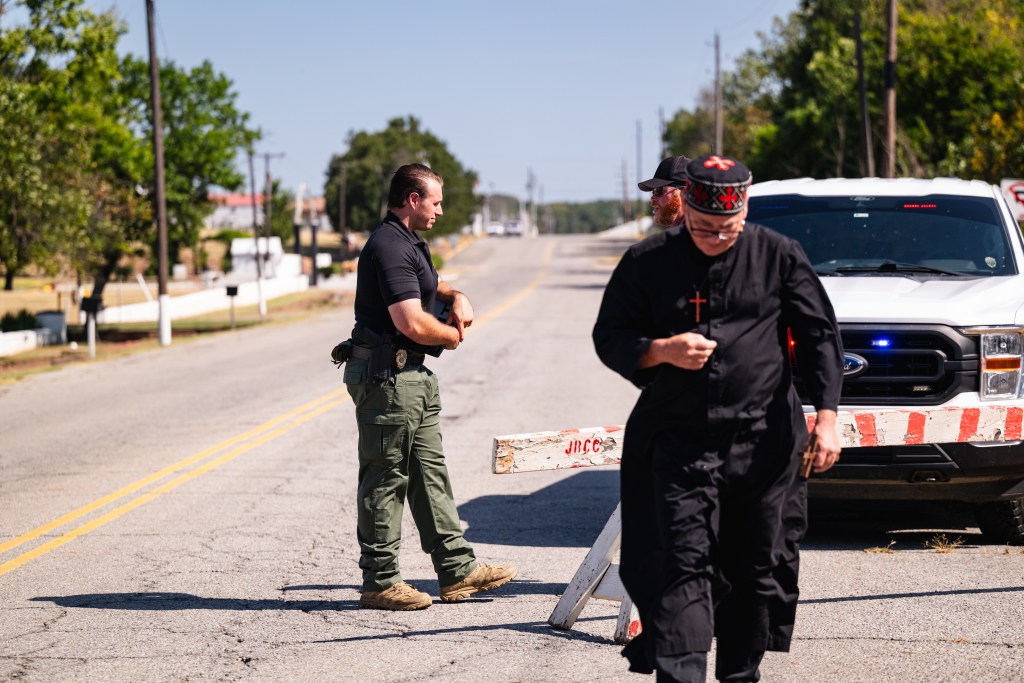
Danny Bishop thanks police officers after praying during the Aug. 13, 2026, execution of Carlos Cuesta-Rodriguez at the Oklahoma State Penitentiary. Credit: Milo Gladstein / Tulsa Flyer
At the same time, Brooks began the prayer vigil outside the prison, as the mood grew more tense.
“The prayer vigil will begin by praying towards the office of the dead,” Brooks said. “We pray the Psalms and the canticles from the Scriptures for them and for the families. We pray for them by name.”
As Johnson’s execution began, the blinds covering a window in the witness box were raised to show him strapped to a cross-shaped gurney bed, covered with a sheet to his upper chest. As the death warrant was read, he mouthed “I love you” to one of his witnesses, who returned the sentiment. Each of the three drugs were administered.
The execution took 12 minutes.
Outside the prison, Brooks led the next prayer.
“I am praying specifically for the person who is being executed for his repentance,” Brooks said “If he has not done so already, that he acknowledges his guilt and sin and asks for forgiveness.”
Then a silence fell over the men. One inside and one outside clutching a rosary.
‘No joy in watching somebody die’
On the day of Cuesta-Rodriguez’s execution, it marked the first time in 16 years that three states exercised capital punishment. Other state-sponsored executions that day were in Tennessee and Alabama.
Since capital punishment resumed nationally in 1976 after being reaffirmed by the U.S. Supreme Court, Oklahoma has executed 132 people. All were convicted of first-degree murder and died by lethal injection. Oklahoma has the highest rate of executions per capita in the U.S., according to the Death Penalty Information Center. Currently, 24 inmates are on death row in Oklahoma, but none have execution dates scheduled.
The recent executions stand in contrast to the attention of those carried through after Oklahoma reinstated the death penalty after the moratorium. The first was Charles Troy Coleman on Sept. 10, 1990, who was one of 115 on death row.
His execution attracted at least 90 journalists with about a dozen allowed in as witnesses. Protesters held vigils across the state, including at least 100 forming the word “no”on the south steps of the state capitol. Several pro-death penalty demonstrators turned out for the vigils.
At the most recent execution of Cuesta-Rodriguez, three people attended the prayer vigil and a handful of media witnessed it.
Johnson’s execution was Regalado’s first as a witness.
“It’s something I don’t really care to see again unless I had a case, I would go and support the family,” Regalado said. “There is no joy in watching somebody die, even if they deserve it, and he certainly did. You’re there for a job and to support the family.”
Brooks plans to continue being present to pray at executions in McAlester. He said these years have given him a “deeper understanding” of what the victims and their families experience.
“They don’t just get over it,” Brooks said. “Sometimes you hear the word closure, we close on a house, not a death, especially not a violent death. That’s such a unique grief, often accompanied with a great deal of anger.”
News decisions at the Tulsa Flyer are made independently of our board members and financial supporters. Read more about our editorial independence policy here.
