


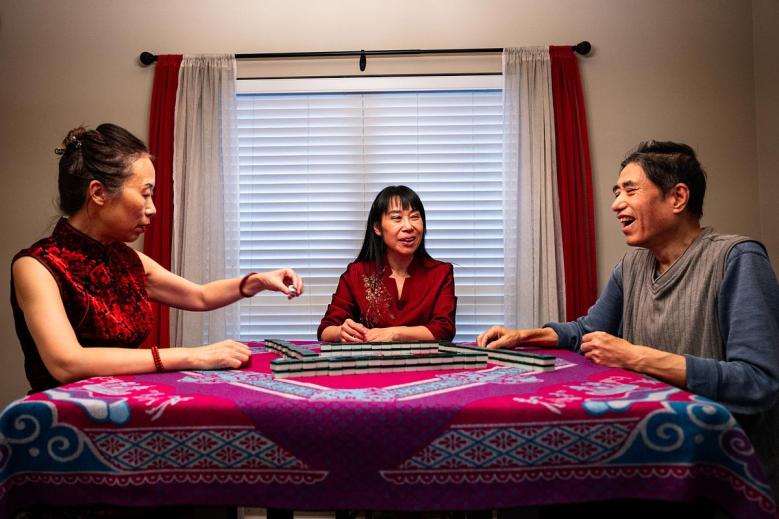
Dr. Xuemei Zhao arrived in America with her family in 1995. Six years later, after getting her green card, she brought her Chinese mahjong set.
But she hadn’t used it since 2001 — until our early April interview. Zhao said she kept it around because it had cultural meaning to her.
“It’s good to keep it with us, just in case,” Zhao told me at her kitchen table in her east Tulsa home near Broken Arrow. “But once we are here, we never find people. We never find the time.”
Mahjong is a tiled, pattern recognition game that originated in China in the mid-1800s and has since become a global phenomenon. Now, there are over 40 versions of it, and it’s starting to catch on in Tulsa. Even as she’s watched mahjong grow in popularity, Zhao’s jade green tiles have stayed tucked away.
“I feel like I already forgot about it,” she said. “But then, now, they started showing interest, so it makes me think back. Yeah, that’s my tradition, and that’s the culture.”
Mahjong through the years
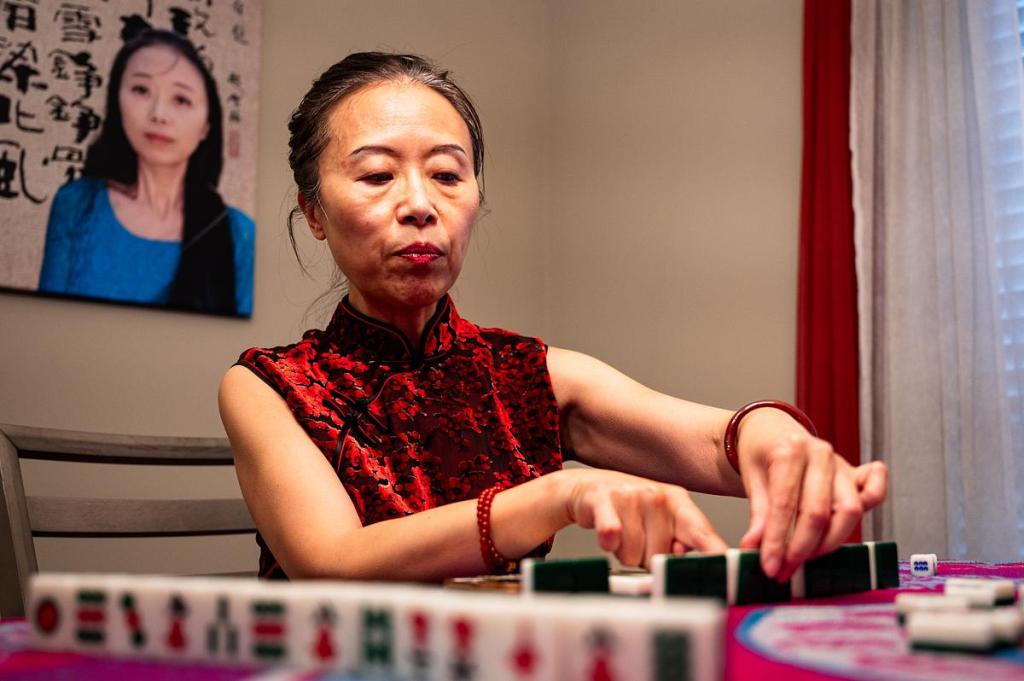
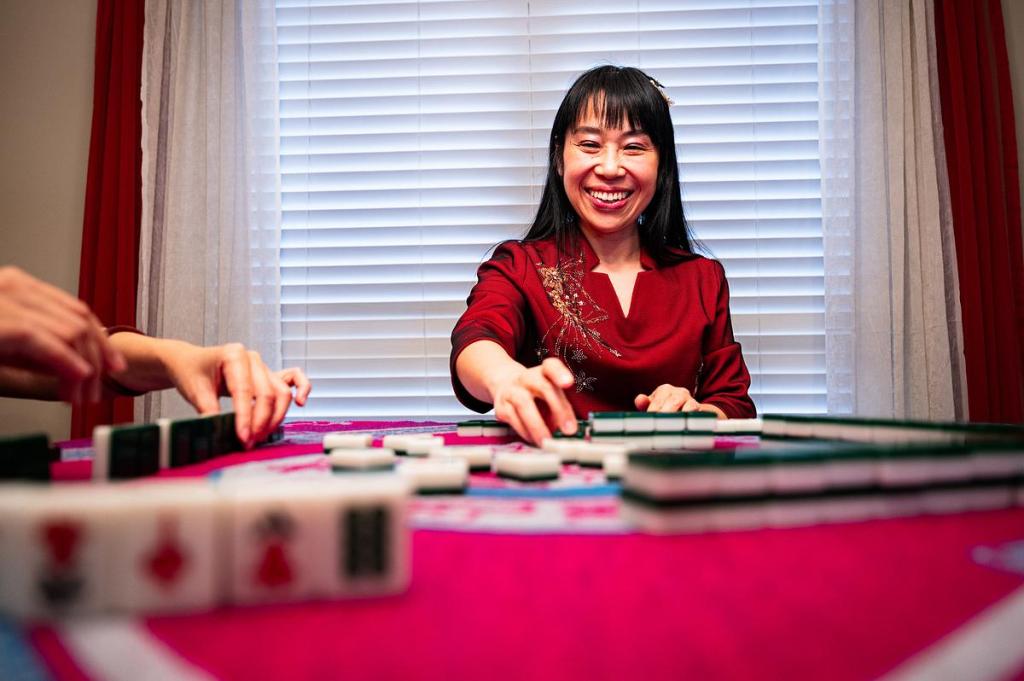
Chinese mahjong is learned in the family. Zhao, 60, and her friend, Alpha Zhang, 49, remember playing during the holidays as children.
A sheet of paper (they can’t find it now) held generations of stories, rules and larger meanings behind the game — something that’s slowly faded.
“The deeper culture thing, I think, is already lost — even for Chinese people,” Zhao said, reflecting on her childhood games with her mom and sister.
Chinese Hanzi characters on the tiles can represent everything from numbers and wind directions to specific themes, like dragons and wealth. Rules can also vary for different suits.
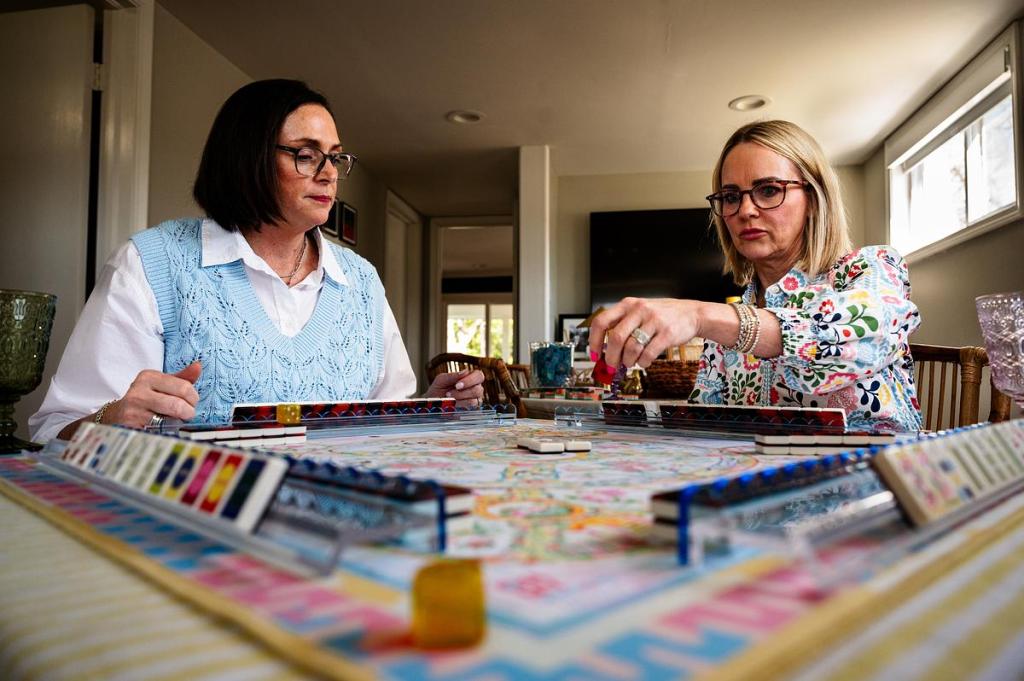
American mahjong emerged much later in the 1920s and was standardized by Jewish women around 15 years after. While it also uses tiles and has similar gameplay, your path to victory looks different.
Rather than building your own, the American version relies on a card that sets the winning patterns and changes each year. A whole culture has grown from it, blending histories and strategy.
“This is a culture from one country with 5,000 years of history to a country with 200 years so we cannot really teach people that deep meaning,” Zhang said of the differences between Chinese and American mahjong.
A surge in Tulsa
With a quick search online, you can find several American mahjong groups in Tulsa for lessons or open play.
Candace Nees and Nicolle Warren are longtime friends and enthusiasts teaching the game in the city. They launched Mahj918 last year, hoping to create space for people to come together, get off their phones and have some “friendly competition.”
Their logo features a scissor-tailed flycatcher, the state bird, and nods to the tile for number one in the Chinese bamboo set, which is also a bird. Lessons cost $65 each, and their open play events often have waitlists.
“We love our community, and we love that we are an inclusive group,” Warren said. “We have a wide range of people come.”
Nees says they have a mix of tiles, mats and racks to appeal to everyone. The Chinese game doesn’t use racks — another difference between the two cultures. Many of the American tiles, though, still have the traditional Hanzi characters on them.
Sets range in price, look and feel, creating somewhat of a microeconomy of its own. You can find “Glitterville Mahjong Tiles” for $500, island-themed tiles for $425 and other vibrantly-colored sets.

The past meets the present
As Zhang saw mahjong clubs pop up around Oklahoma, she would share them with friends in the Chinese community. But she was surprised that most of the people weren’t Asian; they were white adults.
It also made sense because most Chinese people keep mahjong between their family and friends so a Chinese mahjong club of strangers or acquaintances wouldn’t be a cultural concept.
Still, both Zhao and Zhang are proud to see a version of their native game in Tulsa.
“A lot of people said that it is a cultural appropriation thing, right? It’s like our culture is stolen by other people. But I personally perceive it as culture sharing,” Zhang said. She said they’ll take any chance to introduce Chinese culture to a bigger audience.
Zhao agrees. She says mahjong deserves more influence, and she might even start a private group in hopes of opening people’s minds to “know this beautiful art form of game.”
Now, as old and new forms of mahjong are played at tables around Tulsa, Zhang is nearly brought to tears. For so long, she and Zhao have been trying to hold onto and spread Chinese culture here.
“It’s encouraging to see other people interested, which we gradually already forgot, so I think it encouraged me to carry on. I think that’s meaningful,” Zhao said.
News decisions at the Tulsa Flyer are made independently of our board members and financial supporters. Read more about our editorial independence policy here.