




From Bartlesville to north Tulsa, local political figures, community advocates, spiritual leaders, family, friends and admirers gathered last weekend to remember the life of Viola Ford Fletcher.
Together, they lifted their voices with speeches, songs, prayers and musical selections in honor of Mother Fletcher, the oldest known survivor of the 1921 Tulsa Race Massacre. She died Nov. 24 at 111 years old.
Between a two-hour memorial in Bartlesville and a three-hour celebration in Greenwood, more than two dozen speakers rose to bear witness to Fletcher’s life.
Strength and dignity
During the celebration of life ceremony Saturday evening at the Greenwood Cultural Center, state Sen. Regina Goodwin, D-Tulsa, lauded Fletcher for the calm manner in which she helped lead the battle for justice and reparations for massacre victims and their descendants.
“She did not have to say a lot,” Goodwin said. “While everyone around her was losing it, she kept a grace and calm about her. And that centered us and kept us moving forward.”
Goodwin served as emcee at both ceremonies. As a close friend of and advocate for the Fletcher family, she has pushed for financial and moral support for them.
“She was a towering tree,” Tulsa City Councilor Vanessa Hall-Harper said of Fletcher. “One whose roots ran deep into the soul of justice.”
Hall-Harper added that while she had not known her deeply, “every time we met the same thing came through: her presence, her quiet strength, her dignity.”
During the midday service in Bartlesville to honor Fletcher, Tulsa Mayor Monroe Nichols praised her perseverance.
“She knew that fight would be riddled with difficulty and setbacks,” he said. “But that did not stop her from speaking out for the need for justice, knowing that it might not be something that she herself would ever see.”
Passing the torch
Many of the speakers vowed to keep Fletcher’s — and other massacre survivors’ — legacies alive by carrying the fight for reparations forward.
Attorney Damario Solomon-Simmons led the pledge. He said her journey reminded him of Maya Angelou’s poem “Still I Rise.”
“She not only rose but lifted the rest of us with her. And we will keep the mission going,” Solomon-Simmons said.
Nichols credited Fletcher as one of the inspirations for his Road To Repair initiative, a $105 million package he introduced in May designed to address disparities brought about by the massacre.
“She represented perseverance and resilience,” north Tulsa community advocate Joyce Smith-Wiliams said in an interview with The Oklahoma Eagle. “Those are traits we can all use as we continue to fight for justice.”
Artistic performances, woven between tributes, further lifted the style and spirit of the celebration. A video featured highlights of Fletcher’s life, including her 2022 sojourn to Ghana and scenes from her 2021 Congressional appearance.
Impresario and singer Jerica Wortham read a poem by nationally known social justice advocate Mustafa Santiago Ali. Tulsa singer Tony Mason performed a medley of R&B favorites, including a soulful rendition of Whitney Houston’s “A Song for You.” Shondalla Calder, a Texas musician who goes by the name of Dalla, gave a moving violin performance.
From survivor to historic symbol
In the past few years, members of an older generation of Tulsans came to view Fletcher as the face of the unresolved trauma of the bloody events in May 1921.
She was 7 at the time and lived with her family in Greenwood when the massacre occurred. When she was 106, she began appearing regularly at public events in Tulsa and nationally in support of reparations.
Her demeanor was always warm and her message consistent: The victims and descendants of the massacre had suffered inhumane injustices and deserved compensation.
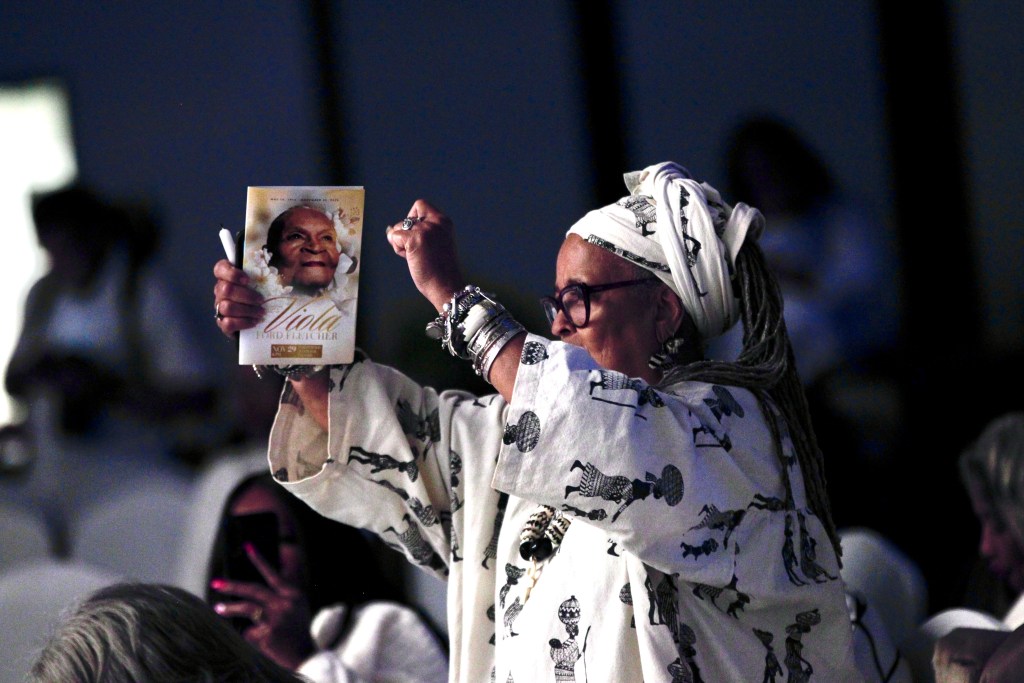
Several flourishes in Fletcher’s homegoing further underlined her regal status. Following the funeral in Bartlesville, a white carriage drawn by a horse and carrying her white casket led the procession to White Rose Cemetery, where she was buried.
“We looked to her for wisdom and she gave us wisdom,” Tulsa musician and KBOB radio station owner Bobby Eaton told The Eagle. “She was our queen. We feel her loss.”
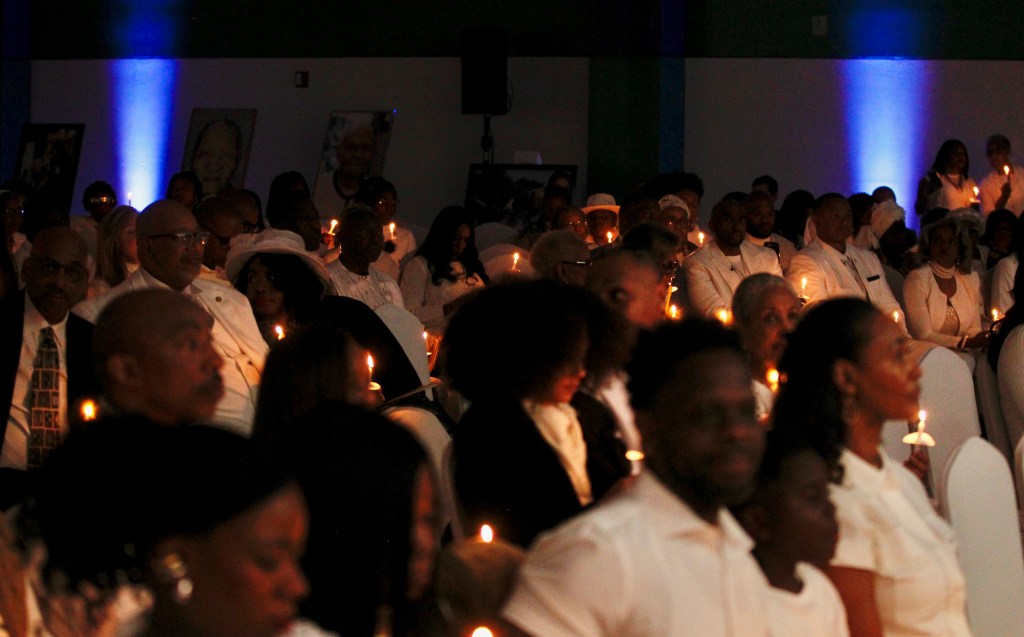
The evening celebration of life was flush with pageantry as guests were encouraged to wear white. Many came in flowing white dresses, white suits and white hats. The stage was decked with dozens of white chrysanthemums and lilies. The ceremony started with guests holding white candles for a prayer vigil.
“Why are we showing up in white?” Goodwin asked rhetorically from the stage. “It’s a reflection of the fact that even when faced with darkness, we shine.”
Living with a purpose
In 2020, following Fletcher’s 106th birthday, Solomon-Simmons began representing the survivors in their push for compensation. Since then, he and his wife Mia created the Justice For Greenwood foundation to keep the survivors and descendants’ cause in the public eye.
Two events pirouetted Fletcher to national prominence. One was her oft-quoted public testimony in 2021 to a subcommittee of the Judiciary Committee of the U.S. House of Representatives. She used it to echo her plea for justice for race massacre survivors and descendants.
The other was the 2023 publication of the book, “Don’t Let Them Bury My Story: The Oldest Survivor of the Tulsa Race Massacre,” which Fletcher co-authored with her grandson, Ike Howard.
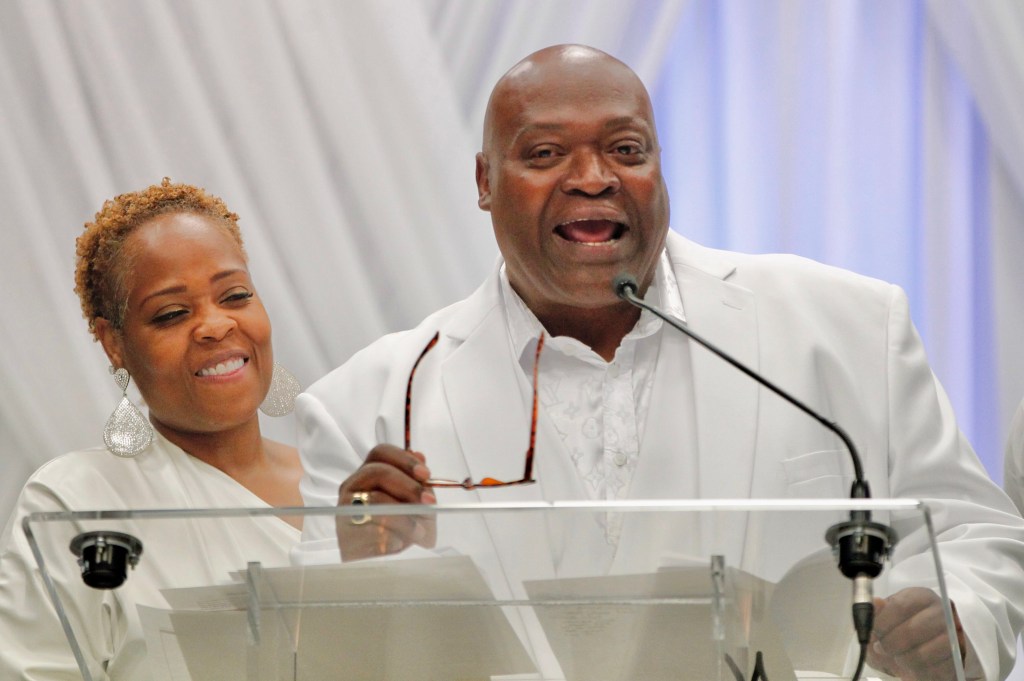
In his tribute at the Greenwood Cultural Center, Howard told the crowd that Fletcher shared lessons of wisdom with him.
He quoted her words.
“You have asked me the secret to a long life,” she said. “I have lived long because I have chosen a purpose even when life tries to suppress me.”