


The Tulsa area has five fewer schools on the state’s failing list and a new A-rated school, driven largely by gains at Oklahoma’s largest district, Tulsa Public Schools.
Ten fewer schools across Oklahoma received an “F” on Oklahoma’s 2026 Report Card, a legally required annual report released Thursday by the state Department of Education. It reflects key indicators of student and district performance in the 2025-26 school year. Most indicators of student performance statewide held steady, moving up or down by less than 5 percentage points.
“Families should recognize that Oklahoma’s school report cards reflect multiple dimensions of school performance really, rather than relying solely on the overall letter grade,” said Lisa Bisogno, associate dean of the College of Education at Northeastern State University.
Letter grades for Oklahoma’s schools take into account a wide variety of indicators, from academic performance on state testing to chronic absenteeism or English learner proficiency. Each of these indicators can be further broken down among different student categories or characteristics.
TPS officials celebrated gains in chronic absenteeism and access to postsecondary opportunities in a statement Friday. Sixteen schools earned a C or above last year, the highest percentage since 2018.
The score for students in good attendance is up to nearly 68% at the district — a 7.14 percentage point gain from the year prior. While academic achievement dropped slightly statewide to 40%, it grew at TPS to 11%.
“(Families) really need to look at each of those single indicators. It really does provide for a more balanced and informed understanding of a school‘s academic strength,” Bisogno said.
TPS’ Webster High School and McLain High School improved four-year graduation rates by more than 10 percentage points. They were two of 11 high schools statewide to do so.
“A lot of summer parent nights, Saturday schools and grad checks/meetings helped us get here,” McLain Principal Rob Kaiser wrote in a Facebook post. “Thank you to our entire community for all of their continuous support. It truly takes a village!! Let’s keep growing!!”

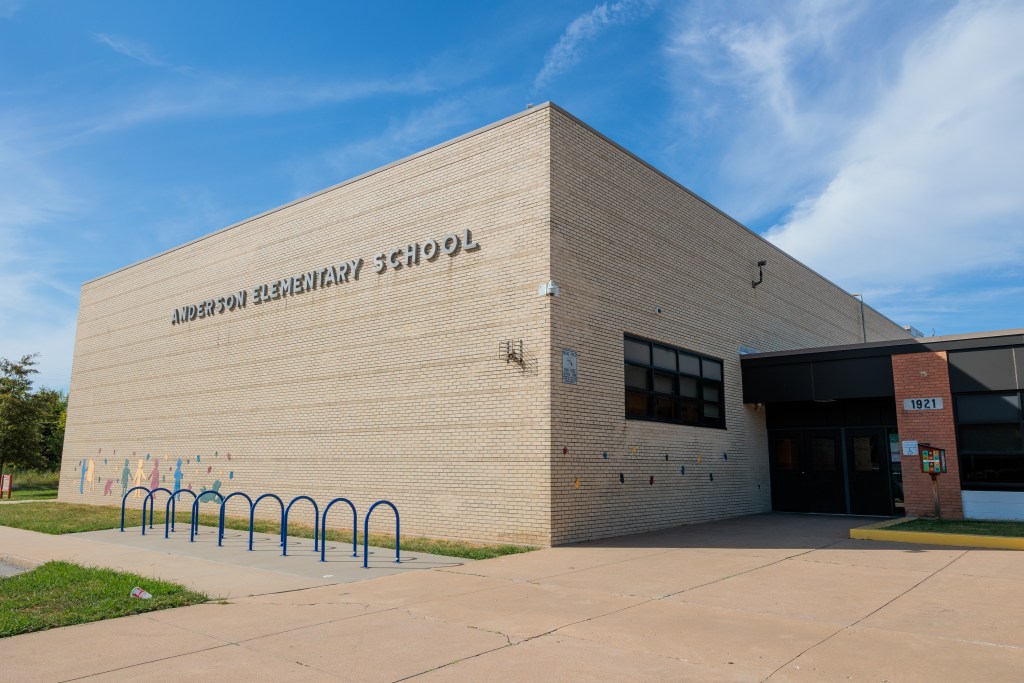
Eleven TPS schools saw improvements in their letter grades — including several set to close next year, such as Anderson Elementary, Hoover Elementary, Greenwood Leadership Academy, Peary Elementary and Tulsa MET Middle School.
Zarrow International School moved from a B to an A-rated school, now one of 38 in Oklahoma. The site will move into the former Hoover building next year, giving Zarrow room for more students.
Of 69 TPS schools included in the report card, two sites downgraded their letter grade rating — Lanier Elementary School and Monroe Demonstration Academy.
As it did statewide, academic achievement fell at varying rates across large Tulsa County suburban districts, including Bixby, Broken Arrow, Jenks, Owasso and Union Public Schools. Owasso High School saw its letter grade fall from B to C, with a near 14 percentage point drop in academic achievement.
Sankofa School of Creative and Performing Arts, a downtown Tulsa charter middle school, also moved off of the failing list.
Statewide the number of low-scoring schools shrank, as 64% earned As, Bs and Cs last year. The state gave itself a D in academic achievement and C in academic growth in public school performance.
Academic achievement is based in part on how many students are scoring at the basic, proficient or advanced levels on annual state testing. Growth scores reflect how individual students are moving between those levels from year to year in English language arts and math.
Only 27% of Oklahoma’s students scored proficient and above on state assessments for English and language arts, math and science last year.
“We expect to see measurable results in future years emerging from recent investments in assessments to identify at-risk students early, literacy coaches, tutoring programs, and other resources coordinated by a multi-tiered system of support to improve student performance,” read a news release from the state Department of Education on Thursday.
Nearly three-quarters of Oklahoma third grade students tested at or below basic on ELA assessments last year, according to public state testing data. In math, 67% of third graders tested at or below basic statewide.
The state Education Department sought to remove chronic absenteeism from its indicator list this year, after the Legislature approved it as a bonus category that would reward schools that improve attendance. State officials are still awaiting approval from the federal government before dropping it for the 2026-27 evaluation.
Altogether, Bisogno doesn’t know whether the graded accountability system is what Oklahoma needs. Another way of presenting the same information, she said, may help families dig in deeper.
“I think so many times we just get honed in on the A through F that there’s other areas where schools are improving,” Bisogno said. “And sometimes it takes those areas to grow before you see the rest of those indicators come up, too.”
“It’s kind of the same as a student. A student that may not be high-achieving may be really successful in college just because they work really hard,” Bisogno said. “You know, I’m a prime example of someone who scored really low on my SATs and ACTs and did very well in college, so it’s the same — every school has its strengths and weaknesses — private and public.”
News decisions at the Tulsa Flyer are made independently of our board members and financial supporters. Read more about our editorial independence policy here.
