



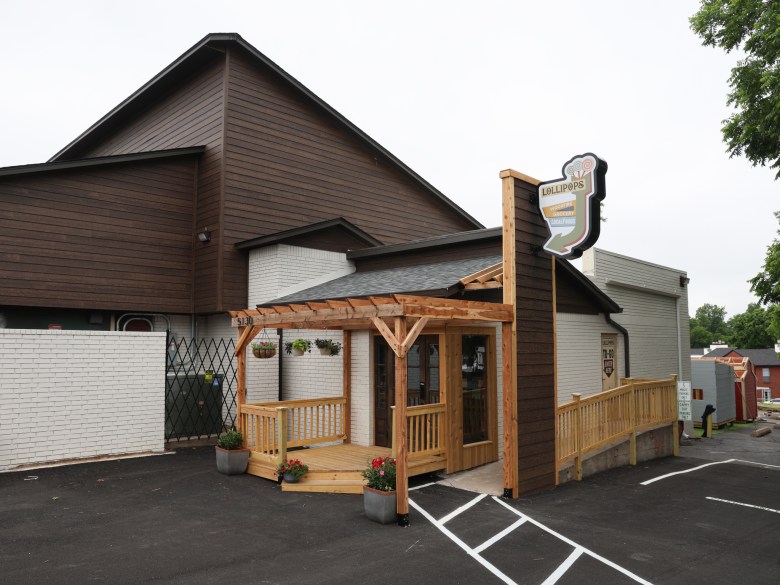
Stricken with fear with a coffee-stained T-shirt, Canaan Kallweit, bar manager of Lollipop’s Woodfire & Grocery, retreated from the parking lot to the inside of his restaurant located on South Lewis Avenue near East 51st Street.
It was a Monday morning in October, and he had just been attacked by a trespasser who became aggravated at Kallweit’s attempt to remove his shopping cart from his property.
Kallweit called the police, but by the time they arrived, the trespasser had fled. It felt as if police were trying to “run out the clock,” Kallweit said.
“I pointed him out. I was like, ‘That guy attacked me,’ and then they were like, ‘Tell us your whole story. What happened?’” he later told The Eagle. “So I told the whole story once, twice, three times and then a fourth time, and he was gone.”
After the assault, the Tulsa County Sheriff’s Office dispatched some deputies who now patrol the area. But this wasn’t the first time the Kallweit family has dealt with this type of situation since opening their Tulsa location in May.
A long-running issue
The owners say they’ve been dealing with vandalism, trespassers and incidents of violence since they began construction in the early parts of the year.
“Homeless people throw stuff out on our property, on properties next to us, and (it) blows on our property, and it’s just a really bad problem,” he said. “I haven’t gone out with a trash bag yet and not filled up an entire trash bag.”
He said he’s found mountains of trash, a broken bike and even drug paraphernalia. To him, it’s a homeless problem.
Tulsa is currently experiencing a housing shortage, but the city is on a mission to achieve functional zero homelessness by 2030. At the end of October, city officials and homeless advocates celebrated a milestone of rehousing 820 people in less than a year — with hundreds more to go to reach a goal of 1,300.
But the Kallweits don’t feel the effect. Adrienne Kallweit, Lollipop’s co-owner and Canaan’s mother, told The Eagle of an incident she experienced in January where someone started chasing her.
“I felt like I was going to be killed for the first time ever in my life,” she said.
She said she contacted her city councilwoman Carol Bush to ask for help. Bush and her incoming successor, Pete Regan, showed remorse with her situation, but other than a 40-minute informational session conducted by a city representative, not much was done.
The Kallweits said they’ve decided to take matters into their own hands by creating an independent community response system.
They call it Safe9 Tulsa. Residents can report an issue they see in their community with documented photos. Safe9 will then send the report to the city.
But the Kallweits said TPD informed them they won’t respond to reports made through the platform. The whole process has the owners of Lollipop’s questioning the city’s commitment to protecting local businesses.
“They just don’t care about us. They care about the homeless people more than us,” Canaan Kallweit said.
We asked city officials how they suggest business owners respond to scenarios where they are put in danger, including the incidents described by the Kallweits. City spokesperson Carson Colvin said they stress preparation and directed The Eagle to several resources prepared by police and city staff.
What should businesses do?
City of Tulsa officials suggest businesses secure their property with fencing and lighting and to obtain a no trespass letter with TPD. That gives officers pre-authorization to act on a business’ behalf.
They also recommend utilizing:
- Citizens Crime Stoppers: A nonprofit community crime report system.
- Neighborhood Academy: Assists in helping people and neighborhoods learn about programs and strategies.
- Destination Districts guide: The city guide describes how to deal with robberies, trespassing and graffiti. It was originally created for the destination districts but can be applied to any business around town.
Homeless interaction
Mark Smith, CEO of Housing Solutions, pushed back on the idea that the homeless population regularly harms people.
“Some of those people do bad things, and that’s not OK,” Smith said. “But the vast majority of people are people who are in crisis, are people who are seeking support and are trying to navigate systems and resources that can be complicated.”
He said unhoused people should be treated as any other person, but in the rare scenario where things might get violent, he urged residents to call 911.
“When incidents of violence happen in our community, we don’t say our entire community is a violent or dangerous place to live,” Smith said. “But I can understand if someone has experienced one of those really bad situations that it would be really frustrating, and it would impact them severely. And I think that’s valid too.”
For encampments, Smith said to utilize the 311 program so the city can help decommission them. Safe Move Tulsa has decommissioned 25 homeless encampments over the past year.
Those who are seeking to help someone experiencing homelessness can call 211 or put in an outreach request through the Housing Solutions website to be provided with resources.
Ismael Lele is a Report for America corps member and writes about business in Tulsa for The Oklahoma Eagle. Your donation to match our Report for America grant helps keep him writing stories like this one; please consider making a tax-deductible gift of any amount today by visiting this link.
