


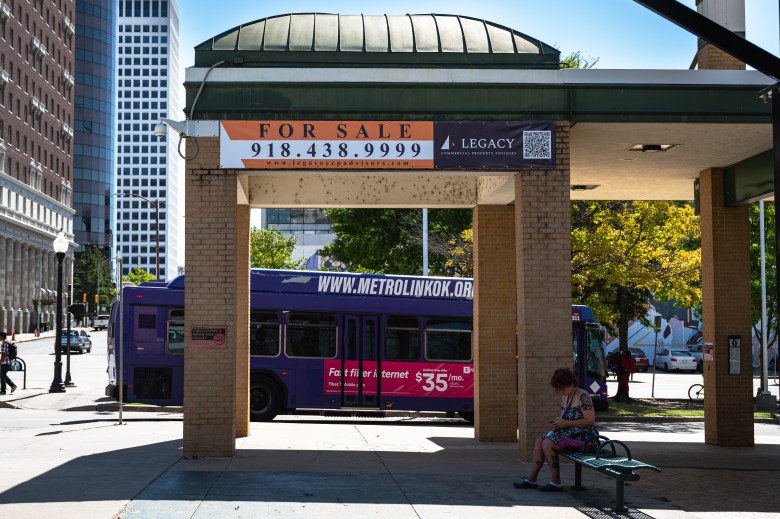
Johanna Burton has used Tulsa transit for more than 40 years. With the city planning to sell its downtown Denver Avenue Station, she believes Tulsa is gutting its civic core.
The station at 319 S. Denver Ave. came open for bid Oct. 1 and has “for sale” signs posted outside.
“We’re making it clear downtown is for the non-poors, and we don’t care,” Burton said. “We don’t care if you need to take the bus to the post office. We don’t care if you need to take the bus to the library. It just doesn’t matter.”
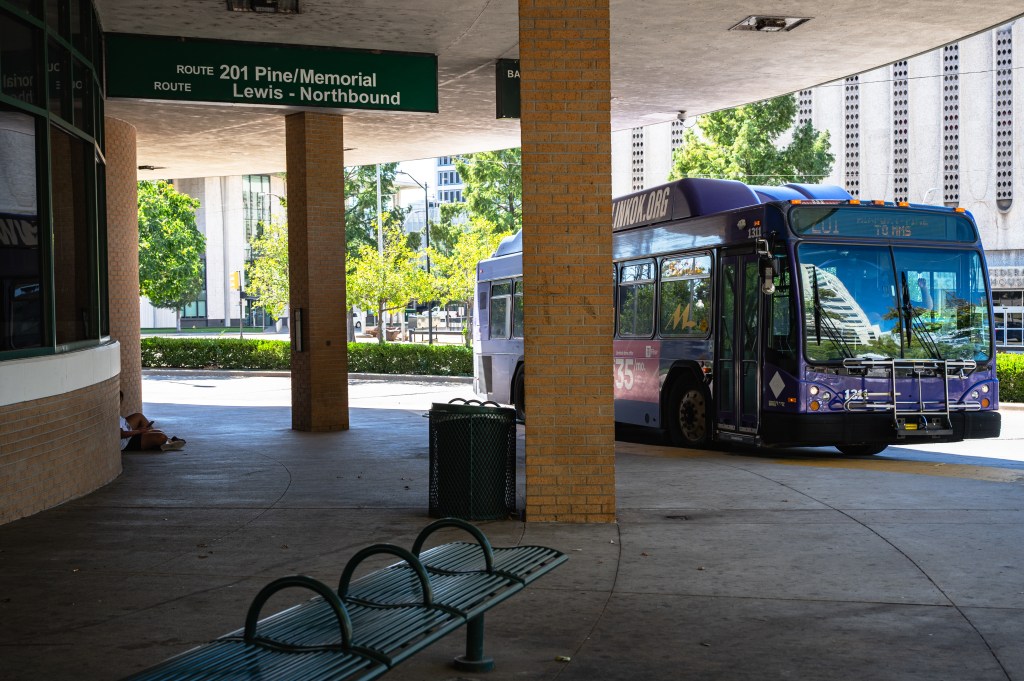
MetroLink Tulsa opened the bus station in 1998 after the property had previously served as a ballroom and a parking lot. CEO and general manager Scott Marr says MetroLink is looking for a “better option” to service the city’s public transportation needs.
“That’s a 30-, 40-year-old model,” Marr said. “It’s time to evolve and come up with something better as we continue to make MetroLink better.”
A more modern transit hub would likely skip public indoor space and have fewer routes traveling into it, he says.
“(It’s) just looking at downtown and imagining how it would look in the next 10 to 30 years, if you will,” Marr said.
Marr points to the city’s 2019 Arena District Master Plan as part of MetroLink’s decision to sell the property. The plan, which surveyed more than 300 Tulsans, ranked the Denver Avenue Station as one of the district’s “top weaknesses.”
“Upon further discussion, respondents often stated that they were not opposed to transit downtown, but felt that the activities occurring around the transit center — both real and perceived — negatively affected the entire district,” the plan, developed by a mix of city officials and downtown business leaders, reads.
Last year, some downtown business owners raised concerns about the presence of unhoused people around the station and complained the city was not adequately enforcing nuisance laws. Soon after, the city placed donated boulders — which Mayor Monroe Nichols called a “community art project” — around the station in July 2025. Those have since been removed, and the MetroLink Board of Trustees voted unanimously to sell the property in June.
Marr expects the Art Deco-styled station could take anywhere from six months to two years to sell. When it does sell, he says downtown routes won’t be affected. However, the listing begs the question: What could eventually replace the Denver Avenue Bus Station?
Build more parking and include transit services
Burton says the bus station property would be a great location for a parking garage with a ground floor dedicated to transit services.
“The one thing that we always need more of downtown is parking,” she said. “So, a multi-story parking garage that sits on top of a multifaceted transit hub.”
The transit hub would ideally have bus stops for east-west routes along Admiral Boulevard and north-south routes along Peoria Avenue — MetroLink’s busiest routes, Burton says.
“A stop for those two (routes), plus scooters, an easy place to find an Uber and bike rentals,” she said.
Burton says a mixed-use development on the property, as the 2019 Arena District Master Plan recommended, would be difficult to keep open due to rent costs downtown.
“I think the original plan was for a retail-restaurant kind of thing. Those don’t stick around. Downtown rent is too high,” Burton said. “You have got to be a fantastic restaurant or retailer to make it downtown.”
Burton says whoever runs that parking garage could charge more if they focused on keeping it safe.
“Another thing on the parking garage dream: If they — whoever was running it — made a point of making it the safest, cleanest, best lit, easiest to use … they could charge $1 more,” Burton said. “Just for the peace of mind of not worrying.”

Preserve the property and create more housing
Tom Neal isn’t a licensed architect, but he is a Tulsan with an architecture degree and runs his own residential design practice. He says the property provides an opportunity for more downtown housing and hotel rooms.
“I don’t do commercial architecture, but the model for housing and hotel are close enough, in terms of the way the building is structured that you could do both,” he said. “Then keep that deco lantern, that’s kind of the eye candy of the piece.”
Neal served a three-year term on the Tulsa Preservation Commission under Mayor Dewey Bartlett and says there is a better solution than demolition.
“I just think we could do better than tearing it down and destroying it for short-term profit,” he said.
Neal says preservation standards rely on historical significance, age and design — the latter of which he believes applies to the Denver Avenue Station.
“That would be the basis I would argue the transit terminal is significant, because it is just kind of over-the-top,” Neal said.
Neal hopes the Art Deco architecture on the Denver Avenue Station can be incorporated into what is built next on the site.
“If I were a betting person, I would bet that it would be destroyed,” Neal said. “But I certainly hope that isn’t the case.”
News decisions at the Tulsa Flyer are made independently of our board members and financial supporters. Read more about our editorial independence policy here.
