

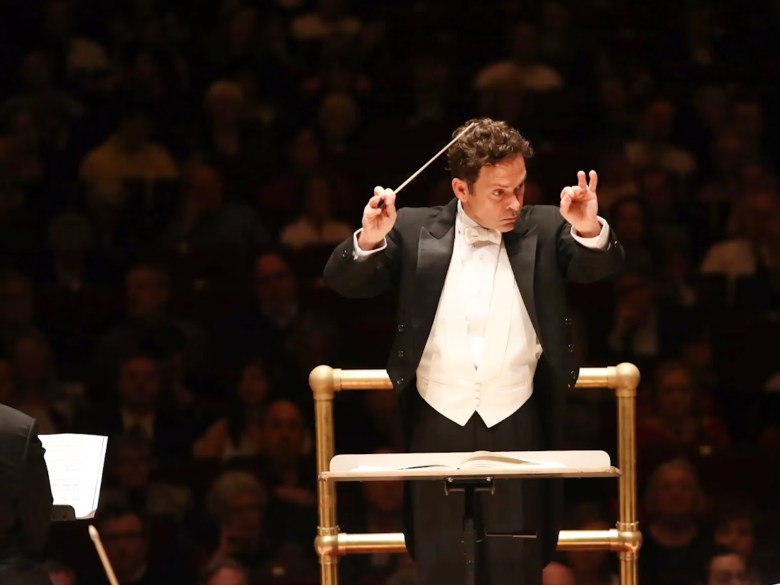
James Bagwell’s new job as principal conductor of the Tulsa Symphony Orchestra is one he nearly took on some two decades ago.
In 2002, the Tulsa Philharmonic, which had been in business for more than 50 years, declared bankruptcy and closed. A group of now-jobless musicians looked to establish a new orchestra, one that would be run primarily by musicians, and they approached Bagwell to be its principal conductor.
It would take until 2006 for the Tulsa Symphony Orchestra to make its debut. And while the new organization chose not to hire a permanent music director, it did include Bagwell as one of the guest conductors in its inaugural season.
Since then, however, it has been a rare Tulsa Symphony season that did not feature a concert with Bagwell on the podium. He had led the Tulsa Symphony in concerts that ranged from performances of epic choral pieces such as Benjamin Britten’s “War Requiem” and towering symphonies such as Mahler’s Symphony No. 2, “Resurrection,” to leading the orchestra as it performs film scores live and collaborates with singer-songwriter Natalie Merchant.
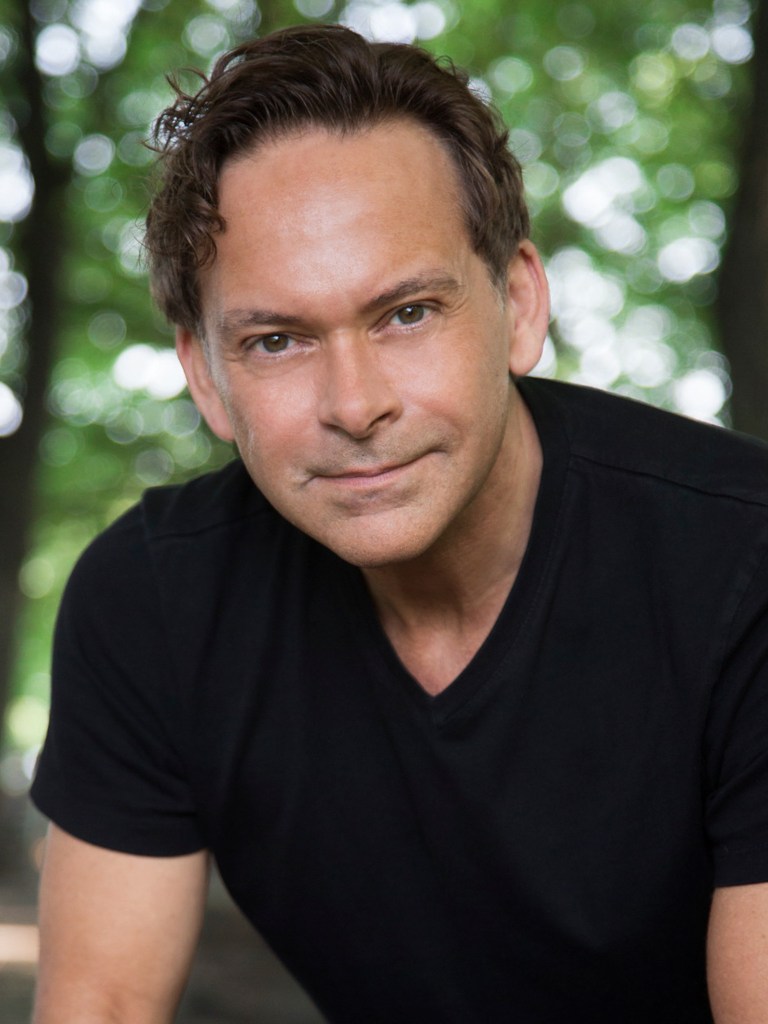
“It’s really been amazing to see how this orchestra has evolved,” Bagwell said. “The longevity they’ve had, the way they have been able to hold to their core philosophy and grow the way they have — it really makes me happy.”
Now, as the orchestra’s principal conductor, Bagwell will lead the orchestra in five of the seven concerts that make up the Tulsa Symphony’s Patti Johnson Wilson Classics concert series for 2026-2027.
The season begins Saturday with an opening night gala concert featuring violinist Francisco Fullana performing “Fandango,” a concerto by the Mexican composer Arturo Márquez Navarro. The program also includes the “Overture” by Polish composer Grażyna Bacewicz, as well as the Symphony No. 4 in B-flat major by Beethoven.
“His long-standing relationship with the orchestra, combined with his depth of experience and artistic leadership, makes him the ideal partner as we look ahead to an exciting new chapter,” Morgan Walker, the symphony’s executive director, said when Bagwell’s appointment was announced.
Bagwell got that first invitation to work in Oklahoma from a friend from college who suggested they work together on a musical adaptation of Oscar Wilde’s “The Importance of Being Earnest.”
That work, titled “Ernest in Love,” would be the start of a decade of summers Bagwell spent in Tulsa as music director of Light Opera Oklahoma, which specialized in operettas and classic musicals, with an emphasis on the works of Gilbert & Sullivan.
“I feel as if, in many ways, I kind of grew up musically in Tulsa,” Bagwell said. “After all, I’ve been coming here since about 1999, when I did my first shows with Light Opera Oklahoma. So that’s almost 30 years.”
It was not long after that when Bagwell became a member of the music faculty of Bard College in New York, where he currently directs the college’s music program and co-directs the graduate conducting program.
Bagwell was also named this year as the principal conductor of the Berkshire Bach Orchestra and Chorus, an organization with which he has worked since 2000.
He has been principal guest conductor of the American Symphony Orchestra since 2009 and associate conductor of The Orchestra Now (TON) since 2015. Bagwell has led both ensembles in performances at Carnegie Hall and Lincoln Center in New York City.
In addition to his orchestral work, Bagwell is in demand internationally as a preparer of choruses. He has collaborated with leading orchestras across the United States and abroad, including the New York Philharmonic, Los Angeles Philharmonic, San Francisco Symphony and Boston Symphony Orchestra.
While Bagwell will not have the responsibilities of a music or artistic director, as principal conductor he will have a central role in helping shape programming and performances to expand its artistic vision and community impact.
“The orchestra’s programming committee is the real driver in the way that repertoire is chosen,” Bagwell said. “I think that’s a very important part of this organization, because I’ve always been impressed with the programming here.
“This upcoming concert is a great example of that, because it’s a very interesting trio of works,” he said.
Where to find tickets
Tulsa Symphony Orchestra presents “Opening Night – Beethoven’s Fourth,” with violinist Francisco Fullana and principal conductor James Bagwell.
When: 7:30 p.m. Saturday, Sept. 26 at the Tulsa PAC, 101 E. 3rd St.
Tickets: $54.75-$113.50. 918-596-7111, tulsapac.com
While Beethoven is likely to be the only composer whose name is familiar to most concertgoers, the work to be performed — the Symphony No. 4 — is not one of the composer’s more popular creations because it’s been overshadowed by his landmark works the Third Symphony and the Fifth Symphony.
“I came across a quote by Berlioz, where he says the first movement of this symphony ‘is almost entirely given over to joy.’ And I think that really describes the whole symphony,” he said.
Bagwell said Beethoven is often thought of as a brooding genius, but he also wrote music that sparkles.
“That’s true of the Fourth Symphony — I think the second movement is just one of the most beautiful things Beethoven ever wrote for an orchestra,” Bagwell said.
Bagwell described “Overture” by Bacewicz as “not a very long piece — it takes about six minutes to perform — but boy is it packed.” Written in 1943, when Germany was occupying Poland, it is not only a demonstration of the composer’s skill at orchestration but also contains a subtle political message, with a motif in the timpani that echoes the opening four notes of Beethoven’s Fifth Symphony.
“Fandango” by Marquez “is essentially a violin concerto, but it uses Mexican dance rhythms,” Bagwell said. “It’s really a thrilling piece, and I think audiences are going to love it.”
News decisions at the Tulsa Flyer are made independently of our board members and financial supporters. Read more about our editorial independence policy here.