
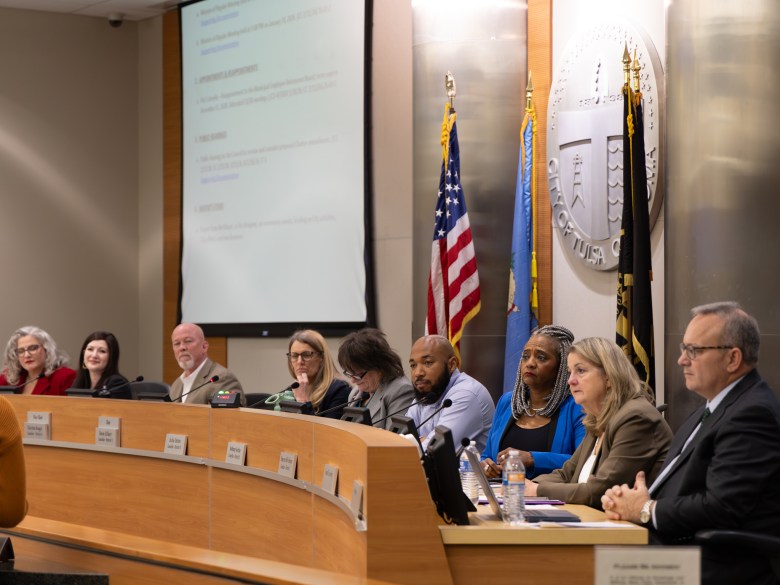
Five months after the Tulsa City Council issued a moratorium on new data center development, officials are considering changing the zoning code to define these facilities by square footage.
The moratorium went into effect March 25 and expires Dec. 31. It followed community backlash to Project Anthem, a $1 billion, 340-acre data center being developed by Meta in east Tulsa. Since its announcement, residents and councilors have expressed concerns about hyperscale data centers’ utilities usage and environmental effects.
The timeout is meant for the Tulsa Planning Office to determine if zoning code changes are needed before processing more applications for hyperscale data center projects. The office is required to produce reports about every 60 days on recommended changes.
Currently, Tulsa’s zoning code permits data centers in industrial-light zones, which are intended for facilities that have few to no adverse land or environmental impacts. Through an open records request, the Flyer obtained the only report produced so far by the city planning office.
The report offers several suggestions, including changing the definitions of data centers to small (up to 20,000 square feet), medium (20,000 to 100,000 square feet) and large (over 100,000 square feet).
Typically, square footage is used to gauge potential impacts of projects. However, small data centers packed with AI-heavy servers can consume more energy and generate more heat than industrial warehouses 10 times their size.
Large data center developments would be permitted only in industrial zones designated for activities that have moderate to substantial adverse environmental impacts.
The office also suggests changing setback requirements, or the distance between a data center and a protected use, from 250 feet to 1,500 feet to minimize effects on residential areas. Data centers under 5,000 square feet would still be permitted in certain office and commercial spaces.
District 4 Councilor Laura Bellis spearheaded the moratorium and acknowledges the zoning code is still catching up with technology. Reclassifying data center developments based on square footage is a good start, Bellis said, but other factors need to be taken into consideration, such as water and electricity consumption.
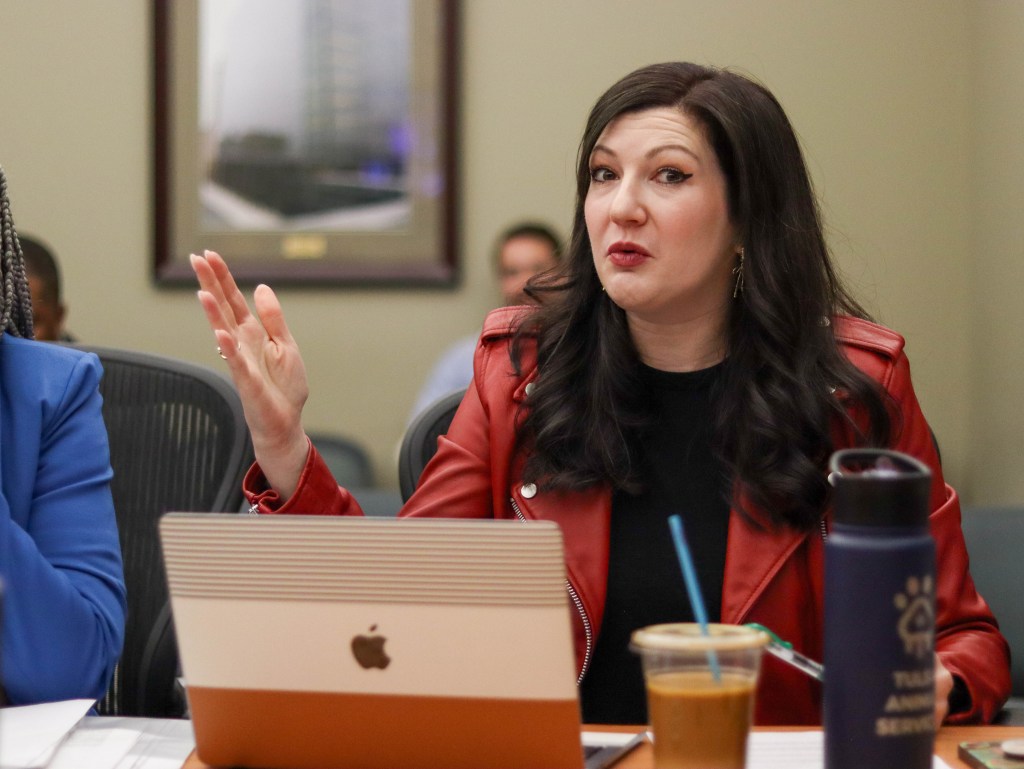
“Maybe we’ll be ready to get all of that done before the end of the year,” Bellis said. “And then, of course, if more broadly the full council thinks that we need more information, we can always extend (the moratorium).”
In the meantime, Bellis is interested in learning how hyperscale projects would impact communities outside of Tulsa city limits.
“The goal would be really having data centers (that) would have their own definitions and delineations, where there’s more clear parameters around what’s appropriate land use, what’s our community’s capacity for these, not just within municipal boundaries, but regionally,” she said.
Echoing the findings in the Cherokee Nation’s data center task force report, District 2 Councilor Anthony Archie thinks each application that comes to the city’s planning office should be evaluated on a case-by-case basis.
“We have smaller data centers that are all around Tulsa, and so it’s not that we (should) have no data centers,” Archie said. “It’s just that these hyperscale data centers pose a different set of effects on our resources that are a lot more consequential than some of our smaller ones.”
District 6 Councilor Christian Bengel represents the district where Project Anthem is located and voted in favor of the moratorium. But he told the Flyer he supports hyperscale data centers.
He’s skeptical of the zoning recommendations, wanting to see the effects of Project Anthem before the moratorium expires.

“So, the problem for me is that you can’t target a specific industry. To me, you have to be fair across the board,” Bengel said.
The planning office expects to complete additional reports in August and October. The final zoning recommendations are due in November, which will go to the full council for review. The council could then adopt the recommendations or possibly extend the moratorium, if more research is needed.
Tulsa is far from the only community in the midst of developing new regulations for data centers. Broken Arrow has adopted a moratorium of its own, and city staff have created a committee to study the industry’s impact and make recommendations for zoning regulations. The city is in the process of hiring an expert to consult with the committee, City Manager Michael Spurgeon told councilors Aug. 18.
Faith Harl is a Tulsa Documenter and freelance contributor to the Tulsa Flyer.
News decisions at the Tulsa Flyer are made independently of our board members and financial supporters. Read more about our editorial independence policy here.