



Tulsa City Council District 9 voters are fed up with speeding motorcycles on their roads and abandoned properties dotting their neighborhoods. They are concerned about having enough housing for people who are homeless or on the edge of poverty.
They want a city councilor who will work collaboratively without political partisanship or a penchant for division. They are sick of campaign signs illegally placed in rights-of-way and want to preserve the unique aesthetics of the Brookside neighborhood.
They want an independent water quality monitor of the Arkansas River and a lot more answers about the impact of data centers, a possible nuclear facility and police use of surveillance cameras.
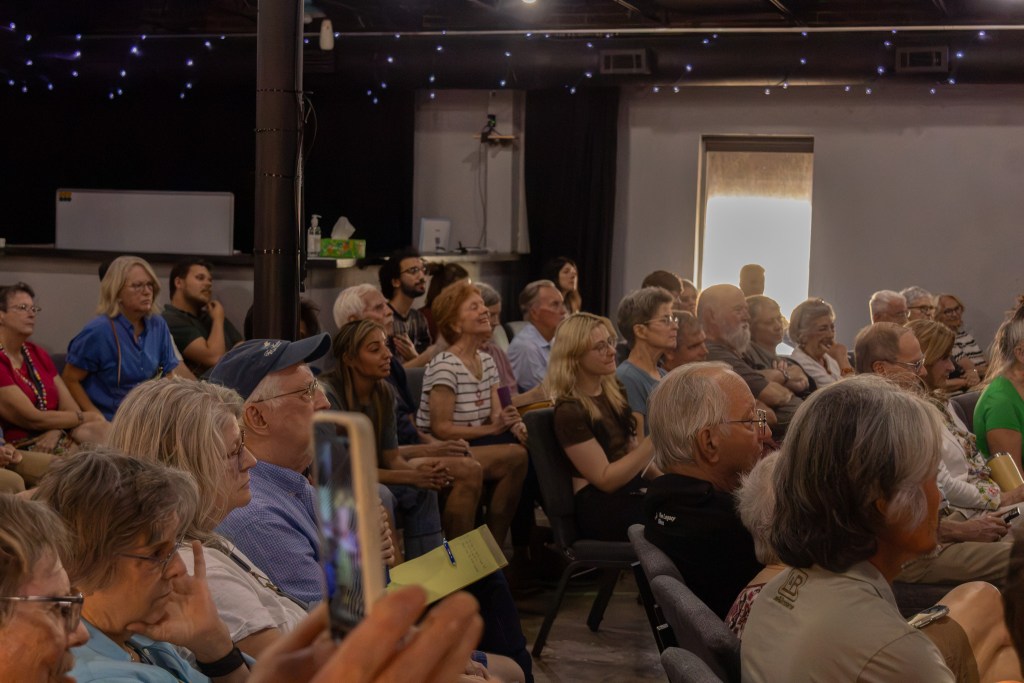
That’s a bit of what a standing room-only crowd brought up at a 90-minute candidate forum Monday night at Community Brookside hosted by the Tulsa Press Club, Tulsa Flyer and Tulsa World.
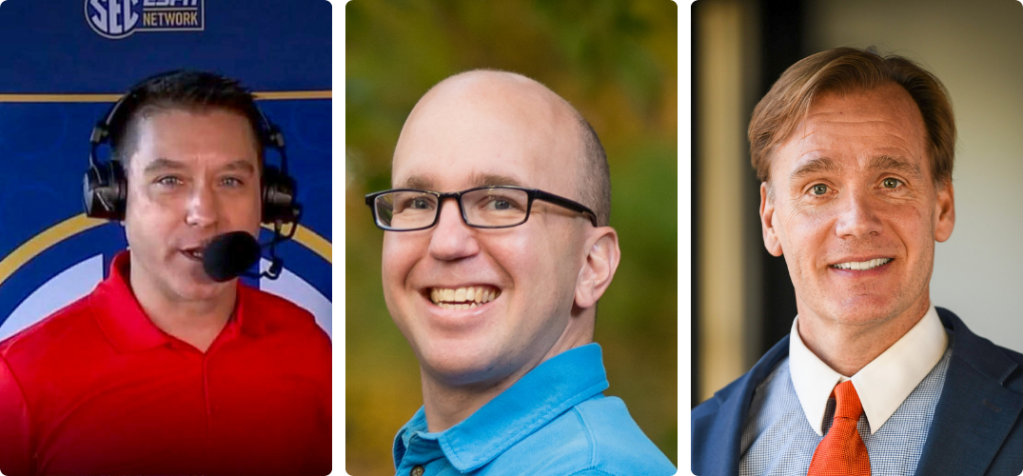
More than 100 people heard candidates Pete Regan, Ben Johnson and Shawn Tiemann answer questions from the Flyer’s Joe Tomlinson, the World’s Kevin Canfield and the Press Club’s Jason Collington. Audience members also submitted their own questions.
Early voting runs from Aug. 20-22. Election Day is Aug. 25. Find more information about what’s on the ballot at the Flyer’s voter guide.

District 9 is the sole wide open seat on council after incumbent Carol Bush decided against seeking a second term. The district’s boundary spans parts of midtown, from the Arkansas River on the west to Sheridan Road to the east and running north-south from about 31st to 71st streets.
In municipal races with more than one candidate, a winner must get 50% plus one to win outright. If no candidate gets that majority, the top two will go to a runoff Nov. 3.
The candidates found several areas of agreement: supporting an increase in hotel/motel tax, bolstering efforts of neighborhood code enforcement and wanting Tulsa police to focus on local crime, not enforcing federal immigration policies.
With slight differences in policy positions, much discussion focused on how their backgrounds will inform their governing approaches.
Regan, an attorney and vice president of the civil engineering firm WSB, touted his experience working with leaders of both political parties including service on the Oklahoma Transportation Commission through appointments from Democratic Gov. Brad Henry and Republican Gov. Mary Fallin and on municipal task forces under Republican Mayor Dewey Bartlett and Democratic Mayor Kathy Taylor. He spoke of a work ethic rooted in his Tulsa upbringing as one of 11 children and history as a consensus builder.
His priorities are public safety and infrastructure with an emphasis on bridging divides in the community.
Tiemann stressed his 30 years in sportscasting and local journalism sharpened his skills of listening and asking the “right” questions. He says his profession prepared him to be an independent thinker able to view all sides of an issue. His priorities are public safety, housing access, animal welfare expansion, neighborhood growth and homeless services.

Johnson — an author, former EMT and staffer at a 911 call center — said his jobs in shift work provide insight into what frontline service providers experience. He said public policies have a direct line into how core services operate.
His priorities are creating more affordable housing, stopping landlords from using evictions as a business model and exploring legal options to curtail out-of-state LLCs from buying large swaths of property.
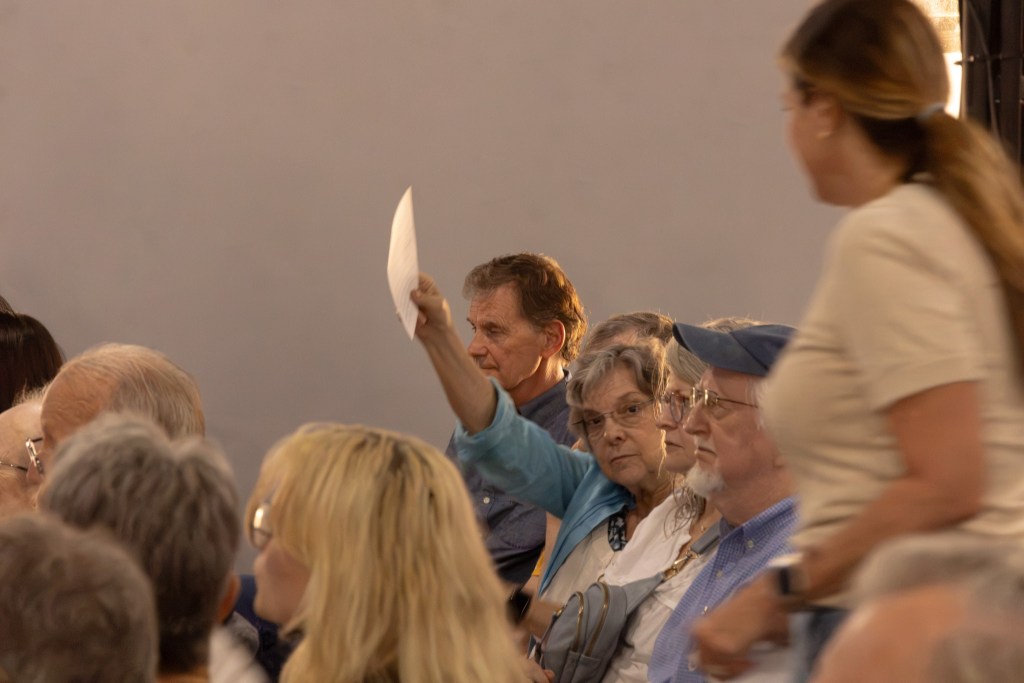
Questions from the audience included three complaints about loud motorcycles speeding in midtown neighborhoods and others about getting rid of illegally placed campaign signs and keeping in the integrity of neighborhoods. There were concerns over chronic absenteeism in schools, rising homelessness, income inequality and air and water quality.
When asked by journalists what priorities from Bush they would continue, Regan said public safety, law enforcement and accessibility. Tiemann said he heard some constituents complain about Bush’s accessibility. Johnson criticized her decision not to recuse herself from votes regarding data centers, citing her job with a company involved with out-of-state data centers.
Other takeaways
Police oversight: Johnson supports added measures for oversight. Regan said “anything” should be on the table for accountability and efficiency, a sentiment echoed by Tiemann.
Police chief: All said they would welcome a national search as Chief Dennis Larsen retires in September. Johnson said the two internal candidates, which the World reported to be Maj. Paul Fields and Deputy Chief Jonathan Brooks, would be good leaders. Regan concurred, adding he wanted the next law enforcement leader to be trustworthy and accessible.

TPD surveillance cameras: Johnson wants law enforcement to stop camera surveillance, likening it to the book “1984.” Tiemann noted the tools can be helpful but wanted more regulation on data collection. Regan said he sees the benefit, with a recent capture of two murder suspects within hours using the cameras. But he wants stronger guardrails that include weekly audits and punishments for wrongful use of data and equipment.
Sales tax: Mayor Monroe Nichols has proposed increasing the city sales tax, and the city council tabled a resolution to put the measure on a ballot. Tiemann said he’d need more information on the issue. Johnson said he would vote for an election on the tax. Regan said he would vote no until there is a deeper dive into the budget and level of core services, citing sales tax as being regressive.
Hotel/motel tax: All are in favor of the Nov. 3 measure that increases the tax from 5% to 9.9%. Tiemann said he believes it is not high enough, proposing to go up to 13%. Johnson advocates reclassifying Airbnbs as motels to include those in the revenue.
Homelessness/housing: All backed Nichols’ efforts that have added 2,000 housing units and placed more than 500 people living in encampments into housing. Tiemann wants the city to be more aggressive with housing attainability and job development; Johnson said the city has 9,000 unused parcels of land that could be developed into housing and that realtors estimate the city needs 13,000 housing units to accommodate existing growth; and Regan stressed the underlying causes such as mental health disorders and addiction must be addressed.
Data centers: Regan said he is interested in findings from a moratorium report released in November. Tiemann and Johnson are not in favor of approving more until more information about their effects are known.
Panhandling on median: No candidate likes it, but all recognize the activity as free speech that has been protected in numerous legal cases. Regan said he would like to explore options in restricting the practice.
News decisions at the Tulsa Flyer are made independently of our board members and financial supporters. Read more about our editorial independence policy here.