


Several Tulsa city councilors have expressed doubts that Mayor Monroe Nichols’ proposed sales tax increase will advance this year. Now, some councilors are pursuing alternative options to raise city revenues.
The council expressed disapproval of the increase at a November meeting and agreed to reconsider the topic in January. But the council has not discussed the proposal this year and it is not on the agenda for upcoming meetings.
“Nothing is going on with the plan that I am aware of,” District 8 Councilor Phil Lakin Jr. said in an email to the Flyer. “It’s tabled and I don’t believe any councilor has any interest in bringing it off the table any time soon.”
He said the council will seek other ways to fund needed city programs.
“Our immediate focus is on the budget and trying to find available resources for a variety of programs out of the budget monies we have and are projected to have,” Lakin said. “Every business can operate more efficiently, and the council is committed to continuing to identify these efficiencies. Revenue into the general fund is $2M+ over what was expected this fiscal year (so far), which is a good sign (for now).”
The Flyer contacted the mayor’s office on the stalling of the sales tax proposal discussion, but the office declined to provide comment.
Nichols proposed a 0.7% city sales tax increase along with a hotel/motel tax hike last year to fund public safety and his Safe Move Tulsa homelessness initiative. His goal was to generate $80 million annually. He argued the city’s current 3.65% tax rate is unsustainable.

“He knows that we tabled it,” Lakin said of the mayor. “The next step, as we communicated back to him a few months ago, was for the council to work on some options on its own, including scrutiny of the budget for additional monies, etc.”
District 9 Councilor Carol Bush also told the Flyer she has no interest in revisiting sales tax discussions.
Some Tulsans also questioned whether an added sales tax was the best way for the city to raise revenue.
“Sales taxes are inherently regressive and can disproportionately impact lower income households, which raises real equity concerns,” said Elizabeth Hunt, who lives in the midtown Terwilleger Heights neighborhood.
“I’m also concerned about timing, the level of public engagement and how clearly any new revenue would be allocated and tracked — particularly if funds flow through the general fund rather than being tightly earmarked,” Hunt said.
Some councilors have suggested the proposal isn’t completely dead; priorities may have shifted, but it’s not entirely off the table.
District 2 Councilor Anthony Archie commented that the sales tax proposal has been “tabled” but is not “dead.” He indicated the discussion will resume at a later date, but he was unclear about when.
Nichols sought sales tax revenue to fund his programs. Archie noted successful programs were funded by federal COVID-19 relief funding but stressed the need for broader discussion to sustain goal achievement.
“The challenge is some programs that are proving to be successful are funded through one time (American Rescue Plan Act) dollars, like the clearing of encampments in my district along Riverside and the rehousing of those people,” Archie said. “I want that work to continue. And I want more investment on the west side of Tulsa concerning infrastructure and revitalizing, etc.”
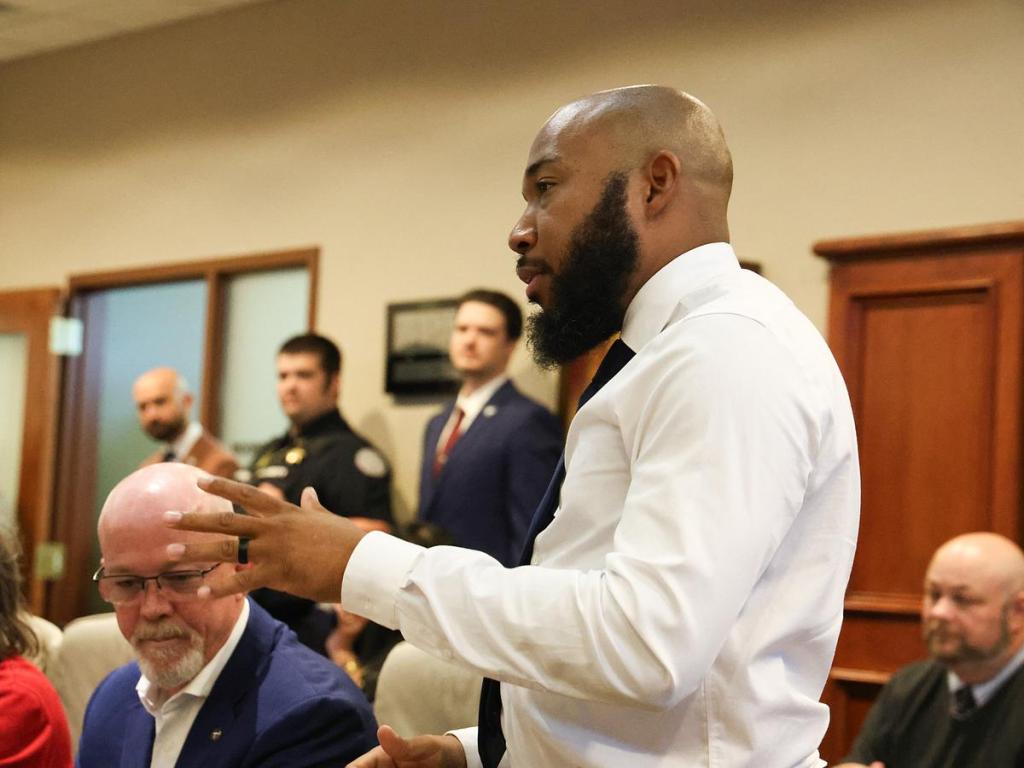
Building community support behind any council decision is important, Archie said.
“A 20% undedicated sales tax increase was what the mayor proposed,” he told the Flyer. “But there are other perspectives on the council that will be brought forward soon.”
The council has turned most of its attention to putting a hotel/motel lodging tax increase on the August ballot.
Nichols previously voiced his disagreement with the separation of the sales tax proposal from the hotel/motel tax increase plan. He said the council did not discuss its intent to put the measure on the August ballot with his office.
Councilors are considering raising the lodging tax to 9.5% to fund maintenance and upgrades for the BOK Center and Arvest Convention Center. This move is largely driven by the city’s desire to remain competitive with Oklahoma City’s arena projects.
“We are working on the hotel, motel tax and the timeline for getting input, understanding the needs of Arvest and BOK Center, our bonding capacity, etc., and then we need to communicate the benefits to the public as we ask for their support,” Archie said. “So I’m undecided on a sales tax, but if it were to happen, the discussions just need a longer runway, likely a longer timeline than the hotel/motel.”
News decisions at the Tulsa Flyer are made independently of our board members and financial supporters. Read more about our editorial independence policy here.