

This article is a part of Snapshot: Election Guide, a collaborative journalism project between Tulsa Flyer, The Oklahoma Eagle, The Frontier, KOSU, La Semana and Focus Black Oklahoma designed to help Tulsa voters make informed decisions ahead of fall elections set for Aug. 25 and Nov. 3.
While much of the Aug. 25 election spotlight is on primary runoffs, all voters have a chance to decide on two proposed amendments to the state constitution.
One state question pertains to tax exemptions for new or expanding manufacturers, and the other would enshrine Oklahoma’s voter identification law — an issue heavily pushed at the federal level by President Donald Trump since he returned to the White House in 2025.
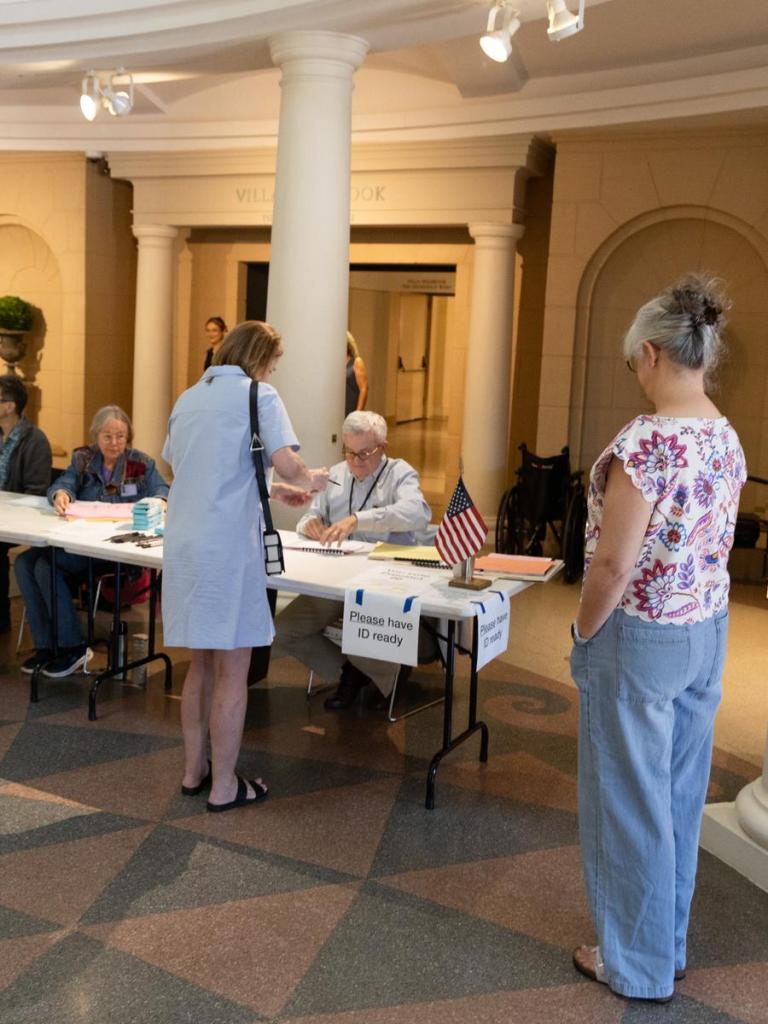
State law already requires voters to show proof of identity before casting their ballots. State Question 846 would add that requirement to the state constitution and allow lawmakers to specify those ID requirements.
Senate Pro Tem. Lonnie Paxton, R-Tuttle, and House Speaker Kyle Hilbert, R-Bristow, authored the legislation to put it on the ballot.
“I think we’re doing really good with our elections. We require proof of identity under current statute and this simply moves that and puts it into the constitution so that for future legislature if they decided to change that they would have a more difficult time to do so,” Paxton said March 26.
What’s in current state law?
On Nov. 2, 2010, 74% of voters approved State Question 746, which created Oklahoma’s proof of identity law.
The law requires Oklahoma voters to show proof of identity at the polling place or during early voting at a county election board. State law also requires voters to register ahead of time.
Proof of identity includes any document issued by the U.S. government, the State of Oklahoma or a federally recognized tribal government.
The state currently accepts the following as proof of identity when voting:
- Photo identification includes:
- Oklahoma driver’s license
- Oklahoma identification card
- Oklahoma medical marijuana card
- U.S. passport
- U.S. military identification
- Tribal citizenship card
- County election board voter identification card
If someone declines to provide or does not have proof of identity, they can vote by signing an affidavit with a provisional ballot. The county election board will investigate the information in the affidavit and either approve and count the vote or reject it.
Documents used for proof of identity for voting purposes must include the name of the person, a photograph and an expiration date after the date of the election, unless it’s valid indefinitely.
The name on the proof of identity documents must match the name in the precinct registry.
How is State Question 846 different?
State Question 846 asks voters whether to amend the state constitution to include required proof of identity to vote in certain elections or in any capacity. It also allows the state legislature to enact specific requirements for proof of identity, meaning future lawmakers could modify the list of acceptable forms of identification.
If passed Aug. 25, it would add these measures to Article 3 of the Oklahoma Constitution and it would ban future legislatures from repealing the voter ID law.
What do state leaders have to say about the proposal and voter integrity?
The state Senate and House supported the measure this spring. In a post-session roundup, the Senate highlighted why it was in favor of sending SQ 846 to the ballot.
“State Question 846 ensures illegal aliens aren’t voting in Oklahoma elections by adding a voter ID requirement to our state Constitution,” reads the May 15 news release. “Voters are already required to show an ID at the polls under state law, but including this language in our Constitution adds another layer of election security that cannot be overridden by future legislators.”
Trump’s unsubstantiated claims of a stolen 2020 election have led to increased scrutiny of the voting process in states across the country.
In a June interview with The Oklahoman, Paul Ziriax, secretary of the Oklahoma State Election Board, responded to the president’s claims as it pertains to Oklahoma’s voting integrity. He noted the president won all 77 counties in each of Trump’s three bids for the office.
“I think Oklahoma has one of the best election systems in the country,” said Ziriax. “In Oklahoma there’s zero evidence of any kind of widespread fraud or anything that would have impacted the outcome of the election.”
During a March 26 floor debate, Sen. Carri Hicks, D-Oklahoma City, said voters are being asked to amend the constitution without knowing what documentation may ultimately be required to cast a ballot. Once it’s in the constitution, she says, any adjustment to the language becomes harder.
“This proposal does not respond to documented widespread fraud,” Hicks said. “It does not cite a demonstrated failure in our current system. Instead it places a new constitutional mandate requiring proof of identity for all methods of voting, including absentee ballots, while leaving the definition entirely to a future legislature.”
Find more details on the August election through our Snapshot series and our election guide.
This article was produced as part of a partnership between the Tulsa Flyer and La Semana, a Tulsa-based bilingual Spanish-English newspaper serving Latino communities in Oklahoma.
News decisions at the Tulsa Flyer are made independently of our board members and financial supporters. Read more about our editorial independence policy here.