

Love it or hate it, artificial intelligence is likely already in your student’s classroom. In the next year, Oklahoma schools must formalize exactly how it can be used.
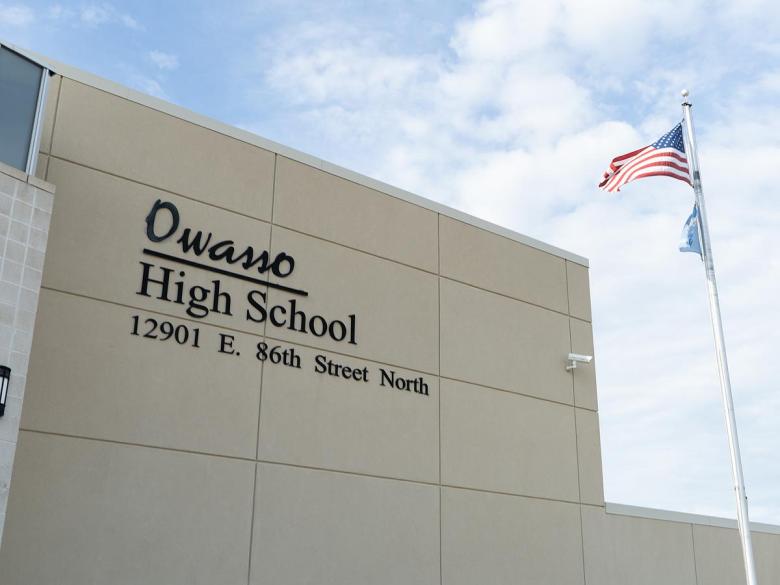
Owasso Public Schools became one of the first Tulsa metro districts to get ahead of a new state law about AI in schools, unanimously approving an AI policy at its July 13 board meeting.
“We want to emphasize that we see the use of generative AI as an instructional tool,” said Mark Officer, assistant superintendent of teaching and learning at Owasso. “It’s just meant to be a support for staff and for students, meant to be a thought partner in a lot of ways for students. Another engagement tool.”
The Oklahoma Responsible Technology in Schools Act went into effect July 1, creating statewide guardrails for emerging technology in public schools and requiring districts to set a formal AI policy by the 2027-28 school year. It also requires districts to annually disclose what tools are being used in schools — and why.
“I’m excited to see the shift,” said Karen Leonard, program director for AI and digital learning at the Oklahoma State Department of Education. “I think you’ve got some great districts, Broken Arrow and Owasso, that are leading this.”
Owasso’s new policy largely mirrors state law, requiring any student-facing AI tool to be developmentally appropriate and used only for “clearly defined educational or instructional purposes.” AI cannot be used as the primary method of grading, disciplining or making educational decisions in the district. Traditional academic honesty rules still apply if students use generative AI and try to pass it off as their own work.
“I see it as something that is a part of our world today,” Officer said. “It’s really important, we feel like, to give our students the opportunity to explore and learn in that environment.”
Next year, Owasso students in third grade and above will have access to Google Gemini — a generative artificial intelligence model — through the district’s Google workspace.
There are “lots” of monitoring systems in place for student use, Officer says, just as internet usage is already monitored through the district’s Google accounts. Principals heard “zero concerns” with AI access for eighth through 12th graders last year, he adds.
“Like any other piece of curriculum that is online-based, we’re gonna do everything we can to ensure student safety, while also preparing them for what’s in the world today,” Officer said.
Broken Arrow Public Schools is deep into the process of setting its policy, according to Brandon Chitty, the district’s executive director of virtual programs and instructional technology. BA has heavily focused on AI training in recent years for students and teachers alike.
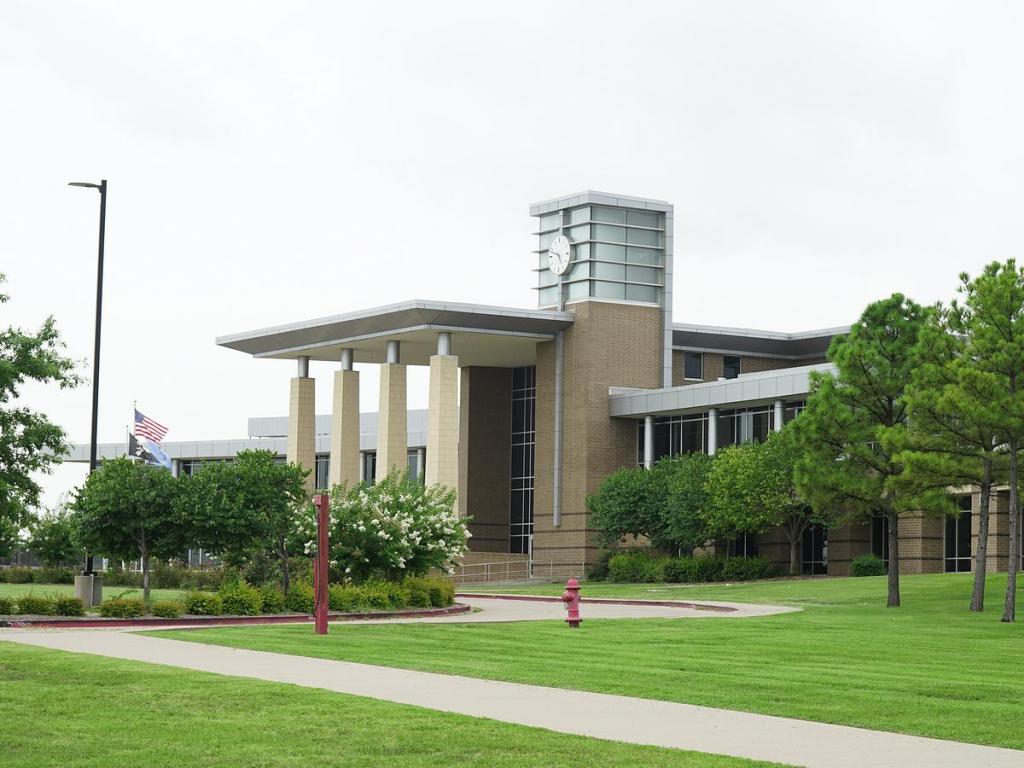
“It’s never about the tool, it’s never about the technology,” Chitty said. “Innovation is really just about doing something different for a better outcome, right?”
The district opened up student access to Gemini last year and saw “huge amounts of engagement,” Chitty said. Around 150 high schoolers took an AI-specific course in the spring. This fall, Vanguard Academy will offer a course about AI and STEM careers for up to 25 students.
“As (AI) tools developed, we really found ways that we could do this really safely and create experiences where students weren’t depending on the knowledge of the teacher to impart that on them,” Chitty said. “They could facilitate and teach students how to learn.”
Broken Arrow held an “Hour of AI” for every grade level this spring, where students worked on developmentally appropriate projects related to the technology. In third grade, Chitty says students may explore how AI tools run off pattern recognition. In 7th grade, they may examine the ethics behind its use.
“The problem with artificial intelligence right now, it’s easier now than ever to learn something you want to learn, and it’s easier now than ever to avoid something you don’t want to learn,” Chitty said. “Especially if the outcome is like a project or some compliance model — that happens a lot in our school districts. And so we’re really thinking about that.”
Additional policies and training at districts like Owasso and Broken Arrow come as parents and educators across the country push back on screen and AI use in schools.
While Oklahoma’s public school boards must adopt policies on AI, they are not required to use the technology under the new law. A district’s policy may say AI is not permitted in its schools at all. Families must also be able to opt a child out of student-facing AI tools without penalties.
Leonard, the state education department official, says she understands parent and teacher caution. But she hopes Oklahoma schools won’t avoid the technology completely.
“Just by turning it off, I don’t think that’s the solution,” she said. “(Students) won’t be ready. And it’s not going to help us with our educational outcomes.”
Where do other districts stand on AI policies?
Tulsa Public Schools is also in the process of developing a policy on safe AI use and implementation, says spokesman Kyle Boone. It will include input from students, teachers and administrators.
Union Public Schools expects to work on a new board policy in October, when the district typically goes through its policies to remain compliant with recent legislative changes, according to spokesman Chris Payne.
Districts must also annually disclose all AI use in schools to families under the new law. The requirement is likely to be a “heavy lift” for some districts, Leonard says, but one she sees as worthwhile.
“The first year will be a challenge,” she said. “But I think it’s great because they have to identify why they’re using (AI), which I think is critical. We’re not just using it to use it — what’s its purpose?”
The state department also expects to release its third iteration of guidance for AI use in schools, Leonard says. It will focus on identifying bias in AI tools, data accuracy, ethical use and the requirements of Oklahoma Responsible Technology in Schools Act.
“I always have said, ‘We only use technology when it can enhance and extend learning,’” Leonard said. “And I think that same thing goes for AI.”
More policies should roll out throughout the coming school year.
If parents or teachers have questions or concerns about AI technology in the classroom, Officer and Leonard recommend starting a conversation with your school.
“Part of this policy is how a parent can request a review of the use of AI for their child,” Officer said. “Give us a call, and we’d love to sit down and talk and explain how we use it.”
News decisions at the Tulsa Flyer are made independently of our board members and financial supporters. Read more about our editorial independence policy here.
