



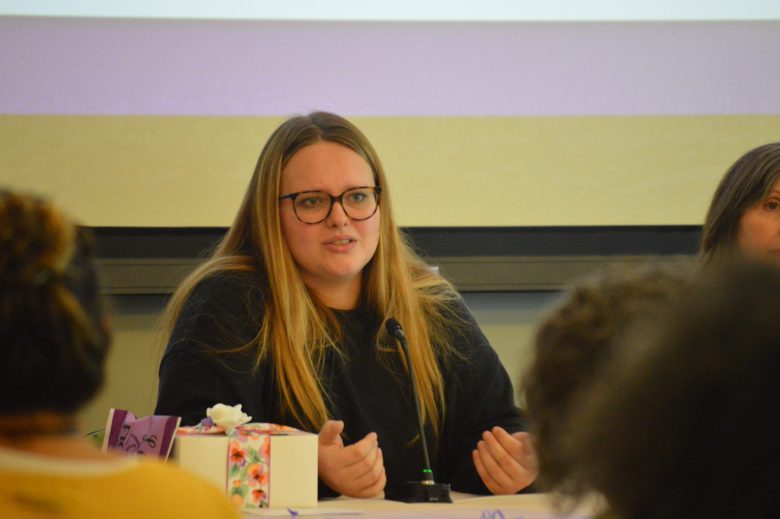
Domestic violence experts shared resources for survivors and addressed common misconceptions during a panel Thursday at the Tulsa Health Department’s North Regional Health & Wellness Center.
October is nationally recognized as Domestic Violence Awareness Month. In Oklahoma, 40% of women and 38% of men experience physical violence, rape and/or stalking by an intimate partner in their lifetimes, according to the state health department.
Of the misconceptions about survivors, a commonly asked question is why victims don’t leave their abusers.
“Maybe they don’t have the financial means to leave,” Natasha Wiedel, education and outreach coordinator for the Tulsa-based treatment center Domestic Violence Intervention Services, said Thursday. “Or maybe the person took all their documentation. Maybe they cut up all their IDs, their birth certificate, Social Security card — all their documents for them to rebuild their life.”
Making an attempt to leave can put a victim in even greater danger, she said.
“When someone does leave an abusive relationship, it is the most violent time of their relationship because that person is losing the control that they’ve had for x amount of time,” Wiedel said.
Data shows it takes on average seven attempts for a person to leave an abusive situation.
The panel came months after the city’s Equality Indicators report showed domestic violence calls to 911 originate from north Tulsa at a rate that is 2.5 times higher than the rate from south Tulsa per capita.
Kimberly Whayne, a licensed professional counselor and founder of Tulsa’s Overcross Counseling and Equine Services, told The Eagle that data doesn’t tell the full story.
Instead, she wants people to consider how systemic factors such as lack of access to adequate transportation and grocery stores — a common theme in north Tulsa — might impact people’s mental health.
“Not having access, it increases so much stress,” Whayne said. “I am from north Tulsa, 28th and Cincinnati. I never saw my dad put hands on my mother but when I got into my marriage, I got into a marriage with a man who kept putting his hands on me. But because I knew that wasn’t healthy, I was able to get out.”
Wiedel encouraged people seeking support to reach out to DVIS. The organization partners with others in the community and can connect survivors to resources like rental assistance, clothing and bus passes. Their 24/7 crisis and information hotline is 918-743-5763.
“People care about you and we’re going to loop you in with community partners who do that as well,” she said. “Because it’s the worst thing to feel not supported. We’re going to support you in every way we can.”
If you or someone you know needs support, you can also call the National Domestic Violence Hotline at 1-800-799-7233.
