


A joke in the Rousseau home is how the parents love certificates. They have a stack representing every parenting class they completed at the Parent Child Center of Tulsa — the only couple to go through nearly every available program, sometimes more than once.
They’ve helped expand a fatherhood class and serve on the center’s parent advisory board. If a new parenting session becomes available, they will be there.
“It’s not so much that you need help. It’s that you’re here because you need more tools,” said Josh Rousseau. “It’s not about coming in to prevent child abuse. It’s about becoming better equipped. I’m coming in to be a better father. If I’m a better father, then we’ll have a better life.”
They aren’t alone. During the COVID-19 pandemic, the Parent Child Center experienced a 116% increase in demand for its parenting programs. The surge hasn’t let up, and waitlists are growing for voluntary parenting classes.

It would take $2 million annually for the center to bring those participants in and eliminate the waitlists.
The problem reflects a positive shift in parenting. Rather than wait for frustrations to mount or child outbursts to escalate, parents seek help early. This prevents child abuse and neglect, even if those aren’t the words the center uses.
“Just acknowledging that you need help is a big struggle in our society,” said Melanie Anderegg, president and CEO of the Parent Child Center. “A silver lining of the pandemic is that it put front and center a variety of different issues that we’ve all been trying to deal with behind the curtains. It made a big difference with parents calling us to say they needed help. They didn’t know what else to do.
“We want to meet parents where they are and reduce the stigma. We let them know, we understand you’re trying to juggle being your parent’s teacher, working a full-time job from home and dealing with all the changes in the world.”
Oklahoma’s child abuse and neglect problem
Oklahoma consistently ranks among the top five states for child abuse and neglect, with a rate of 14.2 cases per 1,000 children — compared to a national rate of 7.7.
The confirmed child abuse and neglect cases rose 41% between 2012 and 2022, according to the latest report from the Oklahoma Department of Human Services issued in December 2022. Those represent between 20% and 25% of total calls for assessments and investigations.
In Tulsa County, the rate is more than double the national average.
The Parent Child Center offers its parenting programs free of income eligibility or insurance requirements. Of the nonprofit’s 11 programs, two — Positive Parenting and Safe Care — include a home visitation component, and each has a waitlist of up to 35 families.
Most of the 93,000 parents and children served annually are coming into the programs voluntarily. Only about 1,000 have existing involvement with the state’s child welfare system.
“We hear a lot from parents about struggles on managing a child’s behavior,” Anderegg said. “They are usually at their wit’s end and don’t know what to do. They recognize they don’t have the skill set needed.
“It’s really OK to say that you don’t know what you’re doing and need help. We aren’t given a handbook to this beautiful gift we’ve been given, and we’re all just trying to manage it. We recognize that we tend to parent like we were parented, and that’s not always the best way.”
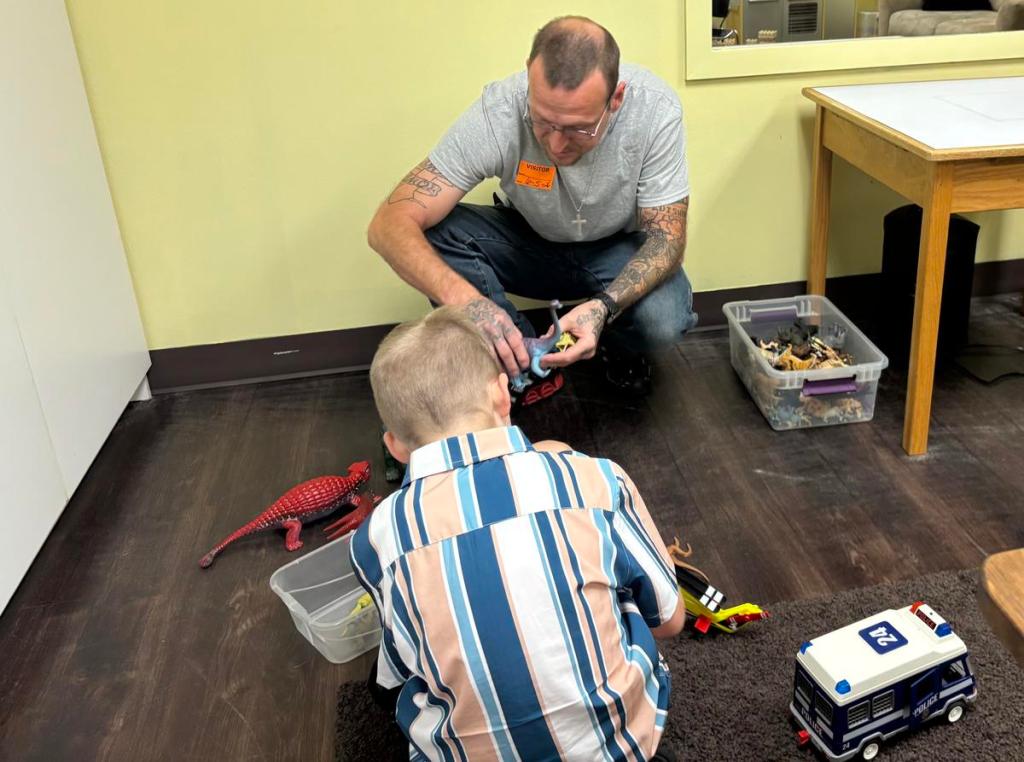
Healing from trauma
Amie Rousseau took her first parenting class in 2012 after a child welfare assessment. A social worker found no child abuse or neglect had occurred but suggested a parenting class.
She decided it couldn’t hurt. It changed the trajectory of her life.
The program helped her leave an abusive relationship and sharpened her communication skills. She created charts showing her children expectations like making a bed. She began narrating to them through activities, like “we’re now putting on our shoes.”
“I didn’t realize my childhood was as bad as it was,” Amie Rousseau said. “I kept trying to figure out why I was choosing all these abusive relationships. It all went back to my childhood.”
Eventually, she met and married Josh, creating a blended family of five. Some parents find the home visitation programs challenging for fear of being judged. Not so for the Rousseaus.
“In the beginning after having a baby, I didn’t go a lot of places and was isolated,” she said. “Then, to have someone coming into your home to talk to and make little changes was so helpful. You’re so focused on the day-to-day that maybe you’re missing the bigger picture.”
Initially, Josh didn’t think he needed a fatherhood program. He took one out of curiosity and realized halfway through how necessary it was.
“You can’t heal from something you don’t know is there,” he said. “I didn’t realize there was trauma going on. You just take it as normal, especially in the male world. Men are taught a lot of different things as a child: Suck it up, be tough, push through it.
“When I reflected on that, I could see where those mistakes were in the past. This program is about not repeating them and passing along to your children, breaking that generational cycle.”
News decisions at the Tulsa Flyer are made independently of our board members and financial supporters. Read more about our editorial independence policy here.