


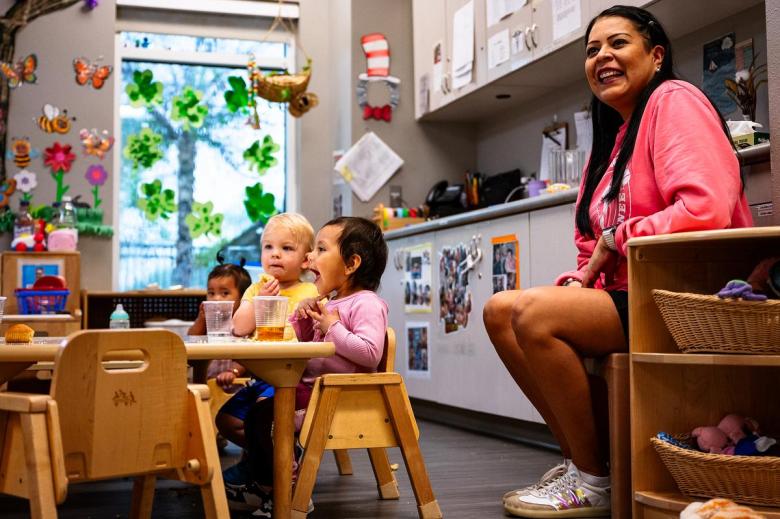
A quarter of the classrooms at Crosstown Learning Center sit unused. It’s not for a lack of demand but a lack of funding.
The child care center in Tulsa’s Kendall Whittier neighborhood uses a mixed-income model and can serve up to 120 children. It has faced numerous financial squeezes — but without a $5 per day pandemic-era add-on payment from the state, Crosstown expects to lose $60,000 this year. It caught them off guard.
“Just year after year of these impacts happening to us,” said Kristina Ellis, Crosstown executive director. “And we look at our budget and we move things around, but we’re at a point where there’s no moving things around, no cutting expenses unless you want to cut quality.”
As of April, 131 child care centers have closed this year in Oklahoma after 472 shut their doors last year, according to the state’s Department of Human Services. The end of pandemic-era subsidy add-ons is hitting small providers and north Tulsa child care centers especially hard.
Even for larger centers like Ellis’ that are less reliant on subsidies, Oklahoma’s child care funding model has caused massive financial hurdles and strain. Come July, income eligibility changes will mean fewer families qualify for state financial assistance for child care.
In December, DHS requested $70 million in state funds “to stabilize the child care system and prevent future funding cliffs.” The ask was drastically reduced to just $7.6 million in the legislature’s April budget announcement.
“It’s really hard to find the positives right now other than the children and the families that we’re supporting,” said Ellis.
The Department of Human Services declined to comment on the state of child care funding or subsidy cuts, with department spokeswoman Nazarene Harris citing “pending litigation.” The department is involved in an ongoing lawsuit with the Licensed Child Care Association of Oklahoma over initial cuts to subsidies.
“The child care industry has been a fragile industry for the last 25 years — the pandemic exacerbated and really highlighted how fragile it was,” said Stephanie Lippert, deputy director of the Oklahoma Partnership for School Readiness. “It has never come back. And it’s been teetering, and it is all coming crashing down right now.”
Lippert’s organization has tracked child care closures since 2017 using DHS data. Pandemic-era funding infusions helped raise the state’s capacity for care, but closures in recent years have brought the number of providers back below 2019 levels.
“The closings, they are coming,” Lippert said. “Between now and the next six to nine months, it is going to be stuff like that I’ve never seen in my 22 years of doing this work. It’s gonna be that bad.”
Lippert, Ellis and others agree these closures and continued reductions to funding will have broader implications for Oklahoma’s workforce and educational system.
“When families are not able to secure child care subsidies they experience disruptions in their lives,” said Cara Kelly, an early childhood researcher at the University of Oklahoma. “We’re talking about job loss, reduced work, school participation, increased economic hardship as well.”
CAP Tulsa, a federal Head Start-backed child care program, expects a $250,000 loss following DHS changes. That’s a fraction of its $72 million budget, but will impact its extended care program, which serves families who are already income-constrained.
“I think we’re gonna have to take a hard look at our budget and figure out how to divert resources to make up for that loss of revenue,” said Karen Tilkin, executive director of CAP Tulsa. “I don’t want to reduce the services that we’re offering for extended care because I think they’re very important for families who are working and trying to put food on the table, especially amidst all the other increases in costs.”
Tulsa Educare serves more than 650 students across four child care centers, with a focus on children experiencing poverty. Executive director Cindy Decker expects they’ll take a 10% hit to their DHS revenue budget, around $250,000, just from subsidy cuts this year. That doesn’t account for July eligibility changes.
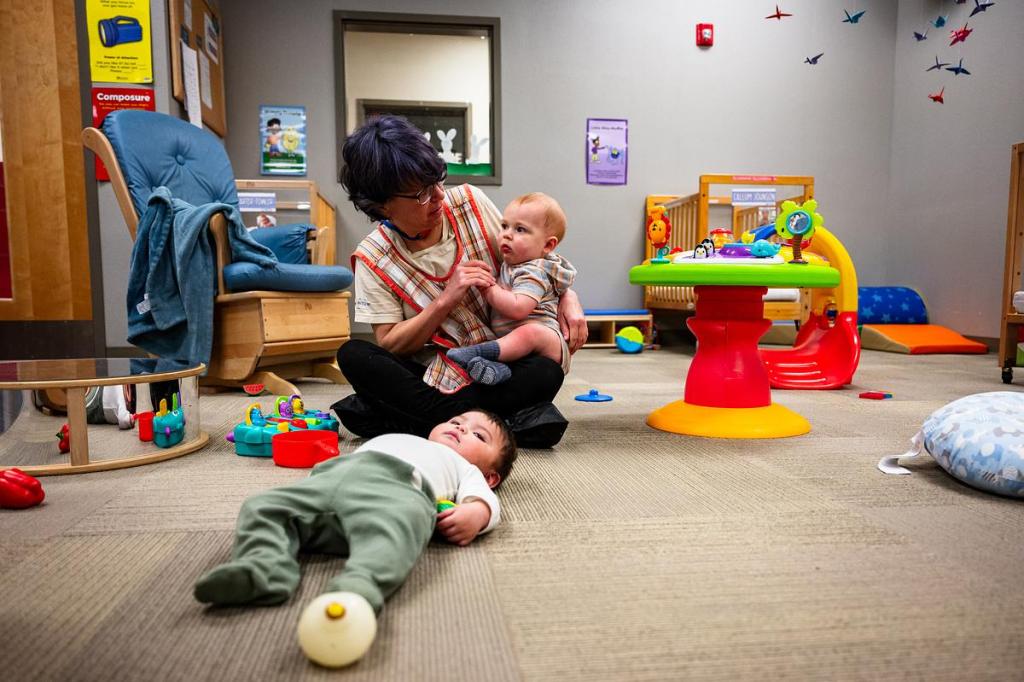
“I’ve gotten accustomed to the frantic, just the survival mode of my work,” Decker said.
“I love my job, but it has gotten to be harder to have fun at work — though we’re working with children who are learning and growing and laugh and play around you — because you’re just trying to survive all the time,” she added.
Decker doesn’t expect to close the doors of her centers, but they will need to make changes. The smaller family home child care centers Educare works with and trains are in a much more difficult position, she said. They are already seeing some prepare to close.
“Child care has not been a business where there’s a lot of profit,” Decker said. “When you take 10% off, I just don’t see how it’s feasible.”
All of the children at Tulsa Educare qualify for Head Start funding. To qualify, the household income must be at or below the federal poverty level or the family must receive public assistance, experience homelessness or have children in the foster care system.
Educare only serves around 6% of Tulsa’s children who meet those requirements, Decker said.
Head Start funding is relatively untouched so far by social safety net cutbacks at the federal level. In February, $85 million was added in the federal budget to both Head Start and the Child Care and Development Block Grant program, which funds state subsidy programs.
Still, federal cutbacks loom large.
“We can’t take care of day care. We’re a big country. We have 50 states,” President Donald Trump said at a private April 1 White House Easter Luncheon.
“We have all these other people. We’re fighting wars. We can’t take care of day care. You got to let a state take care of day care, and they should pay for it too,” the president said.


It’s disheartening to hear, said Ellis of Crosstown. But she takes it as a reason to keep lifting up the work. Her focus now is pushing back on the cuts to state funding and making sure families are prepared for another round of reductions in July.
Crosstown has joined a new coalition of Tulsa nonprofit organizations proposing a local solution to the funding crisis. Yes to Kids Tulsa is pushing for $30 million annually — either from city appropriations or a tax increase — to help fund child care and after-school programs.
“Raise the money, fight for the awareness and not just keep cutting,” said Ellis. “We’ll eventually get to the floor. We’re at the floor. Centers are closing every day.”
News decisions at the Tulsa Flyer are made independently of our board members and financial supporters. Read more about our editorial independence policy here.
