


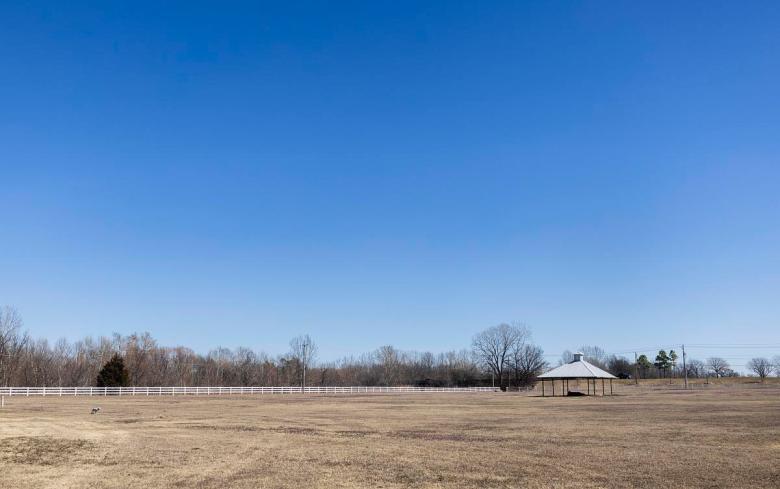
For decades, a 25-acre horse ranch sat at the northwest corner of South Elm Street and West 106th Street South in Jenks — next to about 415 acres owned by the Oklahoma Turnpike Authority.
Now, city leaders think the entire site could someday rival the Gathering Place in Tulsa. But some Jenks residents are skeptical of the city’s vision and spending.
In June 2023, the Jenks City Council approved using $6 million in federal funding tied to COVID-19 relief and about $545,000 in taxpayer funds to purchase “The Ranch” to keep it as green space. When OTA auctioned the adjacent land the following year, the city initially purchased it for about $406,000. OTA later refunded the city $19,437 after recalculating the property value.
According to Councilor Adam Abel, Jenks officials have outlined the 440 acres — which makes up more than 3% of Jenks’ total land area — in its 100-year plan as a “Gathering Place contender.”
“The priority of purchasing this property is because we can’t get any more (land),” Abel said. “And having that vision of something truly special to be part of that 100-year plan.”
‘It could be the next Central Park, but we’re not New York’
Bryan Wilks is co-founder of downtown’s Ten District and owner of the Lenny Lane building and the Freeform House members-only club. He is an outspoken critic of city happenings and believes leaders purchased the property to avoid it being developed commercially.
In April 2023, just two months prior to Jenks purchasing the land, the planning commission voted unanimously to amend the land use from parks and open space to regional commercial, despite pushback from neighbors.

“It was a political problem and they used a big amount of taxpayer money to get out of it,” Wilks said.
Additionally, he says he was surprised by the $6.5 million price tag. According to the Tulsa County Assessor’s Office, the property has a fair market value of $2.91 million — less than half of what the city paid.
Abel, a mortgage officer, says improvements were made to the property after it was last assessed, which changed the valuation. The previous owners added a baseball diamond, a pavilion and other features prior to the sale.
“I don’t think a lot of that stuff was there when (the previous owners) initially bought it, but the difference that they made increased the value to that amount,” he said about the sale price.
Abel says annual property value increases are limited by state law unless the property is sold or improved. When a property hits the market, he says the value is based on the previous sale until it’s purchased again and the value is reassessed.
“That’s when the property tax assessors go back in and see, you know, something’s worth how much somebody’s paying for it,” Abel said. “And thus we redo the tax at the property tax assessment, which is the value of the property.”
Wilks says there are more pressing issues in the city — like downtown infrastructure — that need to be addressed before making multimillion-dollar land deals for properties that will not generate sales tax.
“I love that they say it’s going to be the next Gathering Place. That’s all great. It could be the next Central Park, but we’re not New York,” Wilks said. “We have real infrastructural problems.”
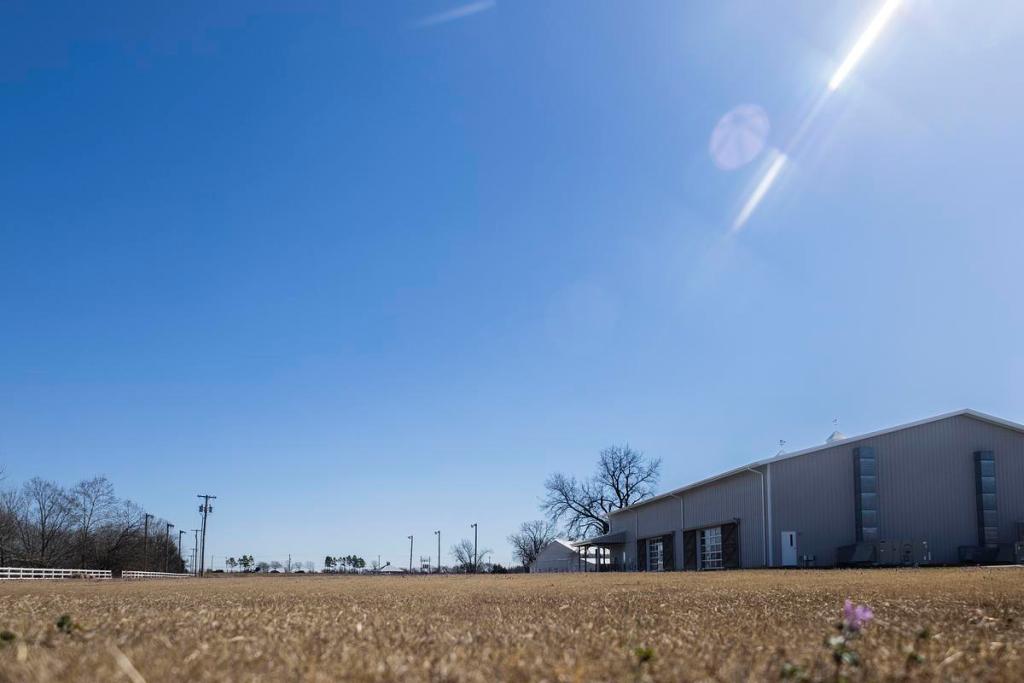
Abel says there is no strict timeline for improvements to the four buildings on the property — including a pavilion and several barns — and the city’s essential infrastructure needs will be prioritized.
He says city officials will begin discussing next fiscal year’s budget in March to determine how much funding could be allocated toward the property on an annual basis for things like maintenance or capital improvements.
“Our infrastructure, road improvements, connecting 106th and Elm to the outlet malls — those are improvement projects that are priority No. 1,” Abel said. “This is almost like an at our leisure project.”
Horse trails and ‘Footloose-style dances’
Abel says hundreds of ideas were submitted for the property during three open houses in 2025, but for now, it’s just a green space. Eventually, it will undergo a name change, he says.
“We had suggestions anywhere from a unicorn barn to disc golf, a track, a horse barn,” Abel said. “One resident rallied a bunch of people to get horse trails because they are removing horse trails from Turkey Mountain.”
He says there are restrictions on the majority of the land that is in a floodplain, but that may change.
“Eventually, we may look into seeing what we can do to lift those restrictions, but from the consensus of those open houses and the wants of residents, people don’t really want — and I don’t think current council — wants that to be commercially developed,” said Abel.
Of the four buildings on the site, Abel says the pavilion will be used to host events that generate revenue for the city. Discounts will be provided to Jenks residents, nonprofits and community groups.
“A rough vision is the gray barn would eventually be rentable too to have ‘Footloose’-style school dances, or just a cheaper alternative other than the fancier pavilion,” Abel said.
He says there are a few organizations interested in reshaping the red barn and the house that sits on the land, including Jenks American Museum and the VFW.
The city opened “The Ranch” to the public Jan. 1. The gates are currently accessible from 7 a.m. to 6 p.m. Monday through Saturday.
News decisions at the Tulsa Flyer are made independently of our board members and financial supporters. Read more about our editorial independence policy here.
