

Atabak Parsa is messaging dozens of friends and family members in Iran to ensure they’re safe, but they can’t respond.
“It is in Persian saying, ‘Hey man, where are you? Are you alive?’” Parsa said, showing his WhatsApp messages to the Tulsa Flyer.
Parsa was one of about 50 people who stood at the northeast corner of East 41st and South Yale Saturday to protest killings of people demonstrating against the Iranian government. Waving Iranian and American flags, the group chanted for Iran to end its Islamic Republic and for the United Nations to take action.
Nationwide demonstrations broke out in Tehran in late December over the country’s economic instability and political establishment. Iran’s supreme leader has acknowledged that thousands were killed during the ensuing unrest, with human rights advocates describing scenes of government forces opening fire on protesters in the street.
Iranian authorities cut off access to internet and mobile communications Jan. 8, though Al Jazeera reports the blackout began to scale back Sunday.
“I sent like 20 to 30 texts to them, but they have no internet,” Parsa said. “To be honest with you, all my family members as well as close friends or other friends of friends, I’m not even sure if they are dead or alive.”
Elham Kucirek, an Iranian immigrant who obtained U.S. citizenship in 2024, organized the protest. She said nearly 1,200 Iranian immigrants and refugees live in Tulsa.
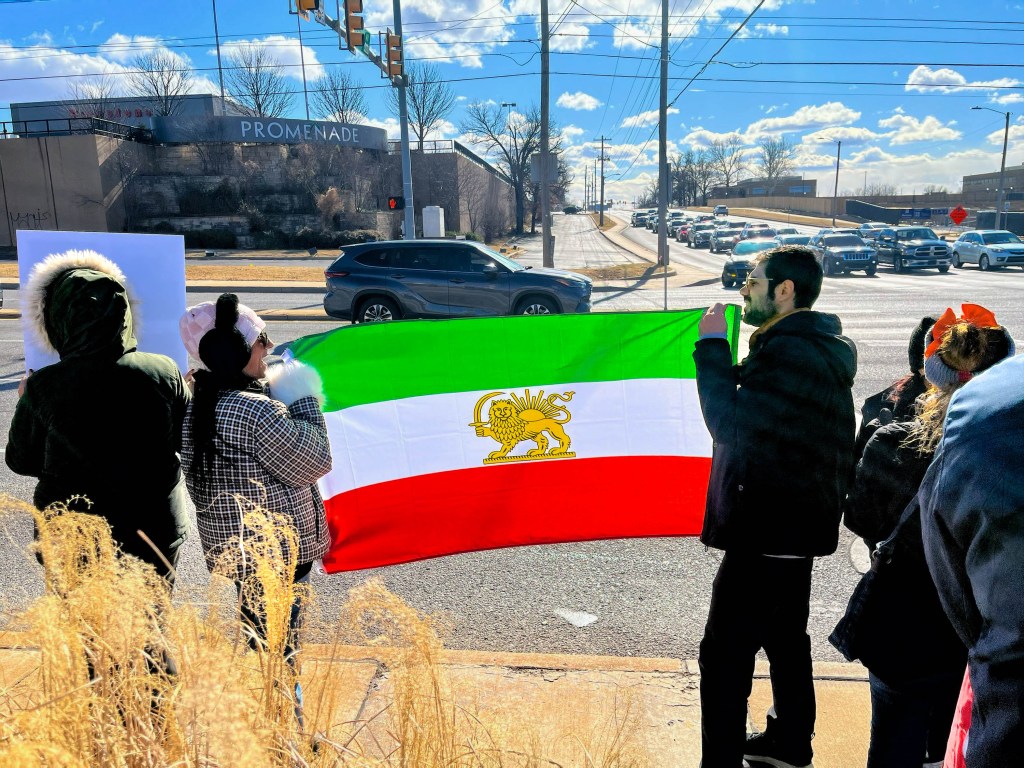
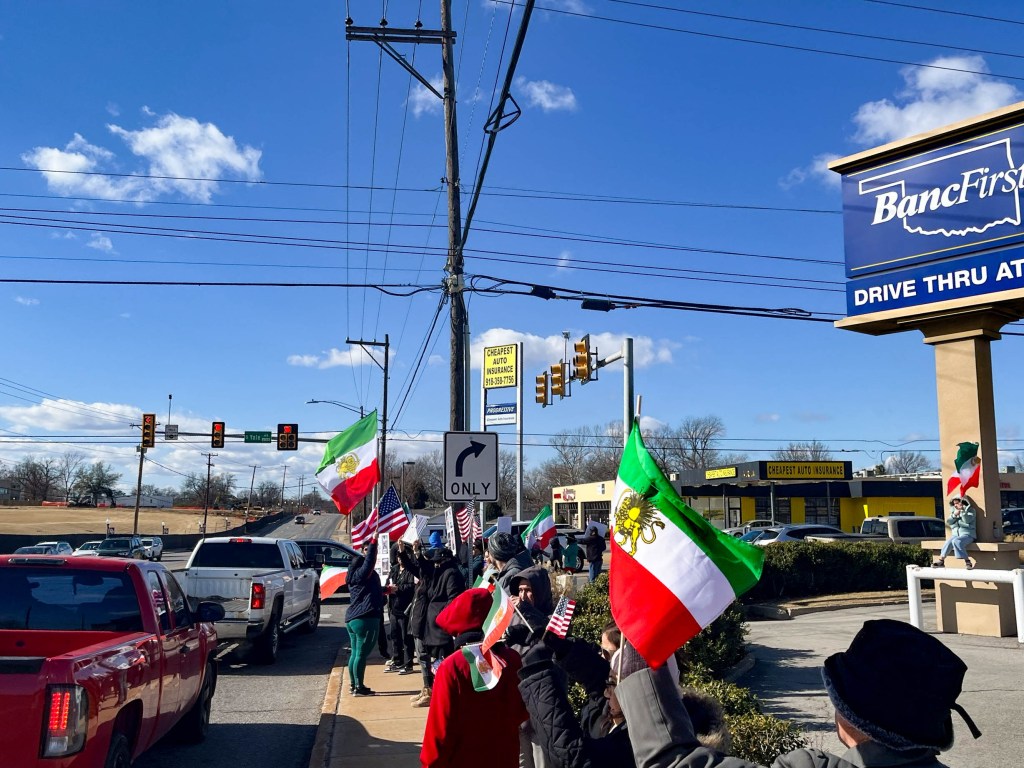
“Our goal is to basically raise our voice and raise concern that this brutal regime is killing people,” Parsa said. “They also do a complete blackout and internet shutdown, so basically, the world cannot watch what exactly is going on.”
In 1979, a revolution transformed the country from a secular monarchy into a theocratic Islamic republic, meaning clerics assumed political control. Rasool Azari, a refugee from Iran who now resides in the Tulsa area, said the country was totally different back then. He converted to Christianity in Iran before immigrating to the United States as a refugee.
“I know a lot of churches, a lot of Christians, a lot of people in Iran are just sick and tired of this Islamic regime,” Azari said. “Even those that are secular, even those that are (practicing) different religions or even the Muslims … even they are fed up with this terroristic, messed up regime and they want to change that.”
Maryam, an Iranian immigrant, spoke with the Flyer Saturday but asked for her last name not to be published out of fear of retribution against her family. She said the Iranian government used internet and communication blackouts to cover up the murders.
“I ask all of the people who are hearing my voice, please, if you have any humanity, be our voice,” Maryam said. “We don’t have any news from our families. It’s like two weeks that we don’t even know if our family is alive or not. It’s two weeks that we don’t know if our friends are alive or not.”
News decisions at the Tulsa Flyer are made independently of our board members and financial supporters. Read more about our editorial independence policy here.
