

Hundreds of students are suspended from Tulsa County school districts each year, but they aren’t limited to high schoolers starting fights. In fact, hundreds of 4-year-old children are being suspended too — some for serious offenses, like assault.
Records show Tulsa Public Schools issued 462 suspensions to 212 preschool students in the last three years. Together, those students missed 912 days of school. Some of the more common offenses include unacceptable physical contact, disruptive or disorderly conduct, abusive behavior toward school personnel and assault.
While pre-K programs are smaller at Broken Arrow, Union and Bixby Public Schools, those districts are suspending preschoolers at comparable rates — between 2% and 4% of the student population — and for similar offenses.
Suspensions in early elementary classrooms are high nationally, a trend families and education professionals want to turn around.
“As a district we’re super aware that suspending pre-K students is certainly sensitive,” said Stephanie Andrews, executive director of student and family support services for Tulsa Public Schools. “It’s upsetting to families — it’s upsetting to the school district.”
A two-decade national problem unsolved in Oklahoma
Since 2005, early education research has repeatedly shown preschool suspension is a widespread problem in the United States, with a disproportionate impact on boys, students of color and students with disabilities. Oklahoma shares the same trend.
According to the U.S. Department of Education, nearly 1,000 out of 1.2 million public preschool students received one or more out-of-school suspensions in 2020-2021, missing more than 2 million school days altogether. That year, children who were Black, male or had a disability were suspended more often.
At Union Public Schools, nearly 77% of the students suspended in the last three years were boys, but the district did not see a “significant correlation” to race or ethnicity, according to district spokesman Chris Payne.
Due to student privacy restrictions, TPS did not share the demographic data for the children involved in their suspensions. The district also declined to provide the number of suspensions at each of its 45 preschool sites.
The average suspension length at TPS was around two days. The district’s behavior response plan for elementary ages recommends pre-K students should not be suspended for more than five days, though some stretched from seven to 11.
TPS suspended 3.5% of its preschool students last year. Broken Arrow suspended 2.2% of its student population last year, issuing 79 suspensions to 53 children in the last three years. Union issued 118 suspensions to 56 children. Bixby issued 22. Broken Arrow and Bixby suspended students for assault. Union did not.
The Flyer has not yet received suspension records from Jenks Public Schools.
While these schools are recording dozens of preschool suspensions each year, the state’s 2017 plan for early and secondary education recommends schools “exclude pre-K students from out-of-school suspension and expulsion disciplinary actions.” That recommendation remained after former Oklahoma State Superintendent Ryan Walters revised large portions of the plan in 2025.
The state instead encourages systemic solutions, like teacher training and early intervention, but they are not required. There is no mandate preventing preschool suspensions in Oklahoma, and schools say using extreme terms like “assault and battery” are needed when reporting school safety data to the state.
With support from the state advisory council, Oklahoma Partnership for School Readiness, University of Oklahoma researchers have been examining the issue statewide and expect to publish a report by the end of the year, according to researcher Courtney Dewhirst.
Preliminary findings show a need for additional mental health, behavioral support, assessment and evaluation services to assist Oklahoma’s youngest students.
In a statement to the Tulsa Flyer, TPS said it is actively reviewing policies and working with partner organizations to assist families with root causes. Broken Arrow highlighted its Tiger Connect program as a solution for disruptive behaviors at the elementary level. Union said recent support measures like added social workers, disability accommodations and behavior plans should reduce future suspensions.
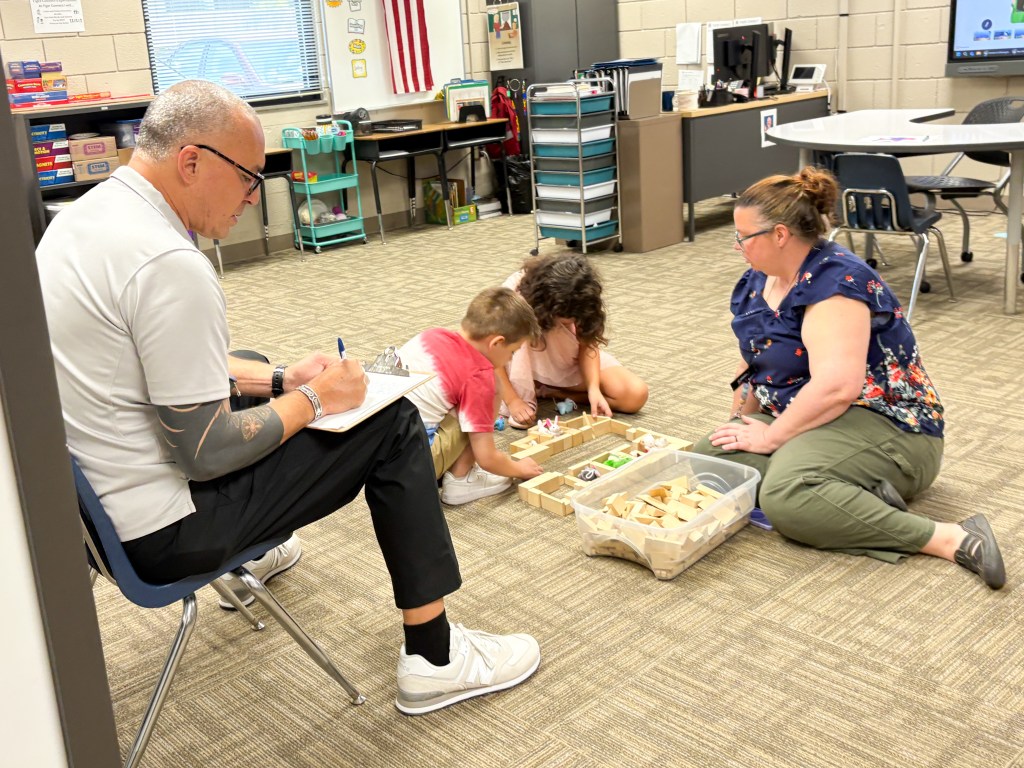

Behavioral challenges are rising across the country following the height of the COVID-19 pandemic, particularly from children who were born or spent their formative years in isolation. Anecdotally, TPS staff say suspensions have gone up too, though they did not provide pre-pandemic suspension rates to compare.
Broken Arrow has “continued to see a rise in violent and disruptive behavior in the past five years,” even at the pre-K level, said district spokeswoman Christina Dixon.
“We do not take these behaviors lightly, and they have to be rather extreme or repetitive before this age group is suspended, but it does occur,” Dixon said. “We have behavior specialists and therapists in our schools to assist, but even with these supports, it can be necessary to send a student home for extreme behaviors.”
Feeling like the ‘cards are stacked’ against kids
“Generally, the children that are getting multiple suspensions for behavior, there’s something more that’s going on,” said Amy Wallace, a TPS parent. “It’s a little bit more deep rooted than just bad behavior.”
Wallace enrolled her son in Anderson Elementary’s pre-K program at age 4. Within 15 minutes of his first day of school, she got a call that her son was rolling down the hallways. After getting calls every day for weeks, Wallace pulled him out of preschool.
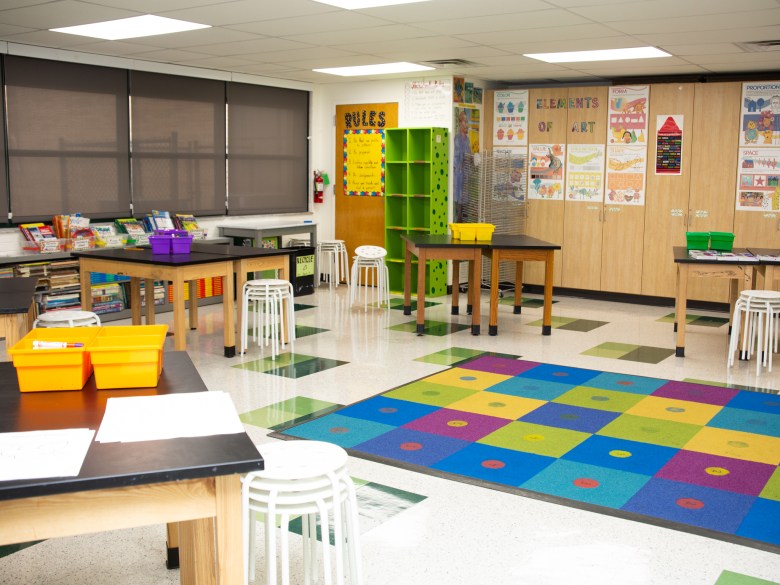
At TPS, Union, Broken Arrow and Bixby, 4-year-olds enter full-day pre-K programs. For some kids, it’s their first time in such a rigorous environment.
“The ability for the average, typical 4-year-old to sustain their self regulation all day is challenging,” said Kelly Kane, executive director of elementary and early childhood education for Tulsa Public Schools. “When you consider kids who might be coming with potentially some trauma or other challenges, it just makes it even, I think, more difficult.”
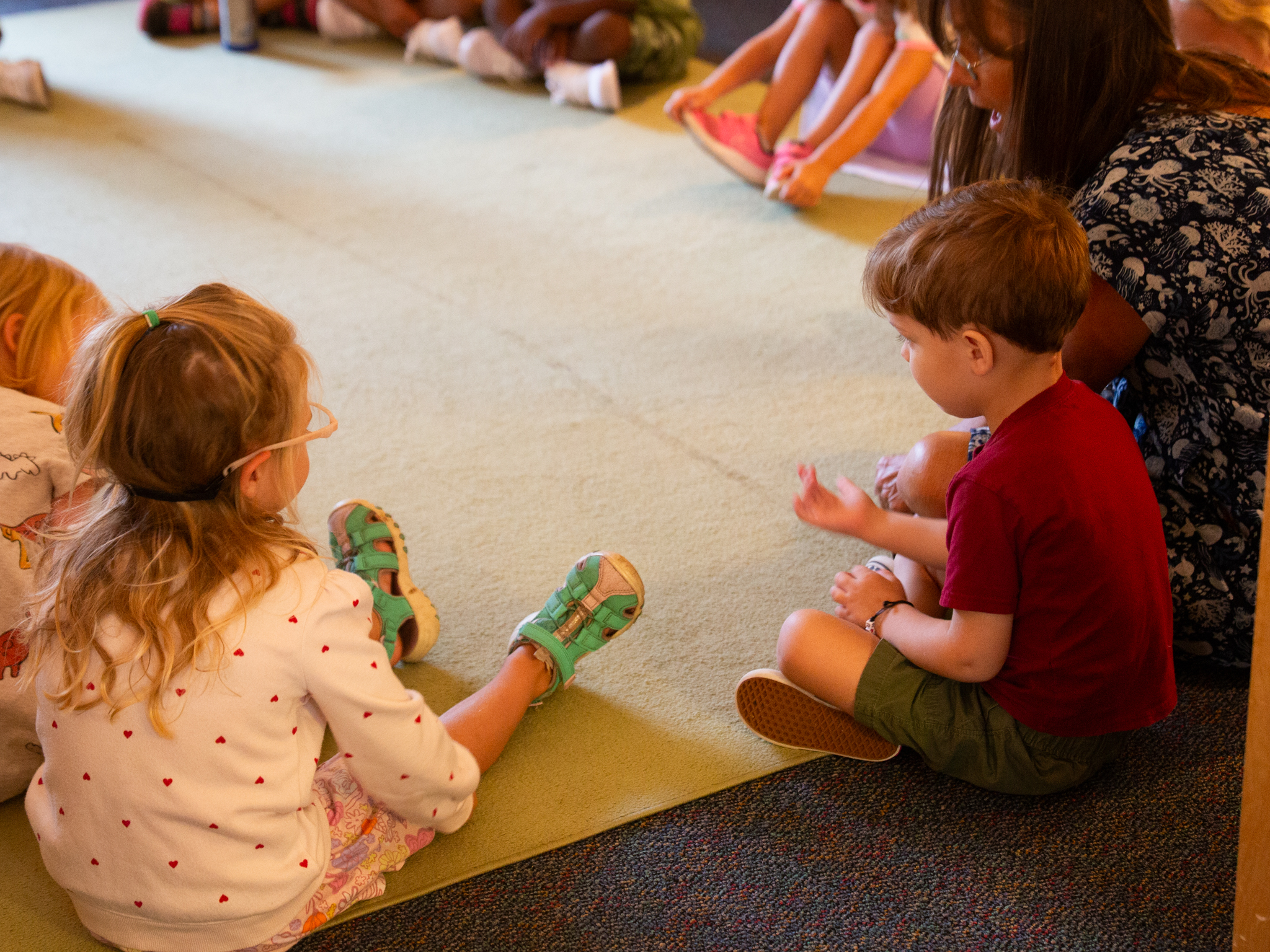
Kane and her colleague Andrews say developmentally appropriate behavior for small kids — running wild, rolling, playing and even pushing another student off the slide — is different from disruptive behavior that warrants a suspension. They said TPS is working to ensure all teachers and school leaders understand the difference.
“If everyone doesn’t have a deep enough understanding of what typical 4-year-old behavior look(s) like, then sometimes someone might code something as a more egregious offense,” Kane said.
When Wallace’s son entered preschool, she knew he had ADHD and developmental delays, but he hadn’t been diagnosed with autism yet. By kindergarten, he was suspended twice for violent behavior and sent home informally several times.
“It’s one of the worst feelings of disappointment and feeling so alone,” Wallace said. “And especially as a single parent and feeling like the cards are stacked against you, not even me — him.”
Wallace eventually had an Individual Education Plan (or IEP) meeting at TPS, where she received help from J.A.M.E.S., Inc., a nonprofit supporting young parents, and The Arc of Oklahoma, an organization supporting people with intellectual and developmental disabilities. Her son, now at Burroughs Elementary, is getting the help he needs from school staff and a Grand Mental Health counselor who support him when his behavior escalates.
Alisa Bell, founder and executive director of J.A.M.E.S., Inc., sat in Wallace’s IEP meeting, where families meet with district staff to develop goal-oriented plans for students with disabilities. Bell has worked with several other families who have faced early elementary suspensions.
It’s one of the worst feelings of disappointment and feeling so alone.
Amy Wallace, TPS Parent
Last year, the 4-year-old child of one of Bell’s clients was suspended for kicking a teacher, an act the district classified as assault and battery. The family didn’t question the suspension itself, but they were shocked it was labeled assault.
Bell says the child struggled with speech, and her family was arranging an IEP. Given the child’s challenges and age, the family couldn’t understand the use of such extreme language.
“I can’t imagine an incident where we should be doing that for a 3- or 4-year-old,” Bell said. “I don’t want to come across as saying that should never be the case, but I would think that that would be the most extreme case.”
TPS: Mandated reports lead to extreme language
TPS calls these classroom offenses “behavior infractions.” They assign codes to each infraction, from 100 to 420. These codes are applied across all school buildings and ages for “consistency and clarity,” according to the district.
The most common infraction for pre-K suspensions is “unacceptable physical behavior,” or a code 210. The district says these behaviors may look different from a 4-year-old than a 14-year-old student, but the code and language remain the same.
Why is that? Each year, schools must submit several reports to the state to show they’re following laws around student safety. These reports can impact how much funding schools receive from the government. The reports also use these terms, like assault or battery, regardless of grade level.
“I am going to first acknowledge the pain that families, teachers and school administrators experience around children with health and social emotional health problems,” said Kate Gallagher, director of the Early Childhood Education Institute at OU-Tulsa.
However, Gallagher says, she sees an issue with the labels being used when suspending these children — labels such as “verbal abuse to staff” or “threat with intent to kill.”
“I’ve seen language that 4-year-olds put out that, if an adult said, would be ‘harassment or intimidation.’ But how can we label it that with a 3-year-old brain, a 4-year-old brain?” Gallagher said.
What to do if your child is suspended
If your child is issued a suspension, you have options. Under Oklahoma state law, every parent or guardian can appeal their student’s suspension of 10 days or less. For a long-term suspension, families can request a review with district administration.
Full district suspension policies are linked below.
Tulsa
Union
Broken Arrow
Bixby
Jenks
Owasso
TPS says it has discussed making the shift to “friendlier, parent-facing” language, but it wouldn’t be a simple fix. To ensure their data matched the state’s terminology and reports without confusing parents, the district says it would have to build a new system.
“What we’ve not ever wanted to do, though, is then you pull up your child’s PowerSchool (portal) … and it says ‘assault,’” said Andrews. “We think there’s a way to say something like: ‘Here’s what that means in our 4-year-old classes.”
Gallagher says she’s not criticizing districts or educators who use these words, rather the educational approach of applying secondary education standards to preschoolers.
“This is systemic,” Gallagher said. “At its origins, schools weren’t designed for very young children — and it’s hard for schools to adapt to children who are in the early stages of developing self-regulation.”
News decisions at the Tulsa Flyer are made independently of our board members and financial supporters. Read more about our editorial independence policy here.
