


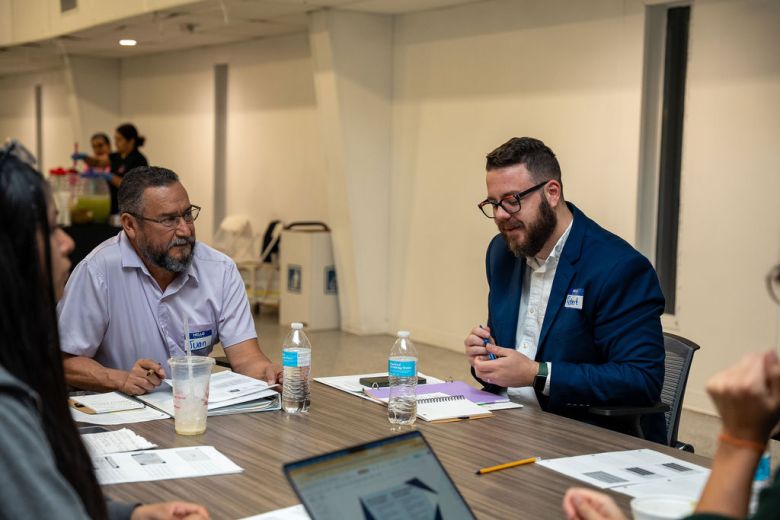
Kristi Roe-Owen wanted to learn how to contribute more to her east Tulsa neighborhood.
She learned that — and more — as part of the first cohort of The Neighborhood Network, an eight-week program aimed at teaching east Tulsans how to be more civically engaged.
The group was tasked with selecting a community project to tackle. After knocking on doors to determine issues in their neighborhoods, the group settled on code violations surrounding yard maintenance.
With a $20,000 grant from the Tulsa Area United Way, the group started designing a solution. They shared their plan with community leaders last week.
“This isn’t the end of the program for us,” Roe-Owen said. “This is the mark of us moving forward with what we designed.”

A persistent issue across east Tulsa
The Neighborhood Network identified improper yard maintenance as an issue that impacts everyone in east Tulsa. Barriers, such as a lack of income or language access, prevent some neighbors from properly maintaining their yards.
According to the City of Tulsa, inadequate yard maintenance is among the city’s top code violations. The following rules apply to all properties, including front yard, backyard, abutting right of way, fence line and ditches:
- Vegetation must not conceal or invite trash piles.
- Garden areas must be tended and cultivated.
- Overgrowth must be managed.
- Plants, trees, grasses and shrubs must be maintained.
- Grass can’t be more than a foot high, and all weeds should be removed.
- Vegetation and trees can’t obstruct the view of vehicles or pedestrians.
Roe-Owen hopes to help people avoid code violations with this project.
“I know what it’s like to get a penalty for a late fine — it makes your life harder,” she said.
Turning the plan into action
The group will create a volunteer-based community program that provides a bi-weekly or monthly yard maintenance service to prevent code violations. The service will include:
- yard care
- resource support
- early canvassing to prevent violations
The service will be available to residents in the Disney, Cooper, Columbus or Magic Circle neighborhoods.
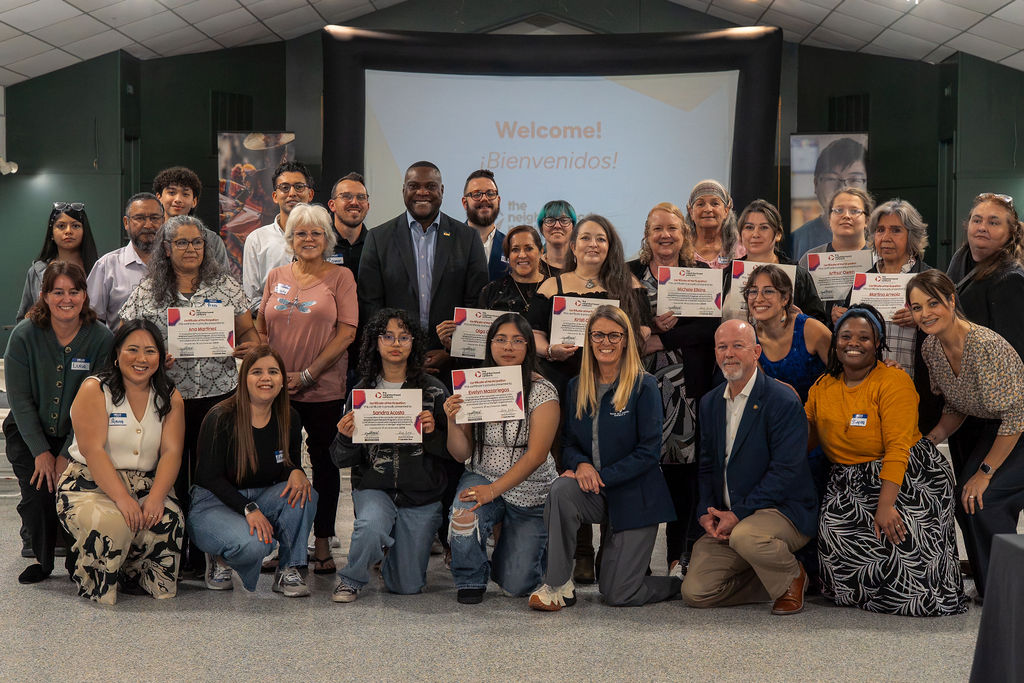
“There might be cases that are more extreme, but this to me is just a way for the neighborhood to start investing in its own resources,” said Luisa Krug, executive director of nonprofit group Eastside Rise, which oversaw the first cohort.
In January, Eastside Rise will create a community council with members of The Neighborhood Network to manage the program moving forward.
The council will flesh out the finer details, such as how to recruit volunteers, whether to buy tools or ask for donations and develop a detailed work plan with a timeline and budget.
Roe-Owen and her son, who was also a part of the network, are excited to take the next step with the council.
She plans to call on her husband, who works with lawn equipment, for his support in the spring. She also plans to bring in family and friends to help out with the service.
With plans to launch the service by April, Eastside Rise also has its sights on welcoming more neighbors into The Neighborhood Network next fall.
This article was produced as part of a partnership between the Tulsa Flyer and La Semana, a Tulsa-based bilingual Spanish-English newspaper serving Latino communities in Oklahoma.
Eastside Rise and The Tulsa Global District are funded by the The George Kaiser Family Foundation, which has also provided funding for the Tulsa Flyer. News decisions at the Tulsa Flyer are made independently of our board members and financial supporters. Read more about our editorial independence policy here.