


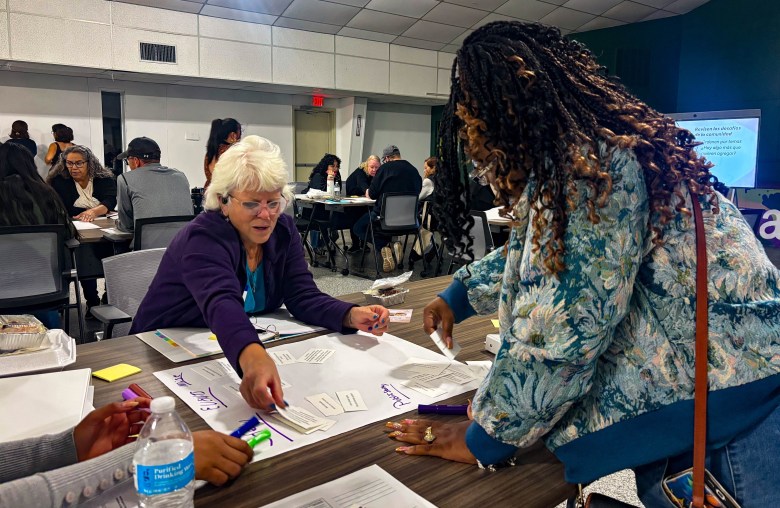
Christy Hartung often sees trash around eastside bus stops and roads. She thinks about spending time cleaning up the trash she sees across town.
But, she often second guesses herself. She doesn’t want to be judged, and doesn’t always know who to call for particular issues she sees in her neighborhood.
Through a new community program, Hartung is learning how to tackle these issues — and, she hopes, change Tulsans’ perspective on cleanliness.
Hartung is one of 22 residents participating in The Neighborhood Network, an eight-week program focused on helping community members understand how to be civically engaged. Each participant must either live or work in east Tulsa to take the course.
“I just have to get past these ‘I don’t know what to do,’ ‘I don’t know if I can do it,’ ‘I don’t know if what I’m thinking is good enough,’ so (the class) has just been empowering me,” Hartung said.
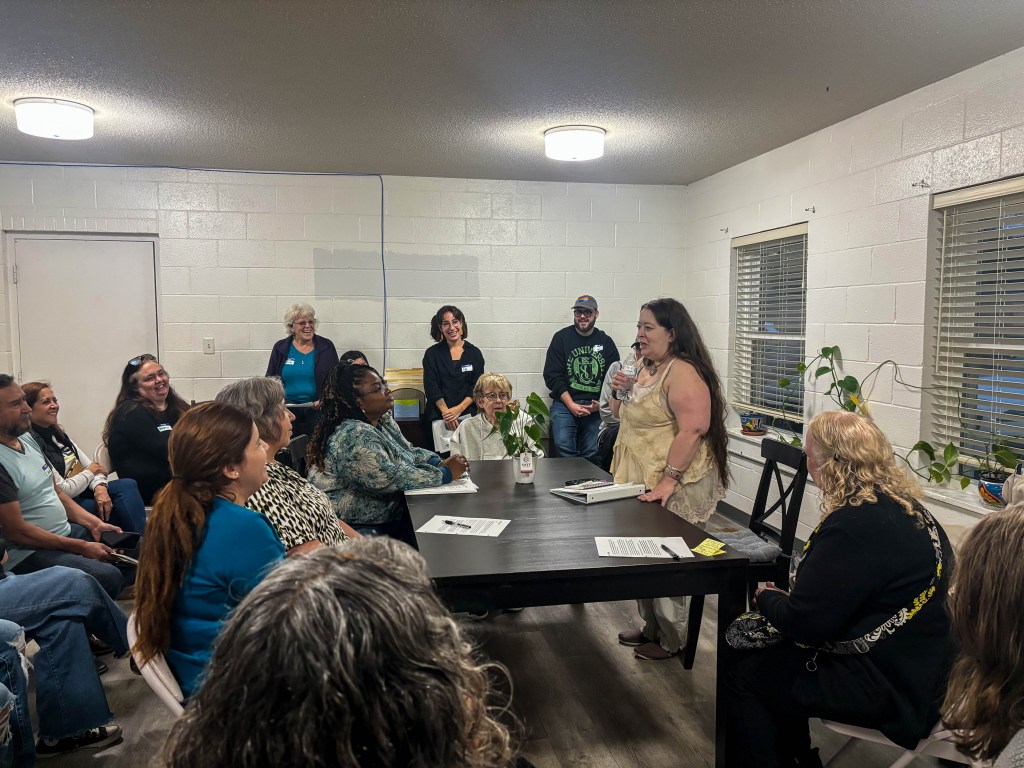
The program was launched in September by the Tulsa Global District, an organization focused on economically revitalizing the area around 21st and Garnett streets, and Eastside Rise, an organization aimed at empowering east Tulsans and connecting them to resources.
Residents have weekly homework assignments asking them to reach out to their city council representative, door knock in their neighborhood, determine who holds power on certain issues and more.
After the first class, participants were tasked with connecting with three people in their neighborhoods or near their businesses. Their mission? Ask about three assets and three challenges they see in the area.
“Every single one of (my neighbors) said they’d be willing to do something,” Hartung said. “So I realized that the personal invitation, a personal relationship, makes a big difference.”
Tulsa Global District received a $45,000 innovation grant from Tulsa Area United Way to launch The Neighborhood Network. Through the grant, $20,000 will be used to address a community issue. Each participant will also receive $500 upon completion.
In mid-October, the group selected “community beautification” as the core issue to tackle for the remainder of the program.
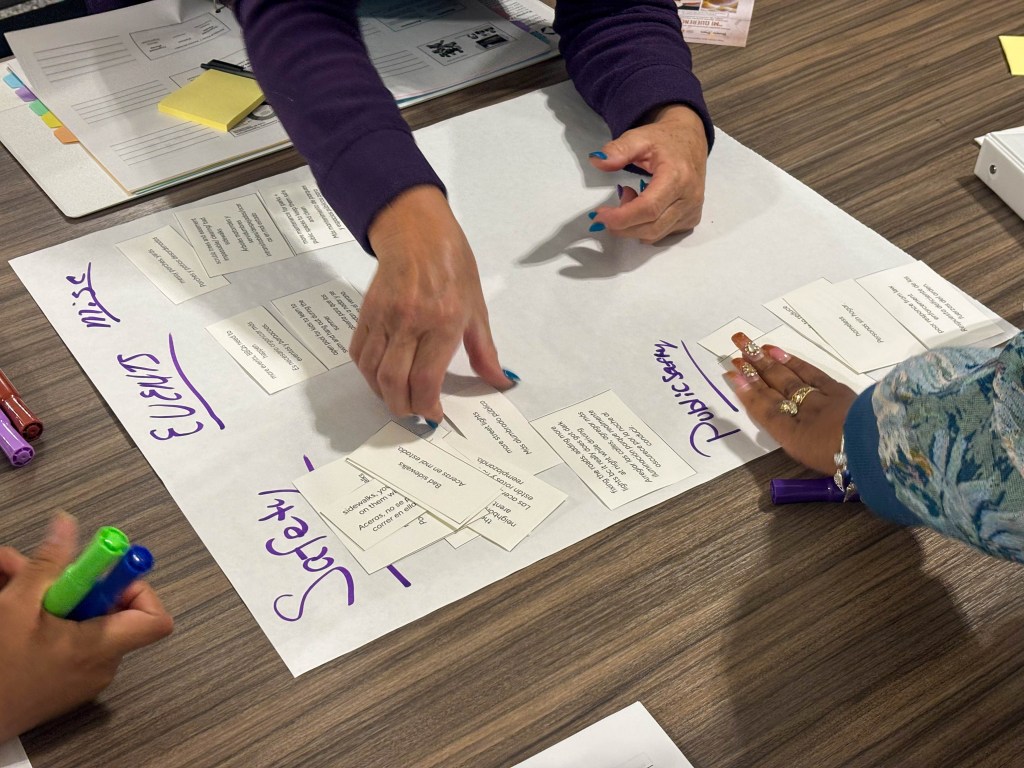
Participant Olga Ojeda sees community beautification as many different things, including connecting with business owners to fix potholes in their parking lots, addressing the rise of homelessness and adding more lighting in the area.
Ojeda has lived in east Tulsa for about two decades, and she opened a gift shop inside the Plaza 21 shopping center about six months ago. She’s heard from fellow business owners at the plaza that they want to see speeding and security issues addressed by local officials.
East Tulsan Martina Arreola owns Michoacana 21, an ice cream and aguas frescas shop down the street from Plaza 21. She’s noticed trash on the roads and fallen trees around the eastside — some of the motivating factors behind why she joined the network.
Arreola has lived in Oklahoma for 21 years and has owned her shop for 15. This is the first time she’s been a part of a program where she engages with the community beyond her business and direct neighbors.
“As someone who is older, I honestly don’t go out much and have mostly dedicated myself to my business,” Arreola said in Spanish. “Now, I said, ‘it’s time. I should participate and meet other people and learn what support we can have and what people can offer us.’ I think there’s a lot we can do when there’s unity.”
Despite their differences, Arreola has already seen participants unite around a common cause: improving east Tulsa.
“It doesn’t matter the level of education we have, but together we’re going to make a difference,” she said.

The network doesn’t only help participants individually connect with their community. It also helps connect them with each other.
Hartung rarely connects with people outside of her neighborhood association. She’s self-employed and also not far from retiring.
“I just don’t want to fade away,” she said. “I want to be a participant in life and with others.”
This article was produced as part of a partnership between the Tulsa Flyer and La Semana, a Tulsa-based bilingual Spanish-English newspaper serving Latino communities in Oklahoma.
Eastside Rise and The Tulsa Global District are funded by the The George Kaiser Family Foundation, which has also provided funding for the Tulsa Flyer. News decisions at the Tulsa Flyer are made independently of our board members and financial supporters. Read more about our editorial independence policy here.
Lea este artículo en español aquí.