


A controversial statue once planned for Riverside Drive near Cry Baby Hill will now find a home on private property in east Tulsa.
The City of Tulsa is now planning to place the much-disputed “Cry Baby Cry” statue at the northeast corner of East 11th Street and South 129th East Avenue on property owned by Indus Elite Properties LLC.
City Councilor Christian Bengel, who represents the east Tulsa area, says the city’s current plan will place the $250,000 publicly-funded art piece alongside a Route 66-themed restaurant at the corner of the property — but he stopped short of guaranteeing the project comes to fruition.
“Until I see that thing sitting there, I’m almost apprehensive to say that’s where it’s going,” Bengel said. “As things stand now, that’s where it’s going.”
‘It’s a literal hill that I’m not willing to die on’
The “Cry Baby Cry” statue — a 20-foot child on a bicycle with tears rolling down its face — pays homage to Cry Baby Hill where the final day of the Tulsa Tough cycling race takes place each year. But the project has faced more stops and starts than a NASCAR race.

First announced in August 2024 by then-Mayor G.T. Bynum, the statue was originally intended to be a roadside attraction on city-owned land at 815 S. Riverside Drive where Route 66 crosses the Arkansas River.
The statue was set to be anchored by a retro-inspired, 50-room hotel called Palmera Motor Court. However, the city announced in July that Sharp Development was no longer moving forward with the project, which city leaders estimated to cost about $23.4 million.
According to the Tulsa World, this marked the second time Sharp Development has withdrawn from a Route 66 development at Cry Baby Hill. The company withdrew a proposal for the site in May 2023 that included a 40-room hotel with an interpretive center and retail and dining space.
City Councilor Laura Bellis, who represents the area around Cry Baby Hill, said it would be disappointing if the statue was not situated near its namesake. She cautiously admitted to liking the original design but noted the Riverview neighborhood flatly rejected the project.
“It’s a literal hill that I’m not willing to die on,” Bellis said. “It’s a shame that we’re not doing something on the actual hill, whether it’s the hotel project or the art.”

The City of Tulsa has sought to build a Route 66-themed attraction at the intersection of Riverside Drive and Southwest Boulevard since former Mayor Dewey Bartlett asked developers to submit ideas for the space in October 2013. Just one year out from the Route 66 centennial, time is ticking for the city to activate that property in time for the celebration in December 2026.
“I just want to see that space be activated,” Bellis said. “It’s disappointing that we’re not there yet.”
‘The Blue Whale of east Tulsa’
Bengel, who is also the vice chairman of the city’s Route 66 Commission, says a general contractor for the east Tulsa property, Abdul Alhlou, originally approached the city to build a truck terminal. They eventually reached an agreement to build the terminal along with a Route 66-themed restaurant.
Alhlou says he will lease the space for the restaurant and statue to the city at no cost.
“We want to make sure Tulsa’s great because we love the city,” Alhlou said.
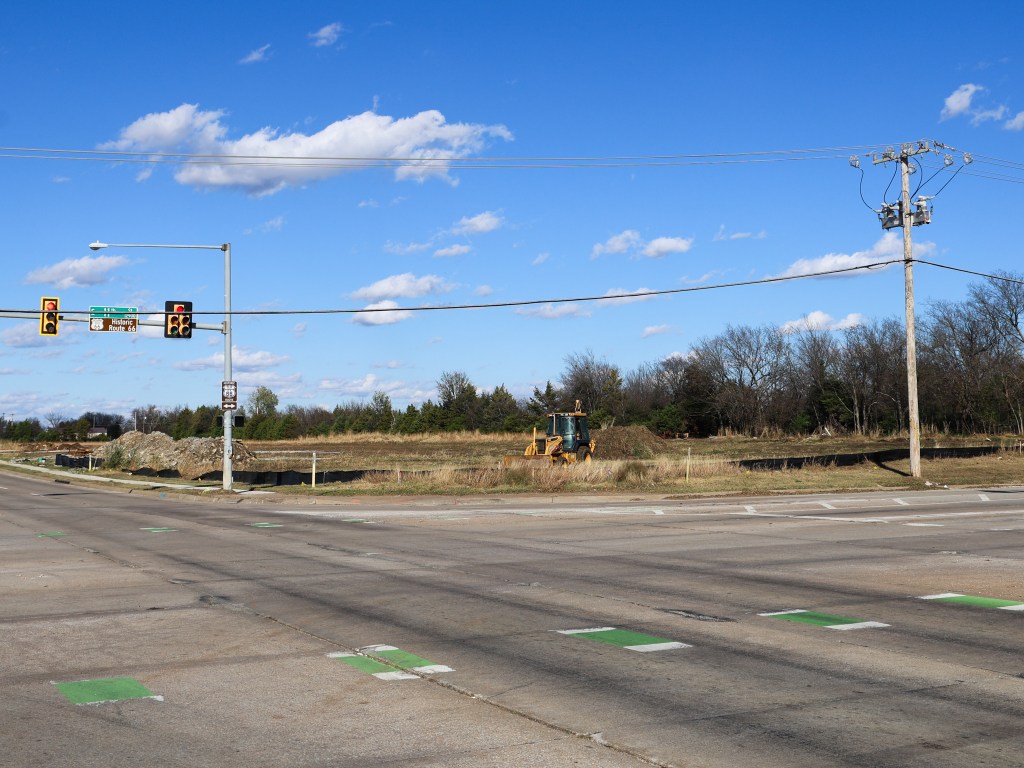
Bengel says east Tulsans have not been able to give their input on the project, which he characterized as “the Blue Whale of east Tulsa,” referring to another historic Route 66 landmark in Catoosa.
“I think everyone will be happy that it found a landing place, and that it will actually be in a place where there’s not been development previously,” he said. “It’s a win, win for everybody, in my opinion.”
Bengel says he is also in talks to have a Route 66-oriented store built at the southwest corner of the east Tulsa intersection — and he thinks the area could eventually turn into a tourism hub.
“It’s not organic development,” Bengel said. “It’s really working to try and activate a corridor that’s been dormant for so long.”
This story was prompted by notes taken by Tulsa Documenter Jazzy BS at the Nov. 10 Tulsa Arts Commission meeting. If you’re interested in becoming a Documenter visit us at tulsaflyer.org/documenters.
News decisions at the Tulsa Flyer are made independently of our board members and financial supporters. Read more about our editorial independence policy here.
