



This article is a part of Snapshot: Food, a collaborative journalism project between Tulsa Flyer, The Oklahoma Eagle, The Frontier, KOSU, La Semana and Focus Black Oklahoma exploring how Oklahomans put food on the table.
Take a quick drive around north Tulsa, and you’ll notice it’s hard to find a full-service grocery store.
That’s nothing new to the residents who say their shelves and fridges bear the consequences, with few fresh fruits and vegetables available to buy.
There have been some attempts to solve the north Tulsa food desert. A grocery store aptly named Oasis Fresh Market opened there in 2021, offering residents a more vibrant selection of produce. It’s since expanded to other areas without a grocery store option, including downtown and 61st and Peoria.
Then came smaller-scale options like The Grocery Box — which now has two locations in north Tulsa. Considered micro-grocery stores, customers can still shop fresh fruits and vegetables albeit with fewer selections.
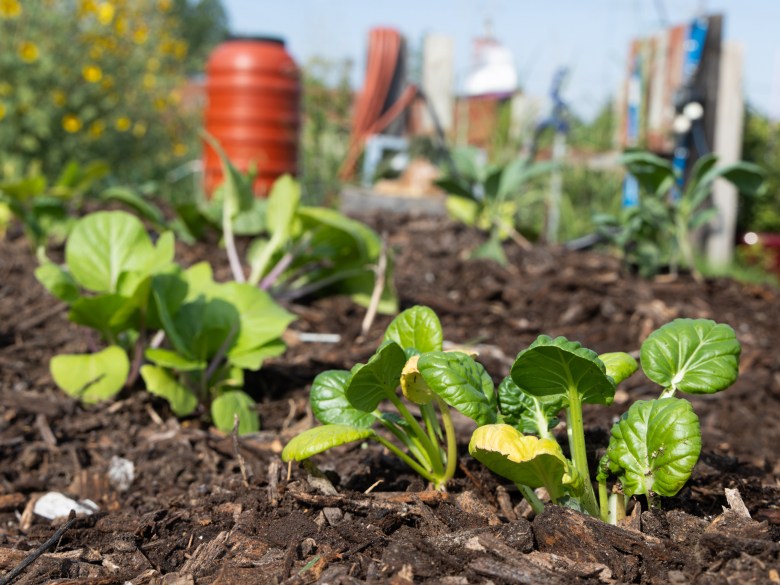
Neighborhoods are increasingly turning toward solutions they can keep afloat themselves. Typically run by volunteers, community gardens are an attempt to have nutritious options growing in their own backyards.
Standing among the 45 beds at the Tulsa Health Department’s North Regional Health & Wellness Center, Lou Emma Newsome is no stranger to having her hands in the dirt and showing kids the ropes.
“There was a nice selection for picking the vegetables,” Newsome said. She says the produce includes tomatoes, asparagus, leafy greens, blackberries and squash.
Born in Mississippi, the 68-year-old Newsome is no stranger to working the soil.
“I was taught farming when I was a child,” she told The Eagle. “I came up in the Deep South. My late parents had a farm, so I knew how to garden and do vegetables.”
Growing up, Newsome said she loved to be outside and have her hands in the mud. As the youngest of 10, she was a sponge around her siblings and parents.
“We had a fenced-in backyard and my mother would plant sweet potatoes during the summer,” Newsome recalled. “She would plant tomatoes, okra, corn and peas.”
Newsome moved to Tulsa after her mom died in 2013. She said she was looking for somewhere to volunteer when she found the health department’s community garden.
Amber Hallford has been overseeing the garden for the past three years. She said they have 45 beds for planting. And once the fruits and veggies are harvested, she packages them up and distributes them around the community.
“This could be a neighbor’s front door, or I’m taking it to a food pantry that will take it in and be able to redistribute it,” Hallford said. “Or I’m taking it to a senior apartment complex who also has the open doors and a small team of people to help redistribute.”
This is a sign the garden is fulfilling its mission, she said.
“Because we are a food desert in this area, the whole idea was to be able to grow food and provide more access to fresh food,” she explained.
From the garden to the dinner table
While access is a large barrier for people in north Tulsa, the gardens’ benefits go beyond that.
“Sometimes people are getting to try a vegetable for the very first time or they’ve only ever had it in a can with lots of salt,” Hallford said. “So they are getting a lot fresher flavor. The aromas are better, the flavors are better, the nutrition inside that plant food is a lot better.”
Eenid Pilan is a recipient of some of the produce. She’s been a vegan for nearly 25 years. Now, at the age of 79, she said she depends on the garden to help keep her plant-based diet going.
“I sauté leafy greens. I’m always excited when I get a bulb of garlic because I like to eat two cloves raw every day,” Pilan said.
Some of her other dishes include leeks and limas and a Moroccan vegetable stew.
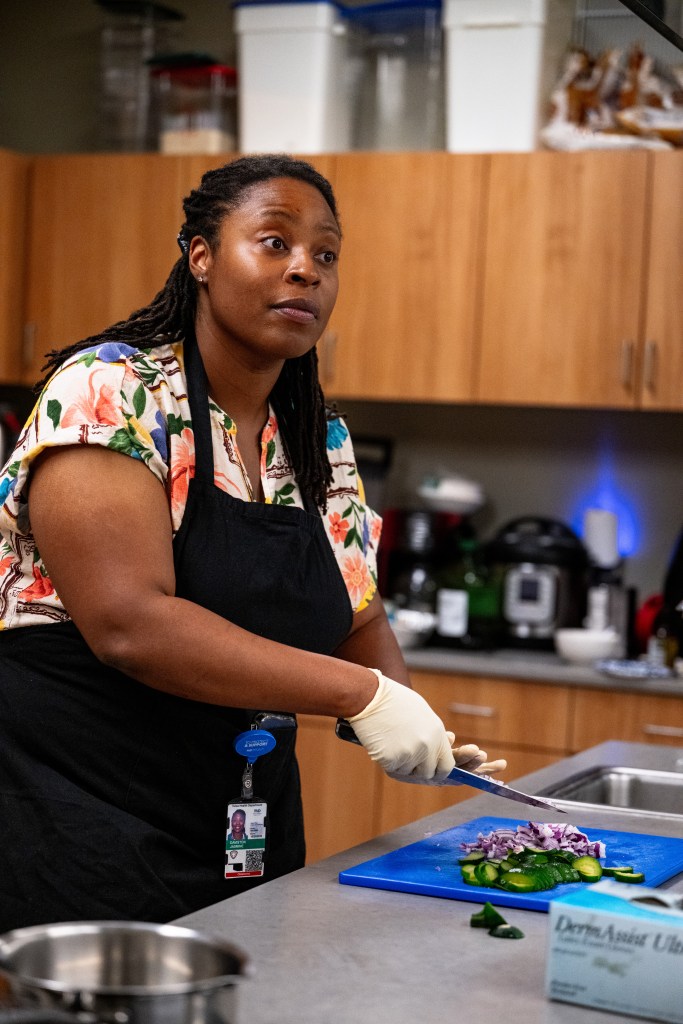
Trying new dishes with fresh produce is something Jasmine Davitson stresses in her cooking classes. She’s a nutritionist with the health department and says produce comes in tiers.
“That fresh is amazing,” Davitson said. “It’s 100% better than frozen but if you’re looking at Walmart or maybe the stuff that’s sitting a little longer, frozen may be better. If it has to be canned, if that’s all you have, that’s all you have.”
She teaches at the health and wellness center and said ultimately every meal should be balanced.
“I emphasize vegetables a lot in my classes,” Davitson said. “We put beans in everything. So you get fiber, you get protein, you get carbs, you get minerals.”
Her classes also focus on practicality. While access and knowledge are key, so is ease.
“You have to look at how people are living,” she said. “If you’re working two jobs or you got to pick up your kids, and you got to get dinner on the table, you have to look at what is easier to do when you have so many other things going on.”
She said small changes can be simple. If you’re planning to make spaghetti, maybe add in onions, peppers and zucchinis.
Newsome said the produce allows her to experiment in the kitchen.
“You can use these fresh vegetables in your soup, to bake meat or even fried,” she said. “You can use them with all kinds of cooking recipes.”
Though, she admitted, she tries to stay away from frying them.
Planting ‘food sovereignty’ in Flat Rock
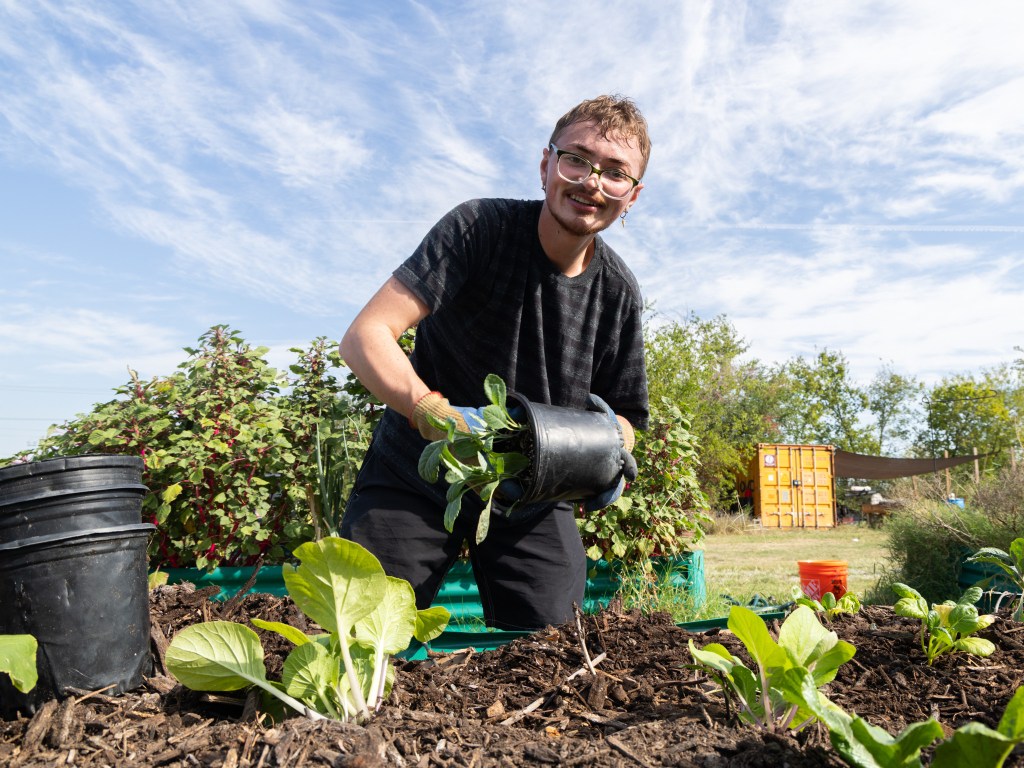
It’s not just the health department doing the work. A mile east at the corner of 56th Street North and North Peoria Avenue, you’ll find Flat Rock Community Garden.
Run by local ecology group Cooperation Tulsa, about nine people oversee a 2.5-acre plot of land with the goal of building food sovereignty.
“Food sovereignty being that everyone has access to food that they need, that is healthy and good for them,” said Gabriel Mize. On a late summer Saturday morning, the Cooperation Tulsa volunteer was out working in the garden.
He used to live within walking distance from the community project.
“It is really hard to get food up here, especially if you struggle with driving,” Mize said. “So having local community gardens like this is super important, and I’m really glad that people are getting back into the gardening spirit and growing with each other and helping each other out like this.”
He said they were currently growing tomatoes, peppers, kale and some mustard greens. They also had radishes and fruit trees planted. The goal was to make a salsa with ingredients from their garden.
Given their smaller size, the food mostly goes to the people who help out with the produce. But Mize said they have bigger aspirations.
“We want to start giving food to our community in the next six months,” he said. “We are going to be door knocking and figuring out more of what this community needs right here.”
With produce being grown closer to home, there’s also a more positive view on food as medicine. A concept that cleaner and healthier diets can help reduce the rates of hypertension, diabetes and other ailments common to African Americans.
Blending a new option for north Tulsans
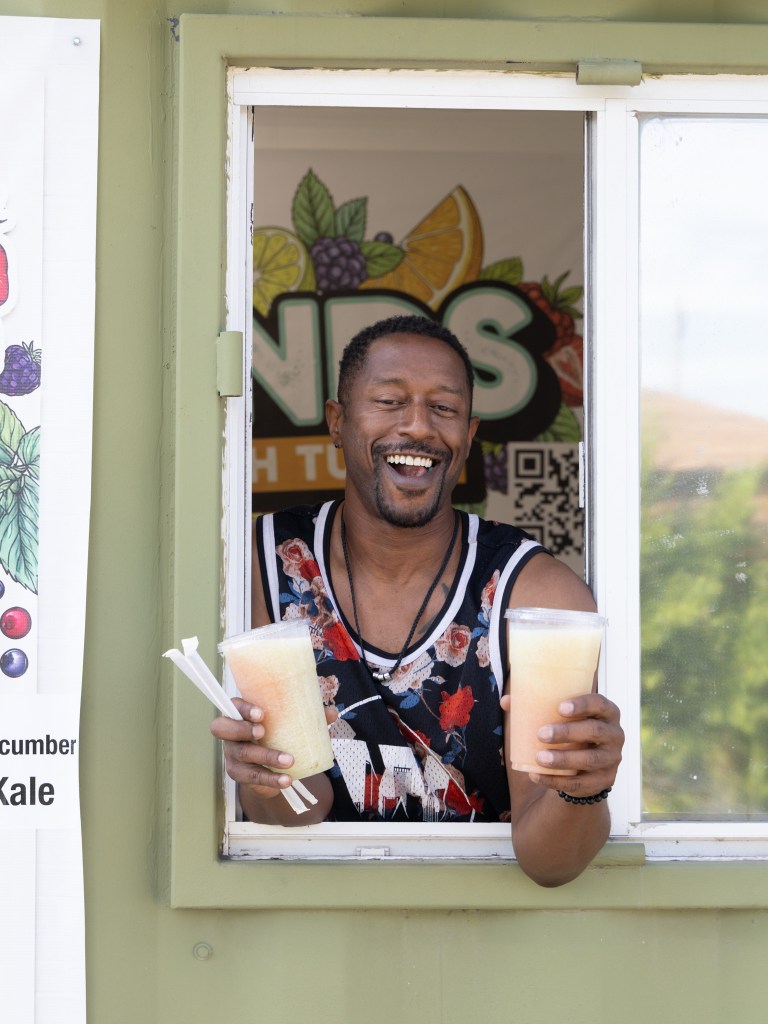
Across the street from the Flat Rock garden sits a shipping container and serves as the home of Blends North Tulsa. Owner Chris Walker describes it as a fruit water drink with just three ingredients.
He’s also an aquaponic farmer growing his own leafy greens.
“I have clients that are diabetic or cancer patients, and (healthier options) help with inflammation, appetite and meal prep,” Walker said.
Another thing you’ll notice on a drive around north Tulsa is the glut of fast food options. You can find Church’s Chicken, KFC and Sonic easier than you can find fresh produce.
But Walker said he’s trying to change that.
“When Black people move from north Tulsa to south Tulsa, they take advantage of all those (healthier) options without blinking an eye,” he said. “We just need more options. It’s a sacrifice for a business owner to come and set up in that area but that’s what we have to get used to.”
For now, Walker said he’s working on combining his farming practices with the drink offerings at Blends.
“I wanted to start growing those (staples) like sweet potatoes and potatoes. We’ll also be dealing with onions as well,” he said. “We want to also have some different options on how to eat them, and not just when you think of sweet potatoes, you automatically just think of yams.”
One of the drinks on Walker’s menu is a sweet potato-mango combination which he says offers a different “taste, feel and recipe.”
Newsome has seen the impact that community gardens have had across north Tulsa. Whether the foods end up used in a cooking class, for a drink by a local restaurant or on someone’s stovetop. Newsome says she hopes the love and joy of gardening is passed on to the next generation.
“You have all age groups: elementary, middle school, young adults, middle age, and seniors who can get nutritious food from the community gardens, and it’s free,” she said. “They can come out to the community garden and experience vegetables that are totally fresh, picked from Mother Nature and just eat less chemicals in their food.”
