

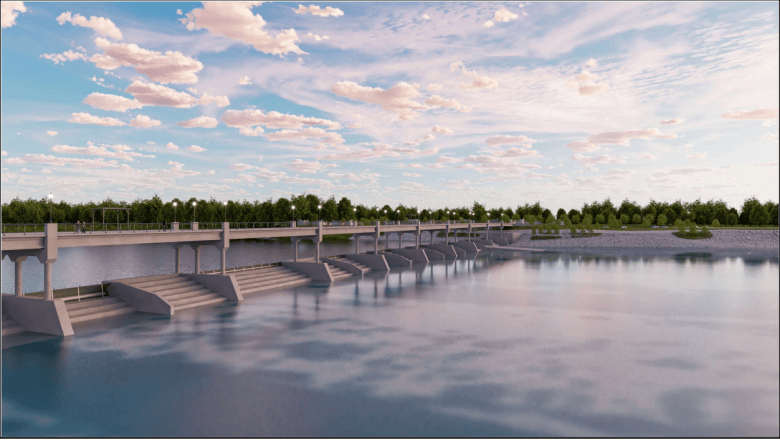
More than a decade ago, Tulsa County voters approved a proposal for a low-water dam and pedestrian bridge near 103rd Street and Riverside Drive. Cut to 2026, the project is now about $100 million over budget and construction hasn’t started.
At a Tulsa Sales Tax Overview Committee meeting last month, chairman Ashley Webb said the South Tulsa and Jenks Dam project is now estimated to cost $180 million. That’s without an estimated $20 million maintenance endowment.
Webb questioned whether Tulsa, Jenks and the Muscogee Nation, which all promised funding for the dam, are still interested in seeing the project come to fruition after the increased costs.
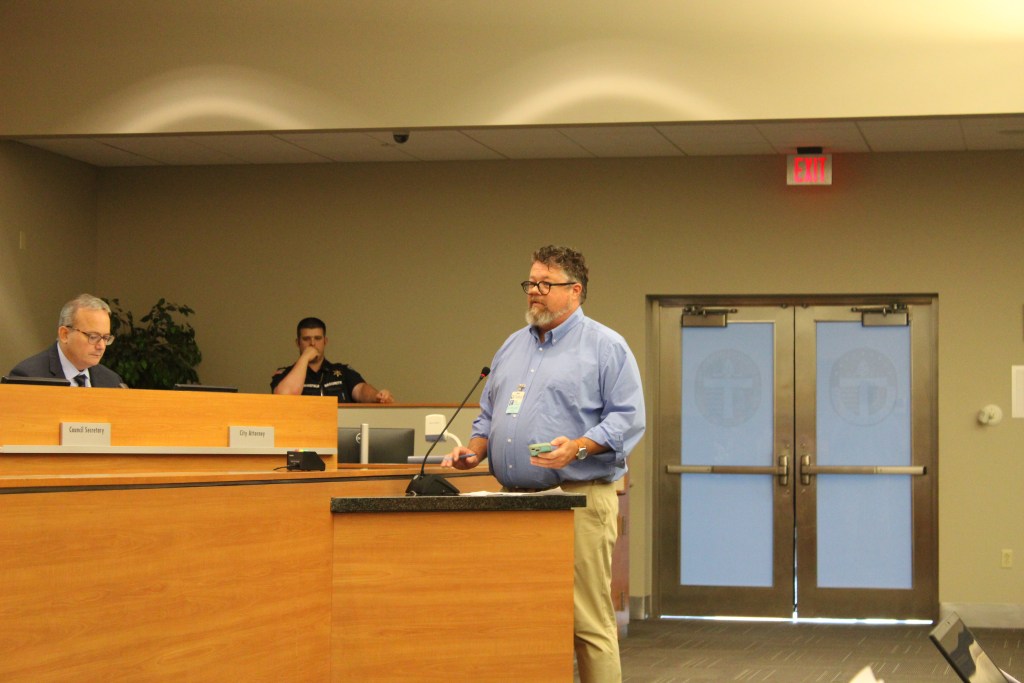
“You’ll notice that the cost estimate currently — without any operational endowment — would be $180 million, which is approximately $100 million over any of the funding that we have…” Webb said. “What is everyone’s appetite on continuing to try to work together to make this happen, and in what capacity given the current budget estimates?”
According to a December 2022 story from the Tulsa World, city officials said it would take about five years to permit, design and build. The project, which would effectively create a lake in the Arkansas River between 71st and 103rd streets, is now in the design phase. The notice to proceed, authorizing the contractor to proceed with full design work, is expected in mid-October.
Discovered by Documenters
This was informed by Faith Harl’s Documenter notes from the Aug. 25 Tulsa Sales Tax Overview Committee meeting. Find out more about how Tulsa Documenters works here.
What was approved vs. what will be delivered
Tulsa voters approved up to $64.2 million for the project as part of the Vision Tulsa capital improvements package in April 2016. In December 2022, the City of Jenks, the Indian Nations Council of Governments and the Muscogee Nation — not a party to the 2016 vote — signed a memorandum of understanding, collectively committing an additional $33 million to the project.
The funding breaks down like this:
- Jenks committed $18.7 million, with $16.7 million coming from the 2016 Vision vote.
- Muscogee Nation provided about $8.2 million generated through the Southern Villa tax increment financing district.
- INCOG contributed $6 million through a federal grant.
District 2 Councilor Anthony Archie, who represents the area where the project would be built, says he, Mayor Monroe Nichols and District 8 Councilor Phil Lakin are working with Jenks officials to honor what residents approved a decade ago.
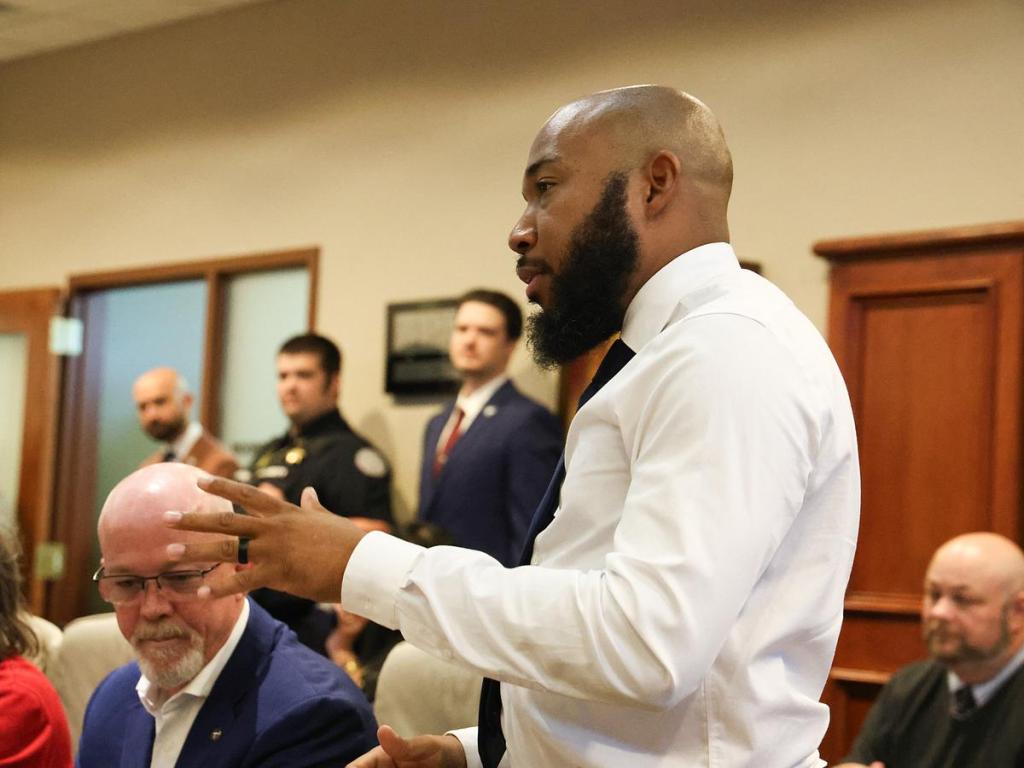
“Beauty is its own utility, and so when we create an environment that is really beautiful up and down that Riverside area, we extend the trails and different amenities, you’re going to have private developers, folks that want to be there — and so I think it’s really important to recognize and capitalize on those assets,” Archie said.
Jenks City Councilor Adam Abel said in a statement to the Flyer engineers have presented three scaled-down proposals of the South Tulsa and Jenks Dam project, but the cheapest option still faces a funding gap of at least $40 million.
“That least expensive alternative is the version currently being pursued, with the hope that some of the removed elements could be added back over time as funding permits. If the project proceeds at that level, it would fund essentially only the low-water dam,” Abel told the Flyer. “The proposed river parks on both sides, pedestrian connections, and other public amenities included in the larger vision would not be part of the initial project.”
Abel noted Jenks has pledged the entirety of its surplus from the remaining Vision 2016 funds — about $10 million — to help close the funding gap. That brings Jenks’ financial commitment to $27 million, he said.
“Tulsa officials have publicly reported approximately $100 million in surplus Vision 2016 revenue after accounting for the city’s approved projects. To my knowledge, Tulsa has not committed enough additional funding from that surplus to close the remaining gap for the South Tulsa and Jenks low-water dam,” Abel said.
Tulsa did volunteer to create a committee to identify potential alternative funding sources, he added.
“I appreciate the continued effort to find a workable path forward,” Abel said. “At present, however, there remains a significant gap between the project voters approved and what the available funding can deliver.”
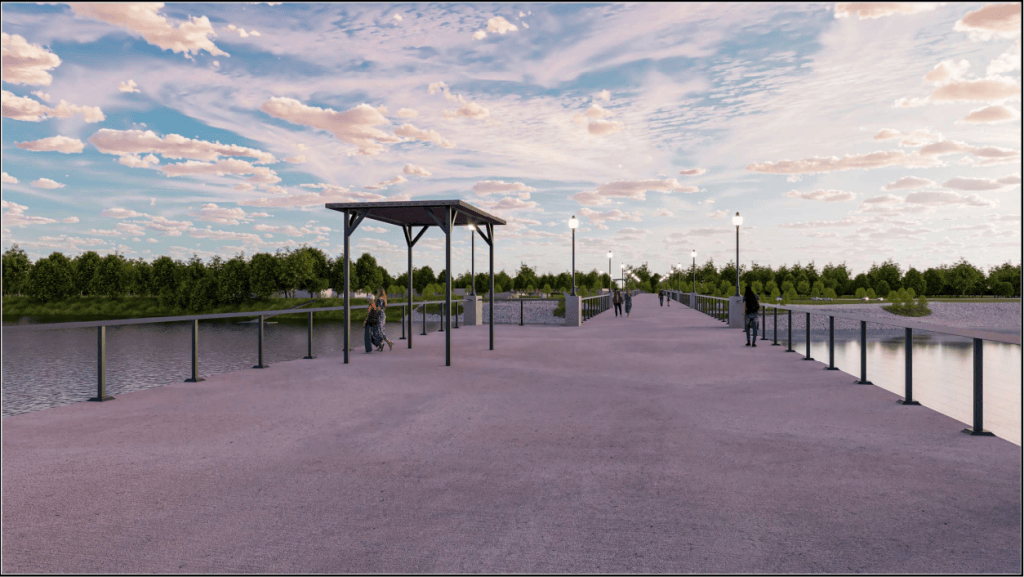
While Muscogee Nation signed a memo committing $8.2 million generated from TIF funding to the project, the tribe’s press secretary, Jason Salsman, said the latest development agreement on the South Tulsa and Jenks Dam presented to tribal leaders did not include that funding.
“When we got the latest version of the agreement … the Nation’s $8.2 million coming from the TIF district was not included in that,” Salsman told the Flyer. “From our perspective, any involvement we’d have going forward, we’d have to go back to the drawing board and get that renegotiated.”
Abel said his hope is that all partners can find a path forward that respects what Tulsa County voters approved while recognizing the financial constraints facing the project.
“Our communities coming together through intentional collaboration is something I will always support, especially when it helps turn a shared vision into a shared success,” Abel said.
Carson Colvin, a City of Tulsa spokesman, told the Flyer the city is working with its partners to determine how to best close the funding gap.
Kenneth Corn, executive director of INCOG, said the organization continues to support the project.
“INCOG, City of Tulsa, City of Jenks, and the Muscogee Nation, formally committed in December 2022 to collaborate on the implementation and construction of this project previously approved by the Tulsa and Jenks voters. INCOG remains committed to working with our partners to implement the vision and opportunities this project creates,” Corn said in a statement.
News decisions at the Tulsa Flyer are made independently of our board members and financial supporters. Read more about our editorial independence policy here.
