


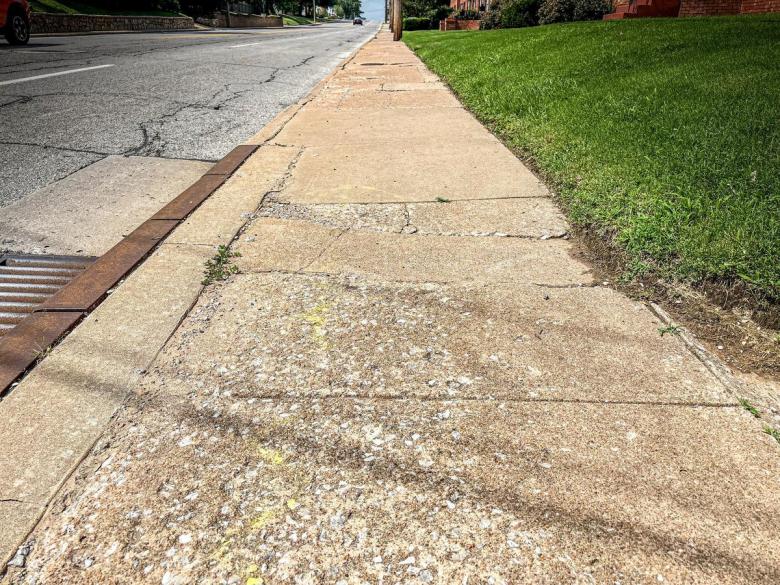
For Tulsa residents, having a walkable community depends a lot on where they live. It’s much easier to access sidewalks downtown than on the north or west sides of the city.
But some Tulsans say it’s time for that to change, especially if the city wants to make it safer for pedestrians to get around.
Joanna Fullmer lives in the Swan Lake neighborhood in midtown and is a local community organizer. She says the area’s narrow sidewalks near oncoming traffic often make her feel unsafe.
“One of the reasons we bought the house we bought is so we could be in a walkable neighborhood and by the schools. We take our kids on foot to school every day, but it is very difficult to cross Peoria,” Fullmer said.
She says fixing the issue would make her neighborhood more welcoming to everyone.
“Just the presence of sidewalks in a neighborhood signals to people this is a walkable, bikeable neighborhood,” Fullmer said.

How Tulsa measures walkability
Tulsa has an average score of 3.3 out of 5 when it comes to sidewalk access. That’s based on the Neighborhood Conditions Index, a tool used by the city to measure neighborhood quality for residents.
Downtown, neighborhoods like Kendall Whittier and midtown areas report the highest scores. Other neighborhoods in north and west Tulsa are rated lower.
Thomas Dow, director of transportation at the Indian Nations Council of Governments, told the Flyer they looked at pedestrian needs throughout the city. INCOG is a voluntary association of local and tribal governments tasked with regional planning efforts, including public infrastructure improvements like sidewalks and trails.
Dow says the issue of accessibility is most apparent in parts of the city that are lower-income.
“There are more households in north Tulsa, for example, that might have one car or not any cars in their households. They can be more likely to be dependent on walking places,” he said.
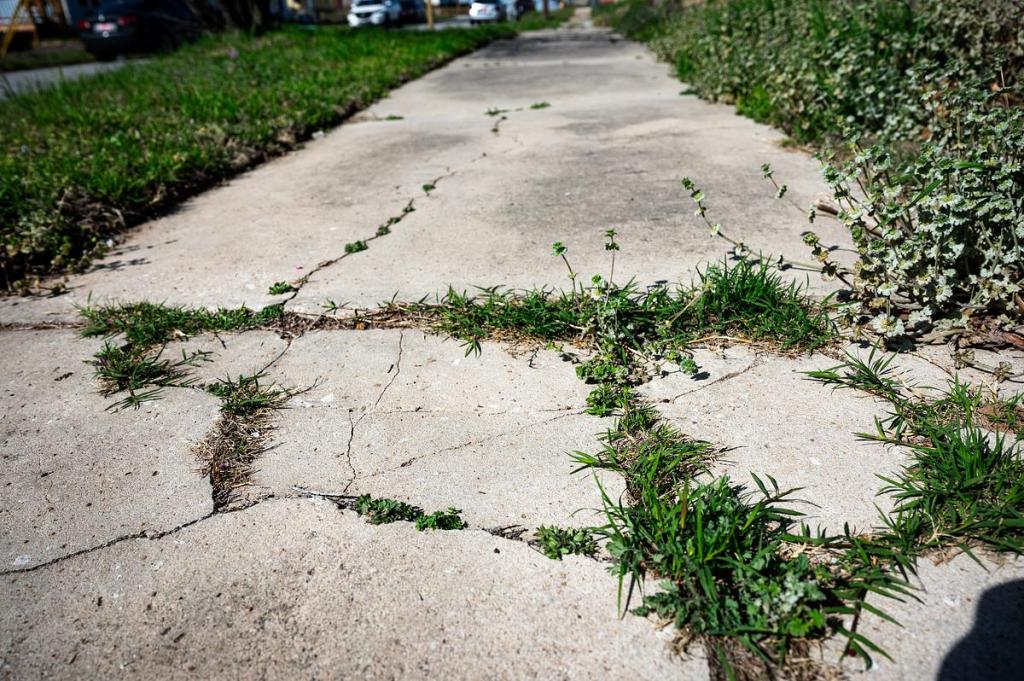
INCOG’s map found at least 500 miles of sidewalk gaps on section line roads. These are part of the mile-marker grid that divides the city’s main streets.
“Clearly if you have to walk along one of those roads and there is a sidewalk gap, that is going to make it harder for you as a pedestrian to navigate safely,” Dow said.
Speeding up progress
Toward the end of last year, Tulsa city councilors approved $500,000 for unfinished sidewalks on south Mingo Road from 81st Street to 91st Street.
Councilor Phil Lakin, whose district covers south Tulsa, has also flirted with the idea of using more of his Improve Our Tulsa 2 funds for sidewalk improvements.
Bill Leighty is the executive director of Smart Growth Tulsa, a nonprofit that advocates for a more walkable city.
He says Tulsa laid some groundwork for a model to follow on sidewalk improvements when it approved its Complete Streets Program in 2010. Complete Streets aims to make transportation accessible and safe for drivers, pedestrians and cyclists.
The program also mandated sidewalks be included in all new roadway construction.
“That was an important milestone for the City of Tulsa to have a complete streets policy. At one point until we had that (program), the city could build on a new street and not be required to build a sidewalk,” Leighty said.
But improvements will take more funding and time. The mayor’s office and Councilor Jackie Dutton recently announced plans to expand and make a neighborhood improvement program permanent. Neighborhood associations and other qualifying groups can apply to be part of the Neighborhood Conditions Index Collaborative through Aug. 14.

Leighty says Tulsa’s planning commission culture also has to change from an “auto-centric” mindset, noting a lot of community development plans have been centered around motorists and not pedestrians.
The city is making slow progress, he says, but making Tulsa more walkable needs to be a priority first.
See how your neighborhood ranks
This interactive map shows where sidewalk gaps exist across Tulsa. Click on a neighborhood to see how it ranks for walkability on a 5-point scale.
News decisions at the Tulsa Flyer are made independently of our board members and financial supporters. Read more about our editorial independence policy here.