

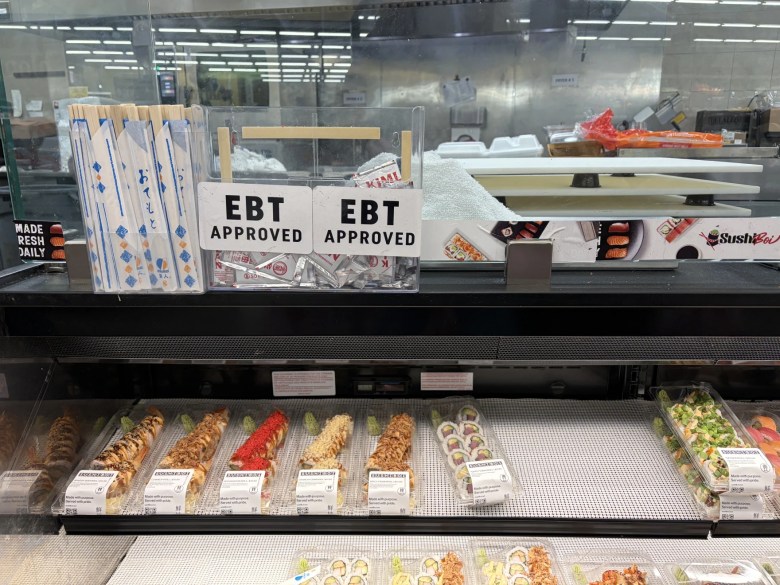
Oklahoma continues to see steep declines in Supplemental Nutrition Assistance Program (SNAP) enrollment.
Of all the states, Oklahoma is seeing the fourth-largest drop, according to the latest U.S. Department of Agriculture data on participation.
Initial numbers show a 22.5% decrease in SNAP shoppers—about 154,800 Oklahomans—from July 2025 to July 2026. About 12,900 people fell off the program in the state from June to July of this year.
There have been massive changes to SNAP. States, including Oklahoma, have been under pressure to follow new rules in the Big Beautiful Bill Act.
The state ranks sixth in the nation for food insecurity, and SNAP changes are being felt at the local level.
When Congress passed the Big Beautiful Bill Act last summer, lawmakers expanded work requirements, cut off eligibility for certain legal immigrants, ended the SNAP education program and moved hundreds of millions of federal program costs to states.
Because of the shift, Oklahoma must pay $25.5 million to cover administrative costs. The state could owe up to $250 million for actual benefit cost, depending on the SNAP error rate. That rate is based on over- and underpayments made to recipients.
Although official USDA numbers show Oklahoma’s error rate has ticked upward, state officials say the Oklahoma Department of Human Services’s preliminary estimate for the error rate is much lower. They are confident the state can avoid the benefit cost because of the reduced internal rate.
In a recent presentation at the State Capitol, Oklahoma Department of Human Services director Jeffrey Cartmell said officials don’t know when enrollment will level out. That makes it harder to know exactly how much the state will owe for the program.
“We’re continuing to see a month over month, anywhere from 4,000 – 7,000 less households,” Cartmell said. “Each month when I get briefed on that, I think it’s going to level out the next month. It has not. It continues to decrease.”
This article was originally published by KOSU. You can see the original story here.