


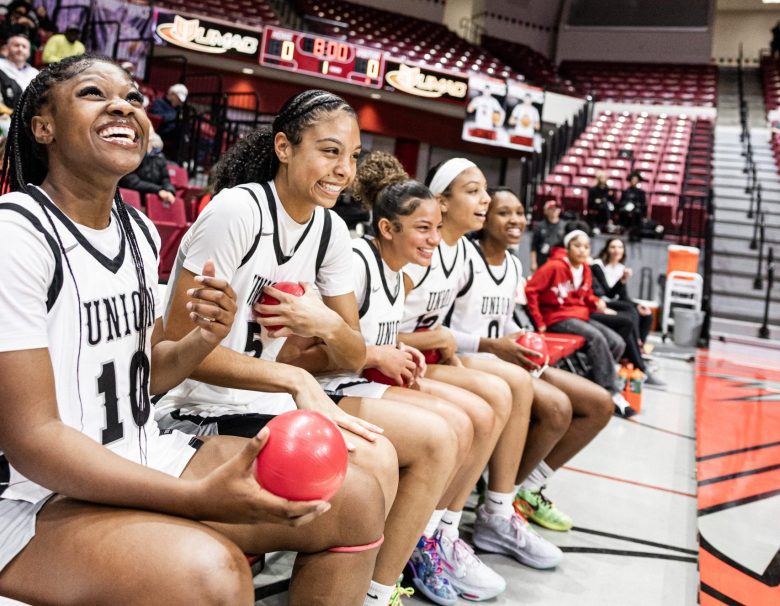
It took a little time for Union Public Schools to tackle the growing access to name, image and likeness for its high schoolers. Its answer is education first, for students and families.
“There’s a big gap in what they know — one, what they’re able to do within the rules,” said Union Athletic Director Emily Barkley. “But also we’re hearing a lot of stories of kiddos once they go to college, not knowing really the risk involved with not being educated on it.”
Still nascent in high school sports but booming in college athletics, NIL allows students to profit off of their own brands. While college athletes can be paid to play, there’s a narrow set of rules for high school athletes, allowing them to enter into paid partnerships with businesses not involving their schools.
In September, Union launched a new, yearlong seminar series called S.O.A.R. — or safety, opportunity, awareness, responsibility. The program is for families interested in learning more about NIL rules and regulations at the high school level. It’s a different approach from other Tulsa-area districts, like Bixby and Broken Arrow, that invested in third-party marketplaces that include educational elements.
“I didn’t want to jump into ‘here’s the marketplace we’re using,’ sign up, make money and go about your business,” Barkley said. “That wasn’t how we in our administration felt like we wanted to approach it.”
The program includes sessions on financial literacy, college eligibility, social media and mental health implications. The first session attracted around 60 participants, and the second, in October, saw a little more than 20. Union Athletics has around 1,500 student athletes between 7th and 12th grade.
“With the way it is moving into the high school space, we don’t feel like we have the ability to just turn them loose and say, ‘oh I hope they figure it out,’” Barkley said.
“And if we’re just doing it to get a $10 deal for a kid, we’ve missed the boat on it. And so what we want to do is equip them,” she added.
Signing on the dotted line
“This is a cool time, it’s a dangerous time if you’re not careful, but this is a fun time,” Cole Way told Union families during a presentation on the dos and don’ts of NIL contracts and agreements Wednesday.
A Union Athletics hall of famer and alumnus of The University of Tulsa football team, Way is now an attorney specialized in NIL at KMM Sports, an athlete talent agency. Any Union athlete can run legal agreements by him, Way said, free of charge.
“There is no other school doing a program like this where they’re educating the families on what this NIL thing is,” Way said. “Because, again, once you sign your name on that dotted line, it’s happening, and those companies are going to do what they want.”

“It’s been around, but probably to the extent where it’s touched our former athletes is just now coming,” Barkley said. “Those juniors and seniors in college, there’s real money now.”
For the Pierce family, attending sessions is about building expertise.
“You want to say on top of it — to a point — should you have those opportunities that are made available to you at this level,” said dad Lamar Pierce. “And you want to make sure you’re adhering to whatever the current state of policies and procedures are.”
Their oldest, Trent, is a 6-foot-10 forward at the University of Missouri, where he averaged more than 10 points per game his junior year. The former Union Redhawk is in his fourth year on the Tigers’ basketball roster — a now uncommon tenure in the collegiate NIL era.
The Pierces landed in the middle of an “ever-changing” NIL landscape with Trent when he transferred from Union to an Arizona prep high school as a senior. The family says everybody on the team had “some level” of an NIL deal.
“And he didn’t, and it was like, ‘what is this?’” said mom Jennette Pierce, a former basketball player at Oral Roberts University and Union educator.
“We were like, ‘dude, we don’t know’ … and that began our communication with him about, this doesn’t define who you are,” she said.
Since then, they’ve navigated the millions of dollars pouring into college athletics and the parental responsibilities of mentoring a young adult on the receiving end.
“We were very clear, early on, that it wasn’t just about the money, right? There’s a bigger goal here,” Lamar said. “And if you can make the money along the way, I mean, let’s do it, let’s take advantage of it, but not to the point where it hinders him from meeting his goals both as a student and a college athlete.”
Now they’re approaching round two with their son Nathan, a sophomore center at Union — though that’s not yet what their conversations are about.
“He could (not) care less about trying to get an NIL deal, trying to be one of the top players in the state, in the country,” Lamar Pierce said. “He just wants to play basketball, wants to win and more than anything, he wants to get better.”
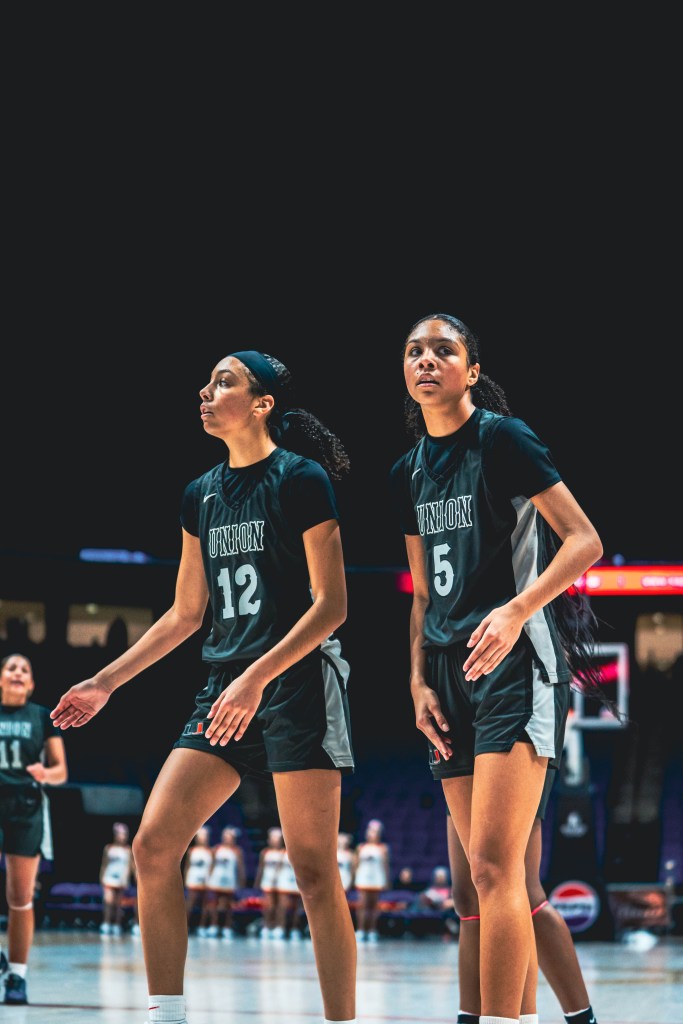
It’s a similar story for twins Mika and Jada Davis, star Union basketball players. College athletics are on the horizon for the two juniors, where their biggest hopes are securing a paid education and playing the best game they can.
“The money makes a big difference,” Mika Davis said. “Like I’ll be playing, and then I’ll get paid, but I’m just playing to have fun.”
They’d both take NIL deals as high schoolers — it’s not easy to find a paying part-time job during the basketball season — though they aren’t sure exactly how they’d handle one.
“But that’s what this is for,” Jada Davis said.
Their dad, Joe, is a bit more hesitant. As an assistant girls basketball coach at Union, he knows the regulations for high school NIL deals can come with consequences if handled incorrectly, a weight he worries about his daughters taking on.
“It’s a lot for a young person to have to deal with, it’s a lot,” Joe Davis said. “If you don’t handle it right, that isn’t worth their eligibility.”
Similarly, Lamar and Jennette Pierce are focused on helping both sons balance the pressure to perform at their best, especially when money is on the line.
“And this is 100% another thing to just add on to it, right?” she said.
The S.O.A.R. program may become more condensed in the future, Barkley said, but Union’s staff didn’t want to shortcut the first go-round.
“We have a responsibility to do something,” Barkley said. “It is here. It’s probably not going anywhere.”
More Union students should take advantage of the program’s final four sessions, the Davis twins say.
“‘Cause you never know what you can expect, like at least try and come because you might learn something new,” Jada Davis said. “And if you don’t like it, then it’s not for you. But at least come, because they worked hard setting this up.”
“I agree,” Mika Davis added. “Go Redhawks.”
News decisions at the Tulsa Flyer are made independently of our board members and financial supporters. Read more about our editorial independence policy here.
