

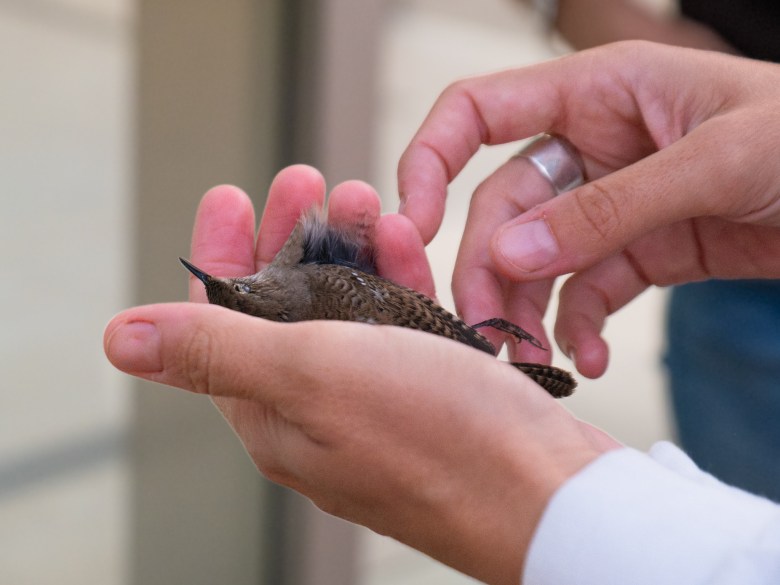
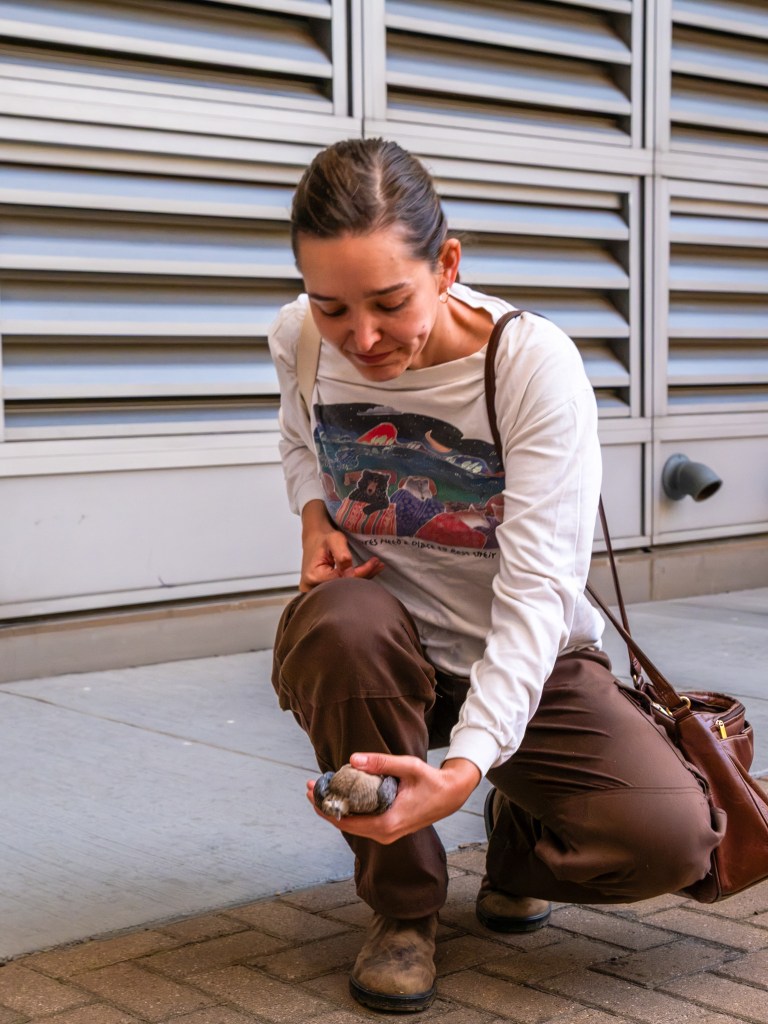
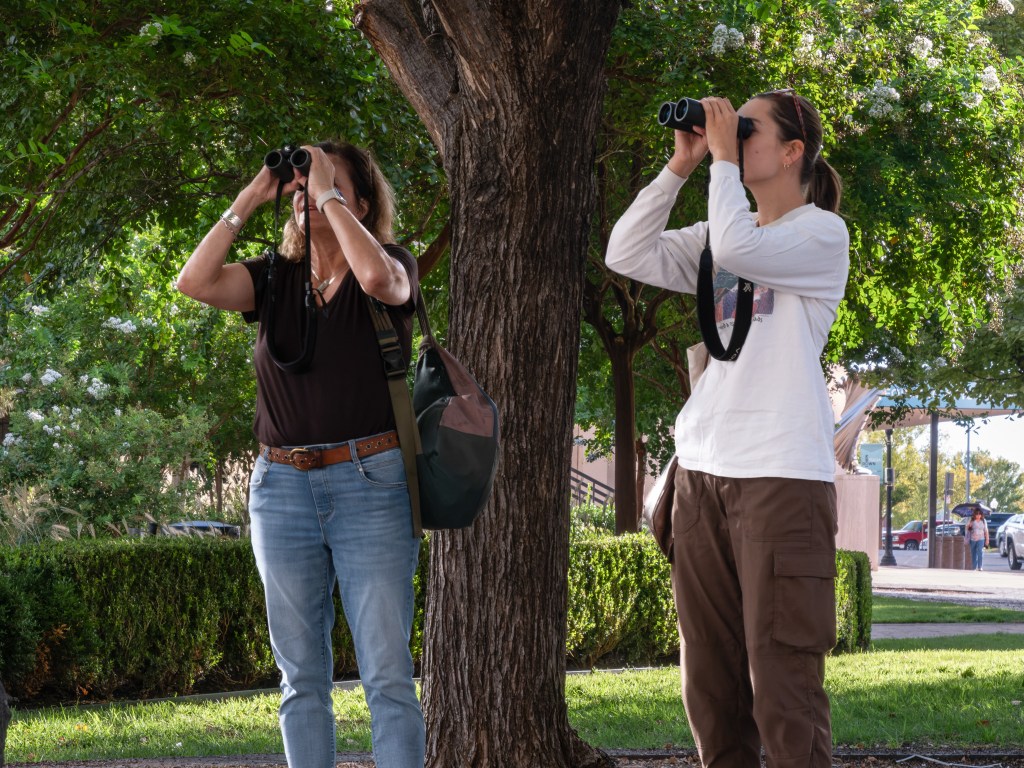
Just after sunrise in downtown Tulsa, Georgia Riggs and Mary Jackson scan the bases of glass buildings for birds that never completed their journeys south. Within minutes, Riggs bends down to recover the tiny, still body of a northern house wren.
The morning walks are part of Tulsa Bird Collaborative’s effort to document bird collisions and bring residents together to prevent them. Co-founded by Riggs two years ago, the volunteer group connects neighbors and conservation organizations together to help make Tulsa safer for birds.
For Riggs, the roots of the group go back to 2019, when she started learning about window collisions and the dangers buildings pose to birds moving through cities. Over one billion birds die through building collisions in the U.S. each year, according to a 2024 study.
A fish and wildlife biologist who studied bird migration at Oklahoma State University, Riggs previously knew little about the issue. It was one she wanted to address closer to home.
“I had never even heard of collisions, and it wasn’t something people were regularly discussing online,” Riggs said. “But there’s so much more awareness now, and that’s really exciting because we actually know how to fix this.”
In Tulsa, addressing those hazards means considering the city’s place along a journey that can span thousands of miles. Oklahoma lies along the Central Flyway, a migration corridor used by birds traveling between northern breeding grounds and destinations that extend all the way to South America.
Finding third places in Tulsa
This story is part of the Tulsa Flyer’s series on third places around the Tulsa metro — spaces and groups where people are creating community outside of home and work. Help us write more stories on the third places that already exist and where they should be by filling out the form below.


Many birds make that journey at night, when light spilling from buildings can draw them off course and into unfamiliar streets surrounded by glass.
“By morning, birds searching for food and shelter encounter windows that reflect nearby trees or reveal plants inside buildings,” Riggs said. “They will fly straight into the window, which will either stun or completely kill them.”
Those collisions are what bring Riggs and a small group of volunteers downtown, where they photograph birds found beneath windows and record their species and locations.
This fall marks the collaborative’s first coordinated monitoring season, with observations intended to help identify dangerous buildings and give property owners a clearer picture of what is happening outside their doors.
One such volunteer is Jackson, the president of the Tulsa Audubon Society who has spent several years encouraging Tulsans to reduce nighttime lighting during spring and fall migration. The spring season typically stretches from March to mid-June, while fall runs from mid-August to mid-November.
Using the Cornell Lab of Ornithology’s BirdCast tool that forecasts bird migration, Jackson alerts residents to nights when large numbers of birds are expected to pass overhead.
Residents and property owners can help protect migrating birds, Jackson said, by turning off unnecessary lights, directing outdoor fixtures downward and using motion sensors to limit how long lighting stays on. Applying closely spaced dots to the outside of windows can also reduce collisions by making the glass more visible to birds.
“These are things communities can consider when they’re planning parks and buildings,” Jackson said. “I’ve spoken with people who had never thought about how lighting affects birds, and once they understood the issue, they wanted to incorporate that information into their plans.”
The collaborative wants to bring those changes to downtown Tulsa. Organizers are planning an upcoming coordinated Lights Out campaign to encourage City Hall and building owners to reduce unnecessary lighting during migration.
Similar efforts are already underway in Houston, Dallas, Fort Worth and across the country, leading conservation groups to bring businesses and public institutions into the work of protecting birds passing overhead.
As conservationists celebrate World Migratory Bird Day Oct. 10, the collaborative is inviting more bird enthusiasts to join its monitoring walks and outreach. Interested Tulsans can contact Riggs through the group’s Facebook page.
Riggs says she hopes those opportunities will help residents build connections with one another while taking an active role in protecting local and visiting wildlife.
“Some of these birds may only spend a short time in Tulsa, but what happens here matters for the rest of their journey,” Riggs said. “We hope to bring more people together to help give them a safer journey through the place we call home.”
News decisions at the Tulsa Flyer are made independently of our board members and financial supporters. Read more about our editorial independence policy here.