

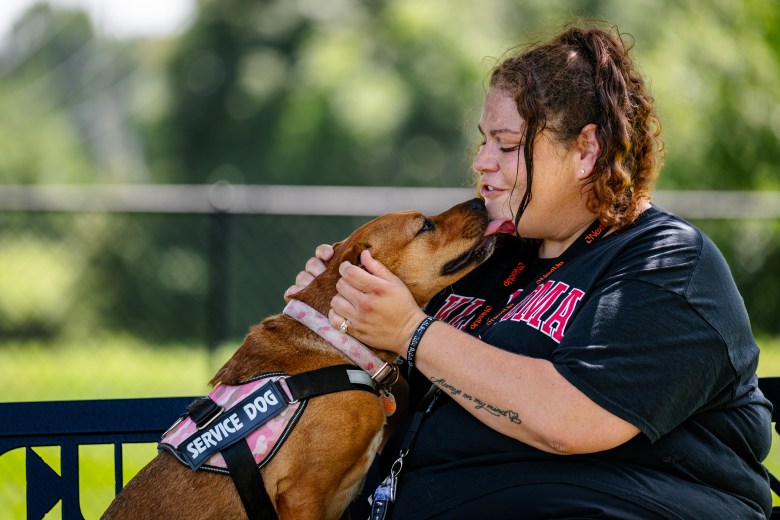
Tabitha Cooke recently stepped inside downtown Tulsa’s Coracle Coffee to cool off with her dog, Luna, who gave birth to four puppies just days earlier. The 33-year-old has had epilepsy since age 3 and relies on Luna for comfort during seizures.
“She really has been very good to me,” Cooke said. “She’ll lay right there next to me or on top of me until I come out of it.”
At night, Cooke depends on Luna to guard her while sleeping under a downtown bridge. She is one of the 1,400-plus individuals who experience homelessness daily in Tulsa County and has been on her own since she was a teenager.
Despite the rollout of Safe Move Tulsa, a $10 million initiative to end functional homelessness by 2030, Cooke says she hasn’t experienced any outreach for housing, mental health or domestic violence. Housing Solutions says the effort has put 650 people into housing so far.
“I just want to be able to be somewhere and live somewhere. I’m not homeless by choice,” she said.
Limited options for pet owners
It’s not just a person who is experiencing homelessness. It’s also their pet.
The National Alliance to End Homelessness found that about 10% of people experiencing homelessness do so with a service animal or pet.
Until the Tulsa Day Center opened its pet kennel in 2024, individuals seeking shelter could bring their pet in a carrier or remain outside with them.
“So now that they can come in with their pet, we’ve seen more clients coming in as opposed to leaving or not coming in at all,” said Noe Rodriguez, the center’s chief operating officer.
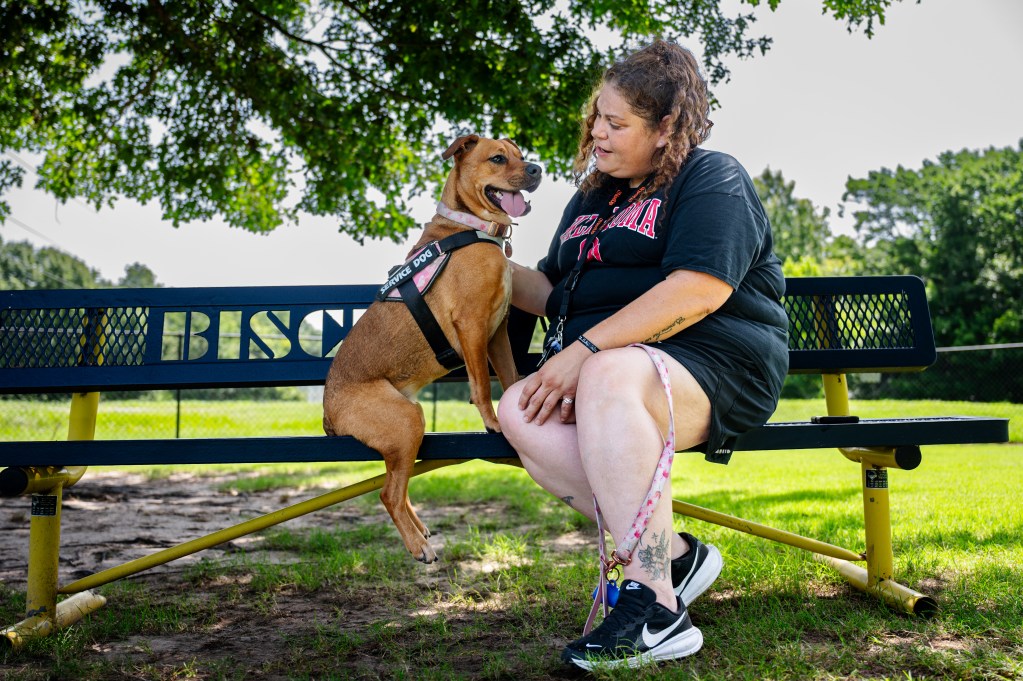

Wakanda Johnson, 45, was one of the first clients to use the center’s kennel after living in an encampment for two years with her dog, Tammy.
“(Tammy) never judges me. When we were hot, we were hot together. When we were hungry, we were hungry together,” Johnson said. “I really don’t think I would’ve been able to make it without her. She keeps me sane.”
Johnson now lives in an apartment and volunteers with the soup kitchen and grocery pantry Iron Gate. But getting back on her feet was difficult, especially finding affordable housing that accepts pets.
“It’s just so hard to find places that accept animals,” Johnson said. “A lot of times it’s almost impossible to get them in.”
Tulsa Housing Authority’s pet policy requires residents to pay a $200 non-refundable pet maintenance fee and a $100 pet deposit at their properties. Johnson got those fees waived by registering Tammy as an emotional support animal.
However, many people who are unhoused face other challenges. That includes 45-year-old Amanda Sandvig, who lost her home in a fire over a year ago.
“It’s been hard,” Sandvig said. “I’ve been processing my Social Security (disability benefits) right now, but until I have an income, I can’t apply for income-based housing or anything.”
Sandvig owns two dogs, Scrappy and Lucy, who she describes as her “eyes and ears.” She is immunocompromised and avoids shelters out of fear of catching an infection.
Her dog, Lucy, doesn’t get along with other animals, either, which is a requirement of the Day Center pet policy.
“We have about 300 people coming in and out of our building a day. Their owner is aware that the pet has to be able to manage inside our communal space,” Rodriguez said.
The Tulsa Day Center kennel can accommodate up to 10 pets and partners with the Tulsa-based nonprofit Pause4Paws to provide pet foster services to individuals experiencing homelessness, mental health issues and addiction.
Soon, more options will be available to unhoused people with pets. The City of Tulsa expects to open its first low-barrier shelter, The Harbor, with a 38-dog kennel in December.
News decisions at the Tulsa Flyer are made independently of our board members and financial supporters. Read more about our editorial independence policy here.