



If your family has a connection to the 1921 Tulsa Race Massacre, local researchers want to talk to you.
The oral history project, titled “Breaking the Silence: Building a Community Archive of Allies, Bystanders, and Participants of the Tulsa Race Massacre,” seeks to document “memories of the attack that have been transmitted, preserved or omitted across generations,” researchers say.
It’s a partnership between The University of Tulsa and Gilcrease’s Helmerich Center for American Research. The university manages the city-owned Gilcrease Museum.
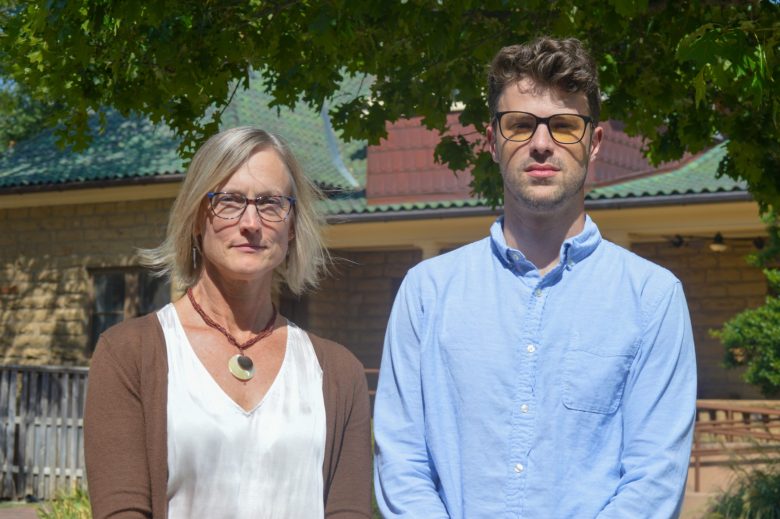
Doctoral student and cultural anthropologist Aaron Schoenfeldt told The Eagle that from now until next May, they are especially seeking to hear from Indigenous and white Tulsans who have an ancestral connection to the massacre.
That could range from stories that have been passed down among family members or acquiring objects — like photographs, documents or other artifacts — that can give a clearer picture of what happened.
While the stories of Black massacre survivors and their descendants have already been documented in great detail by historians like Eddie Faye Gates, Schoenfeldt said narratives of Native and white Tulsans remain shrouded in secrecy.
He wants to interview relatives who are ready to have these family stories archived in historical records.
“We’re just trying to document history,” he said.
Want to share your family story?
People can contact the project team at breakingthesilence@utulsa.edu and by calling or texting 734-883-6632. People who no longer live in Tulsa or Oklahoma can also share their story, since interviews will be conducted virtually and in-person.
Building upon the work of others
The Gilcrease Museum currently houses an audio-visual collection of Gates’ work. Instead of competing with previous research, Schoenfeldt said this project intends to build on that work.
“We’re not looking to replace in any way but looking to complement,” he said. “For us, it’s like a continuation of capturing local history — recognize those who came before us and try to be in conversation with them.”
Schoenfeldt said he studied the massacre as a graduate student at Northwestern University and continues to be interested in the silence among some white people about what happened.

“I think the really sticky question of racial violence and how we remember it is who did it and what is that legacy,” he said. “And what does it mean to live in the wake of these forms of racial violence as somebody from a white community? For me, I’ve found that those questions were always really private and amongst family.”
He visited Tulsa as a graduate student and many of the Black people he spoke with were open in talking about the massacre.
“I would go to some of the reparations meetings in Greenwood and specifically at the 36th Street North Event Center. It was always fascinating to me to hear just how different those public conversations were in Black communities,” he said.
Kristin Oertel, a TU professor and researcher on the project, said they anticipate some white Tulsans having trepidation talking about their family’s connection to the massacre.
Victims and their descendants are still seeking reparations for the loss of life and property destroyed during the attack and in the years after. But Oertel believes “atoning for the sins of the past” is how communities can move forward.
“We believe that sharing the story authentically and trying to engage in conversation across the racial divide that still exists is an important part of the process of healing,” she said.
For people who might be hesitant, researchers are providing the option to have your story recorded anonymously, Schoenfeldt said.
“One of the things that I’ve found is there is so much shame attached to this stuff,” he said.
Still, he believes people will be compelled by the opportunity to take these hidden histories out of the shadows. And they’ve already heard from people who want to share.
“I always use the metaphor that it’s in people’s closets or in people’s attics — whether that be an object, whether that be a story that you kind of don’t want to tell, but your grandmother told you one time and you were told never to kind of talk about this,” he said.
Although the researchers are particularly interested in the stories of Native and white families in Tulsa, he said all stories of the massacre are welcome.
“I’m trying to really understand these stories as the participants have heard them,” Schoenfeldt said. “I’m not trying to tell anybody that they’re wrong for their history. What we’re really after is memory and how this has been kind of transmitted through the generations.”
