


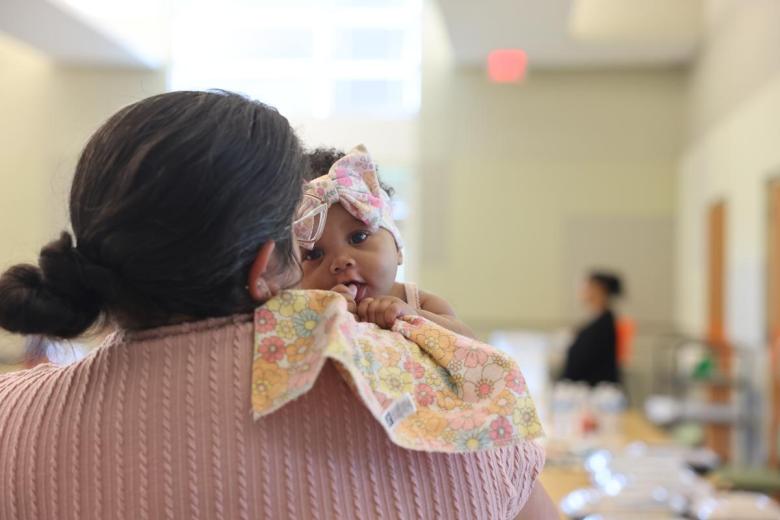
A maternal wellness program credited with saving the lives of thousands of Oklahoma babies is on the federal chopping block. Of the state’s four grants, Tulsa administers two Healthy Start programs to ensure every vulnerable mother and child gets needed resources for survival.
If nothing changes, Healthy Start services will be eliminated in April 2027.
In Tulsa, the federally-funded program began in 1991 to bring down the infant mortality rate, defined as a baby dying within a year of birth. Then, the U.S. infant mortality rate was 8.9 deaths per 1,000 live births, compared to 5.07 today.
“I’m going to be honest,” said Bruce Dart, executive director of the Tulsa Health Department. “We have an administration that has unqualified people tasked with making important decisions with little to no experience regarding community health and unfortunately little understanding of the science, which results in decisions being made that are not based on the data that shows the critical need for programs like Healthy Start, so here we are.”
Discovered by Documenters
Tulsa Documenters Kerry Hernandez and Katie Starnes found these potential program cuts and more at the April 15 Tulsa Health Department Board of Health Meeting. Read their meeting notes here and find out more about Tulsa Documenters here.
Healthy Start provides a case manager for expectant mothers and infants in ZIP codes with the highest mortality rates to access resources ranging from healthcare to housing. Home visits and a fatherhood component are part of the slate. It hosts a community consortium to address neighborhood-level reasons leading to high infant and maternal deaths.
The state’s other Healthy Start grants are administered by the Community Health Centers of Oklahoma for Oklahoma and Pottawatomie counties and the Hugo-based LIFT Community Action Agency.
Uncertainty around Healthy Start’s future reflects a larger frustration about inconsistencies from the federal government. When President Donald Trump took office, he issued executive orders that would have eliminated 44% of Tulsa Health Department’s $45 million budget. Court challenges later restored funding, but it’s unstable.
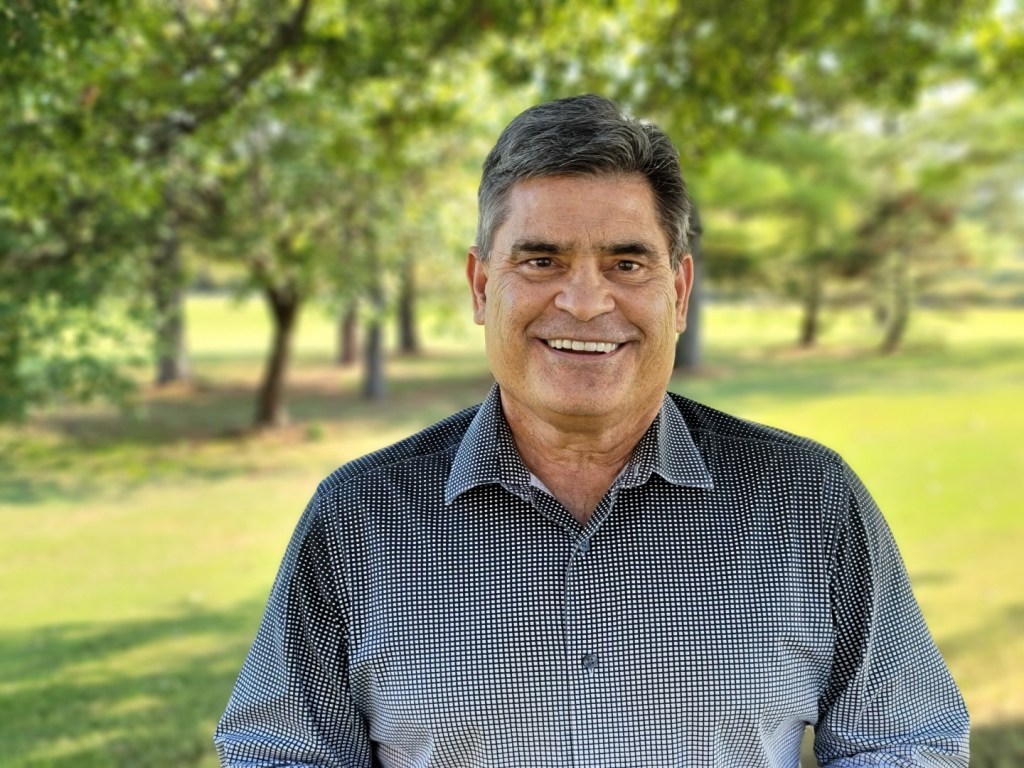
“It’s still a threat and burden we live under every day,” Dart said. “We’ll get an email one day rescinding a program and two days later we get an email rescinding the rescind. It’s been difficult to adjust not knowing what will happen next with funding or public health programming.”
Officials in the Trump administration have argued Healthy Start is redundant or could be replaced more efficiently with state block grants or Medicaid programs. Right now, no funds are set aside for the program.
Public health officials like Dart worry that the end of Healthy Start could foretell future cuts.
“I don’t know if that will happen, but that’s what seems to happen when looking at history,” Dart said. “There really seems to be a domino effect: Once one goes, then others follow. I’m hoping that is not an occurrence this time, but it’s definitely a fear.”
Covering Tulsa County
The last federal budget included $142 million in Healthy Start grants through the Health Resources and Services Administration within the U.S. Health and Human Services Department.
Tulsa County’s two grants amount to about $1.3 million administered by the county health department and $1.1 million by the nonprofit Supporting Healthy Initiatives for Tulsa, or SHIFT. Combined, they cover 30 of Tulsa County’s 34 ZIP codes, serving close to 2,000 clients annually.
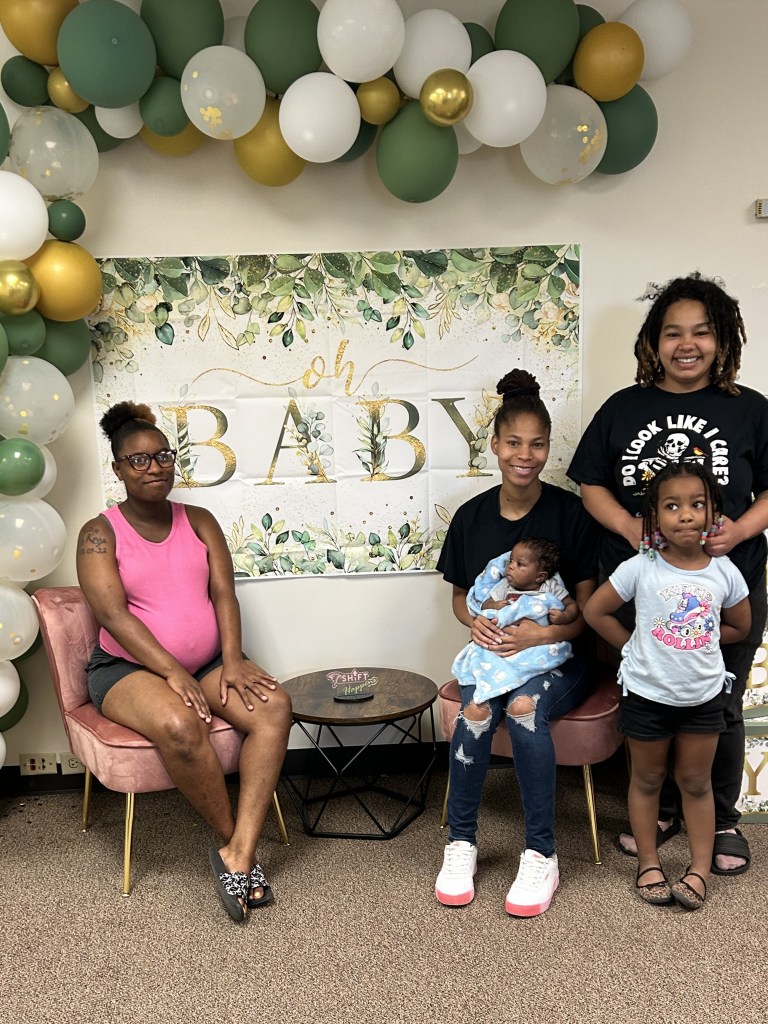
The program is not income-based because health challenges for women and children exist beyond a bank balance. Women are referred into it through clinics or other health partners.
Tulsan Corrina Jackson founded SHIFT after serving in the Healthy Start program since it was first implemented. Jackson oversaw the program for 13 years in the Tulsa Health Department before helping secure the second grant in 2014 for the Community Service Council.
In 2023, the council changed its focus to veteran affairs, so Jackson moved the grant to SHIFT as its central focus.
“Our case management is what makes this so successful. It’s the key to what we do,” Jackson said. “We develop a bond and walk with these individuals through every aspect of their pregnancy. We walk with them through preconception and after the birth.
“They know they can trust us because we do not judge. We’re going into the communities where they live and know where resources are that they need, working with clinics and hospitals.”
Typically, Healthy Start grants are awarded in five-year cycles, but the Trump administration has threatened funding each year.
“We had to fight after the first year of funding. We got it, but the second year got even harder,” Jackson said. “Now we’re back up for elimination, again. It’s just harder and harder.”
Healthy Start shows healthy results
Officials for both grant programs say no mother or baby has died while in Healthy Start. Infant death rates have shown improvement since Tulsa secured the first grant.
In 1995, the state had an infant death rate of about 8.2 per 1,000 births. That includes having the highest baby death rate among white babies (8 per 1,000 births), but it was double that rate for Black infants (15 per 1,000 births).
Since then, Oklahoma brought down the infant death rate to 7.1 per 1,000 births. By race, Black infants remain more at risk with a death rate of 12.4 per 1,000 births, compared to 6.3 from white mothers.

The infant death rate is 7.1 per 1,000 births among Indigenous women, 6.2 for Hispanic mothers and 5.5 among Asian women. Oklahoma ranks as the fifth-worst rate nationally as other states have made greater gains.
Tulsa County had an infant mortality rate of 8.3 in 1992 and improved to 7 per 1,000 births by 2020.
Consequences of elimination
So far, the staff at both Tulsa programs have remained, relying on faith it will work out.
“I’m just praying that we get funding from somewhere,” Jackson said. “I know things can change in the wink of an eye.”

SHIFT employs 12 people, and the health department has 15 employees paid by the grant. The agencies have contacted Oklahoma’s congressional representatives about restoring funding and are looking into outside sources.
“The staff exchange being enriched, as opposed to getting rich, on a regular basis,” Dart said. “We can’t pay for that. That’s in their heart and their character.”
If the program goes away, Tulsa does not have any others like it. Clients will go without.
The likelihood rises that women will not get prenatal treatment, increasing preterm deliveries and risks for deaths and lifelong disabilities, said Marcus Anderson, who oversees the initiative for the Tulsa Health Department.
“This impacts the delivery of the child but also puts the mother more at risk,” Anderson said. “With low birthweight babies, they are at risk for developmental delays, which can lead to educational challenges and other disabilities. Early intervention is always the better way to go.”
News decisions at the Tulsa Flyer are made independently of our board members and financial supporters. Read more about our editorial independence policy here.