




During the month of June, which is also Pride Month, Tulsa celebrated its LGBTQ+ community with several events downtown. There were plenty of dance parties, drag and even game shows.
But the welcoming nature exhibited by the city wasn’t always the case, especially for its Black community.
The Oklahoma Eagle interviewed three Black, queer Tulsans born in different eras to learn more about their life experiences and how those shaped their identities. Quéntin Marcellis, 34; Londenn Raine, 45; and Janae Grey, 19, each grappled with their identity and found community in and outside of Tulsa.
A new birth
Born into a military and church-going family, Quéntin Marcellis never felt like he fit in.
Growing up in the ‘90s and 2000s as a Black, gay man, his peers didn’t seem to miss a moment to call him out.
“You walk different.” “You talk different.” “You do this different.” The comments followed him as his interests didn’t align with what society expected for boys.
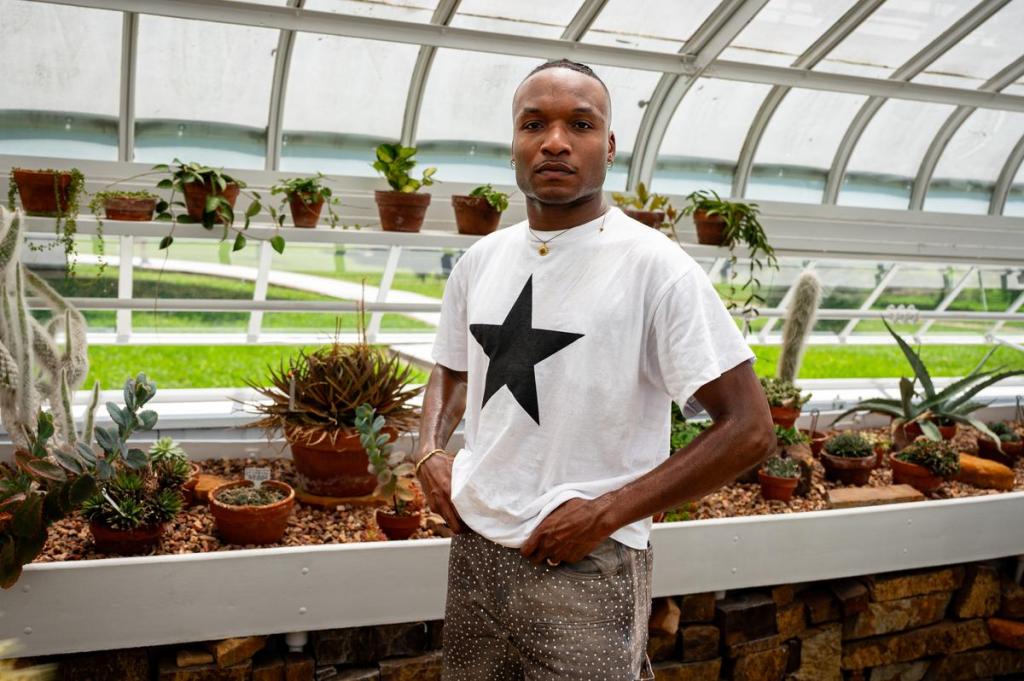
Growing up in north Tulsa, he was drawn to music, modeling and acting — all of which he discovered by going to church.
Marcellis says the arts spoke to his heart in a language that only he understood. They also defied the norm.
“When you’re a kid, you feel like you’re an alien, you feel like you’re alone, and (the arts) made me feel isolated. Those things made me feel like I was afraid to express my gifts and talents and be confident,” Marcellis said.
To avoid ridicule, he tried to blend in but at the cost of chasing his passions. He felt if he came out, he’d receive the most hate from his own community.
“I was afraid of being labeled gay, because I knew that kids that were labeled gay were the ones that were targeted in school,” Marcellis said. “Once I realized what those words meant is (when) I kind of sunk into the closet.”
He moved to Washington, D.C. in 2011 for college. It was there he met other LGBTQ+ people who lived openly.
His love for music also became a catalyst for confidence. Marcellis found himself listening more to Frank Ocean, one of the only openly queer Black artists around his age at the time.
This inspired him to continue pursuing his own passions, reigniting his passion for the arts. This time, he felt comfortable being himself.
“I was in a new place, and there was a new birth of me, because I finally accepted my sexuality, and that gave me the freedom and courage to go after my dreams,” he said. “I feel like the universe was able to open up so many doors because I was moving authentically and I wasn’t pretending to be something I wasn’t.”
Marcellis is now an actor, musician and social justice activist. He recently worked on the Tulsa-based production of FX’s “The Lowdown.”
Looking back, Marcellis realizes he came of age during a crucial time. His 20s, which were in the 2010s, came during a time where Black artists like Ocean and Tyler the Creator reshaped ideas of Black masculinity. It also marked a societal turning point with the legalization of same-sex marriage in 2015.
As a millennial, he sits at the intersection of two generations — an older one that was more openly homophobic and a younger one that was more comfortable pushing for change. But just a decade older, Raine’s story unfolded in a different way.
‘I did it on a dare’
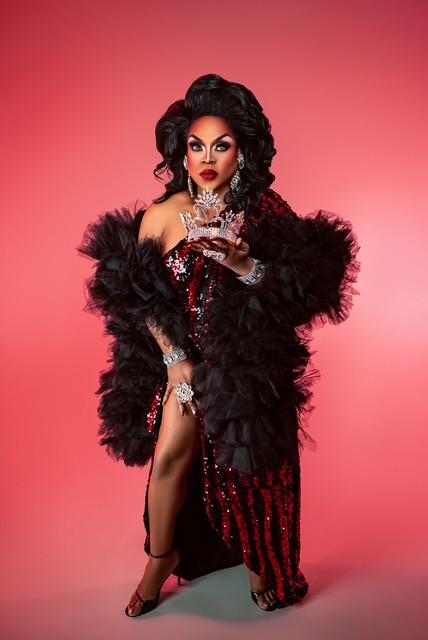
For over 20 years, Raine has taken to the stage as one of Oklahoma’s most popular drag performers. Decked out in extravagant dresses, colorful makeup and wigs to accentuate a hyper-feminine look, Raine holds the title of Miss Gay Oklahoma America Femme, a pageant competition specifically for transgender women.
As a panesexual, transgender Black woman in her mid-40s, Raine found community through drag shows and performances when she first moved to Oklahoma in 2000.
She came out to her sister when she was a teen, but her first introduction to LGBTQ+ life was at the turn of adulthood when an old high school friend introduced her to drag.
“I did it on a dare, and never stopped,” she said. “It became like my livelihood, it became my art, it became how I feed my children.”
Raine has two kids, both of whom identify as nonbinary. Raine views drag as something where people can authentically be themselves through performance and spectacle.
Born in Dallas into a military family, Raine was one of seven children. Even early on, it was clear that she was different. Instead of playing with her brothers, she would gravitate to whatever her four sisters were doing.
Growing up in the ‘80s and ‘90s, she remembers life being different for queer people, especially those who were still trying to understand their sexuality.
“We didn’t really have terminology like our children (do now),” she told The Eagle. “I never knew about queer places, people, nothing besides what we saw on TV, and that wasn’t always a good look.”
The HIV/AIDS epidemic also hit in the 1980s when she was a child. The narrative driving widespread panic at the time was that it only affected gay people. This led to slow government response in helping people who contracted it.
In somewhat of a full circle moment, Raine works as a receptionist at Guiding Right Tulsa, which offers HIV testing, prevention education and case management.
Despite being such a prominent member of the Tulsa LGBTQ+ community, she still lives with fear due to the high risk of fatal violence and discrimination that Black transgender women face in the U.S.
A study conducted by the California HIV/AIDS Policy Research Centers found that out of 229 documented cases of fatal violence against transgender women between 2013 and 2021, Black women accounted for almost 80% of the victims. Black transgender adults account for only 13% of all trans people.
The study notes that Black transgender women are more likely to be shot and killed at a younger age than their peers. Perpetrators were only identified in 54% of cases, but the majority of them were Black cisgender men. It’s not just the physical violence Raine fears — there’s also a political component.
“It’s scary to feel like your existence, your being is targeted. Everything is a trans bill, everything is trans motivated,” she said. “But before I’m even trans, I’m already Black, so over years of feeling less than just for being your color, when you add the transness, it makes it even more of a target.”
But what Raine lacked in terminology growing up to describe her identity, she sees young people today picking up the slack.
‘I feel like it’s safe’
When Grey officially came out as pansexual to their dad, he told them this:
“Make sure to find somebody that will love you for you. I don’t care if they’re man, woman, nonbinary or anything,” Grey recalled.
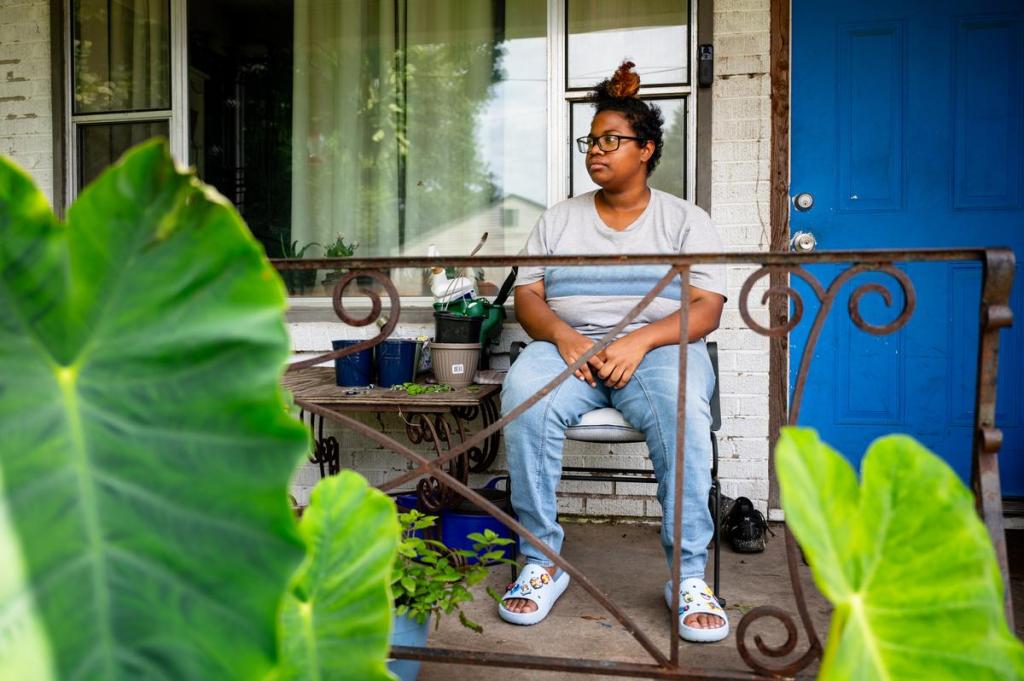
Like Marcellis and Raine, 19-year-old Grey, who uses all pronouns to describe their gender, realized quickly they weren’t like most of their peers.
“I was a little different, because I didn’t like to play how the girls played, and I didn’t like how the boys played, and I always liked to hang around the boys more than the girls,” they said.
But unlike her older community members, Grey came out at an earlier age and without as much fear of retaliation.
Along with having accepting parents, they also have a trusted circle of friends and a queer uncle who has influenced their journey. Being part of the LGBTQ+ community wasn’t something that was strange or commonly ridiculed in Grey’s world — it was just normal.
According to Gallup, Generation Z has the highest percentage of people who identify as LGBTQ+, with 28.5% of women and nearly 11% of men. For millennials, there is a clear drop off — 12.4% of women and 5.4% of men identify as LGBTQ+.
A 2021 study by UCLA’s Williams Institute found about 4% of Tulsa’s population, or 30,000 people, identifies as LGBTQ+. And as the city grows, that number seems to be responding in kind.
“I feel like (Tulsa is) safe with all the events that we have for queer people and all the places that we have for them to come and be themselves, like Club Majestic,” Grey said, referencing one of the handful of the city’s LGBTQ+ bars. “I feel like those are really good places where they can come, have fun, and be safe.”
Despite this, there is still statewide legislation impacting the queer community.
In May, Gov. Kevin Stitt signed a bill prohibiting the use of public funds for any gender transition procedures and bars any state property, facility or building from being used to provide the procedures.
Stitt also signed “Right to Raise” legislation saying parents can’t be denied the chance to adopt or foster a child for raising them “consistent with their God-given biological sex.”
Though Grey describes her journey of understanding herself as one filled with support, she still fears for her fellow queer folks in Oklahoma.
However their love for friends and family keeps them going.
That’s a sentiment that transcends generational differences. Even as the journey for the community has been — and may still be — one filled with obstacles, Marcellis and Raine are leaning on the oft-quoted sentiment: Love conquers all.
Ismael Lele is a Report for America corps member and writes about business in Tulsa for The Oklahoma Eagle. Your donation to match our Report for America grant helps keep him writing stories like this one; please consider making a tax-deductible gift of any amount today by visiting this link.
