



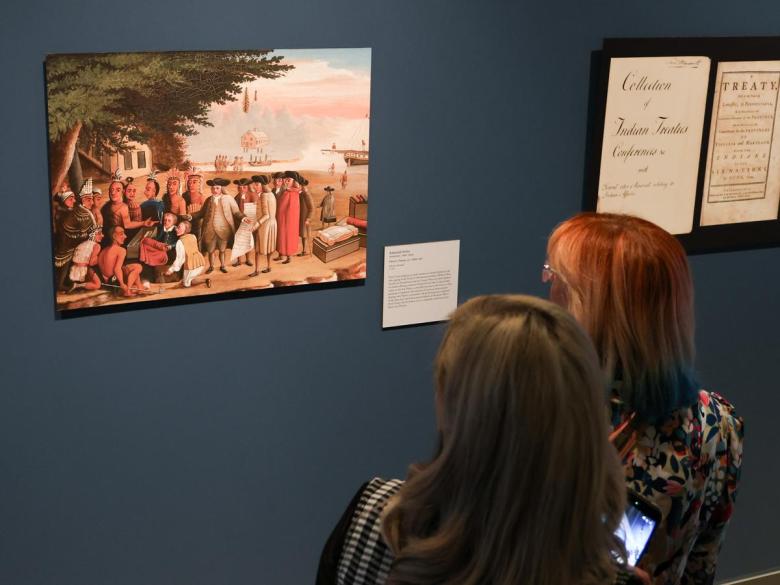
As America celebrates a milestone birthday, Gilcrease Museum officials have dug through the archives to host “Indigenous Independence,” an exhibit examining the struggle between Native nations and colonists during the American Revolution.
The exhibit opens to the public June 15 on the eve of America’s 250th anniversary, with opportunities for the public to visit through Aug. 7. It sits inside the Helmerich Center for American Research, located next door to the new museum that opens in early 2027.
“This is a new era for the Helmerich Center, building on its great reputation as a research center by creating more access to our community and opening the doors and inviting people in to take advantage of the space,” said Gilcrease director Brian Lee Whisenhunt.
Visitors can walk through the Helmerich Center gallery to study rare treaties between Indigenous nations and Great Britain, peace medals commemorating pivotal diplomatic moments and historic maps highlighting the Native peoples and places central to this moment.

The exhibit consists of reproduced items that have seldom or never been on display, including rare documents. Among them is a handwritten copy of the Declaration of Independence, which Whisenhunt describes as “a crown jewel” of the museum’s collection, along with books, maps, peace medals, statues and artworks.
Thomas Gilcrease acquired the Benjamin Franklin-signed copy in 1948 via the Freedom Train, an exhibition focused on American patriotism between 1947 and 1949. It will be on view in the reading room on select days with chaperoned and time-ticketed access during the summer.
Those events have filled up, but Gilcrease has a waitlist. Whisenhunt said the document will be on display when the museum opens next year.
That moment Gilcrease first saw the Franklin document continues to inspire Willam Smith, a Cherokee Nation citizen who serves as director of the Helmerich Center. Smith often thinks about how Gilcrease, a Muscogee (Creek) Nation citizen and one of the only Indigenous founders of a museum, found a way to get the documents to Tulsa and give them a permanent home.
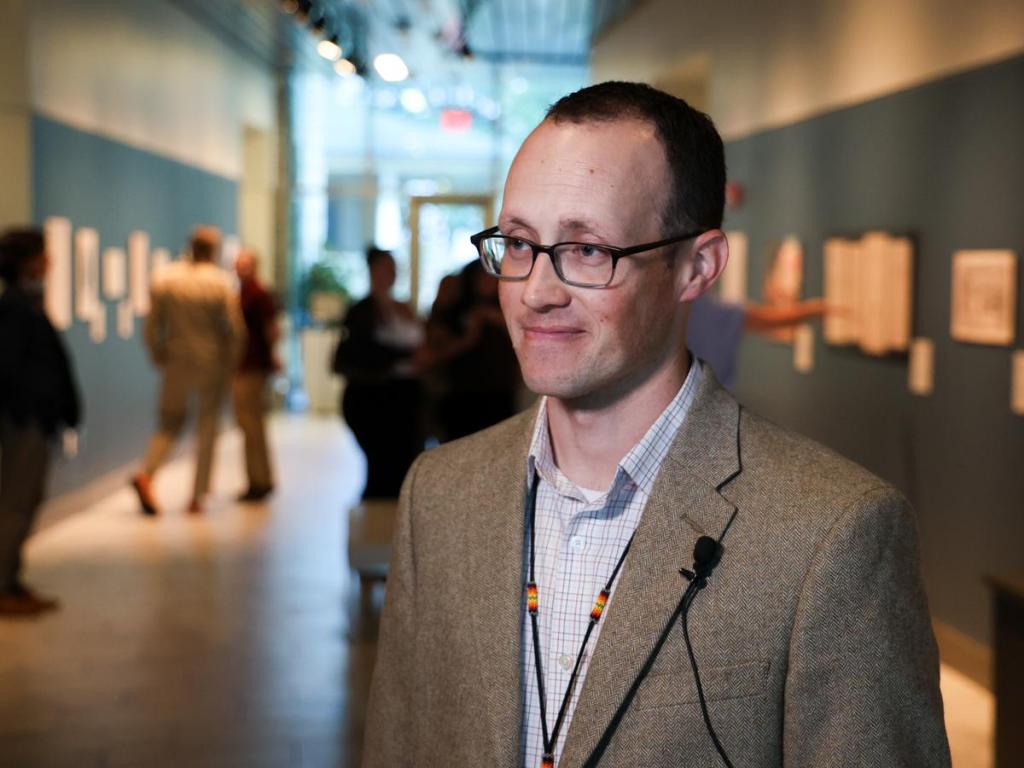
“As a historian, as someone who teaches students and loves to ignite the spark in people to help them see they’re a researcher too, if you ask questions and you’re trying to find answers, that’s research,” Smith said. “I’m really excited at the possibility of someone coming and seeing something that ignites that spark and makes that inspirational change.”
The exhibition goes beyond a display of the Declaration, examining how the historical document used the term “savagery” to describe Indigenous people and laid the groundwork for the word to be weaponized during the American Revolution and beyond.
Those who want to see the authentic documents that have been reproduced for the exhibit — or the 100,000 other rare books, documents, maps and unpublished works in the Helmerich Center’s archive — can also examine them in the reading room.
“This is a space where you don’t just come to see history on the walls, you can actually come and study it, you can come and make appointments, you can feel the historical materials and do the work yourself, and so we’re excited to be welcoming people into that experience,” Smith said.
News decisions at the Tulsa Flyer are made independently of our board members and financial supporters. Read more about our editorial independence policy here.