




Reparations. It’s a controversial topic for some, but for others, there’s an obvious right decision.
The topic will take center stage this weekend during a three-day conference led by the City of Tulsa’s Beyond Apology Commission. It’ll feature national advocates, faith leaders and political strategists.
“We want people to understand reparations — what it is and what it’s not — and also to hear from people who are doing this work and letting them know it is possible,” said commission chair Kristi Williams. “In Oklahoma, we’re afraid to even say the word reparations, but everyone outside of Oklahoma is saying it boldly.”
A handful of speakers, like nonprofit leader Robin Rue Simmons and pastor Michael Nabors, are coming to town from Evanston, Illinois. Those two were key figures in helping secure cash reparations for Black people and their descendants who faced housing discrimination in Evanston between 1919 and 1969.
Although other cities, like San Francisco, have discussed reparations for decades-old harms, the Illinois city remains the only one in the country to distribute publicly-funded direct payments.
Tulsa’s fight for reparations
Tulsa’s conference comes nearly a year after Mayor Monroe Nichols announced his Road to Repair initiative, a multi-pronged plan aiming to address generational impacts of the 1921 Tulsa Race Massacre. A white mob descended upon the Historic Greenwood District in one of the worst episodes of racist violence in U.S. history in May 1921, killing an unknown number of people and destroying 35 blocks of Black Wall Street.
Elements of Nichols’ plan included furthering the mass grave investigations and excavations started under former Mayor G.T. Bynum, holding a day of observance and establishing the Greenwood Trust, with a goal of raising $105 million in assets through private philanthropy.
“Imagine a city without the massacre. Imagine if Greenwood would have continued to thrive uninterrupted,” Nichols said during a June 2025 ceremony announcing the initiative. “There is not one Tulsan — no matter their skin color — who wouldn’t be better off today had the massacre not happened or if generations before us would have done the hard work to restore what was lost.”
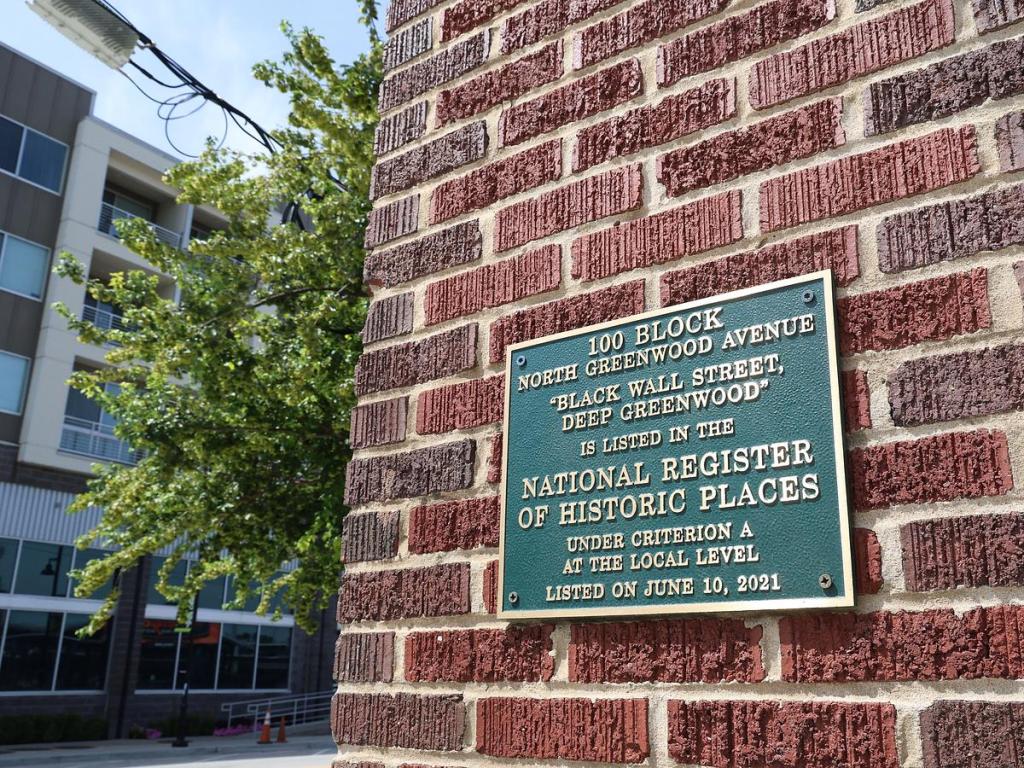
In the decades following the massacre, Greenwood residents rebuilt. But the arrival of federally-sanctioned urban renewal initiatives brought the end of the community’s golden era of prosperity.
The initiative by Nichols marked the latest political gesture in a decades-long conversation of atonement for the massacre.
In 1997, state Rep. Don Ross and Sen. Maxine Horner formed the Tulsa Race Riot Commission. It published a report four years later arguing the case for reparations, including that direct payments to survivors and their descendants were necessary to amend for the harms.
The report also included their recommendation that the state establish a fund for descendants of the massacre who want to enroll in college in Oklahoma.
Recent legislation drafted by state Sen. Regina Goodwin, D-Tulsa, proposes explicitly giving “first priority status to applicants who are direct lineal descendants.”
Moving past apologies
Former Tulsa police chief Chuck Jordan apologized in 2013 for the department’s actions during the massacre, saying he was “sorry and distressed” that officers “did not protect its citizens during those tragic days in 1921.”
In 2021, as the city commemorated the centennial, Bynum apologized on behalf of Tulsa.
“Tulsa’s city government failed to protect Black Tulsans from murder and arson on the night of the 1921 Tulsa Race Massacre, and from discrimination in subsequent decades,” he said.
Still, Bynum opposed the city making direct payments of reparations to massacre survivors and their descendants.
“I mean, you would literally be levying taxes on the descendants of victims to pay that, and you’d be financially punishing people in Tulsa that didn’t do anything wrong, and so I don’t support that,” he continued.
However, before leaving office, Bynum signed a 2024 executive order to form the Beyond Apology Commission, tasking the group with studying the generational impacts of the massacre and identifying opportunities for economic development and investment in north Tulsa.
Defining reparations
Reparations can come in myriad forms, such as direct monetary payments, the establishment of scholarships and official apologies to make amends for historic harms.
Much of the national conversation around reparations has focused on what the federal government owes descendants of enslaved Africans. But governments in other countries have approved restitution for systemic human rights violations such as when the former West German government paid reparations for the systematic genocide of Jewish people.
The United States paid reparations and formally apologized to Japanese-American survivors of internment camps through the Civil Liberties Act of 1988.
Some states have approved reparations measures such as Florida’s 1994 establishment of a scholarship fund for descendants of victims of the Rosewood Massacre and in North Carolina where the state approved compensation for living survivors of its forced sterilization program.
Legal challenges
The Oklahoma Supreme Court in 2024 upheld a lower court decision dismissing a lawsuit brought by the last known survivors of the massacre who sought reparations from the state and Tulsa. Lessie Randle celebrated her 111th birthday last November just weeks before Mother Viola Fletcher, the oldest known survivor of the massacre, died at 111.
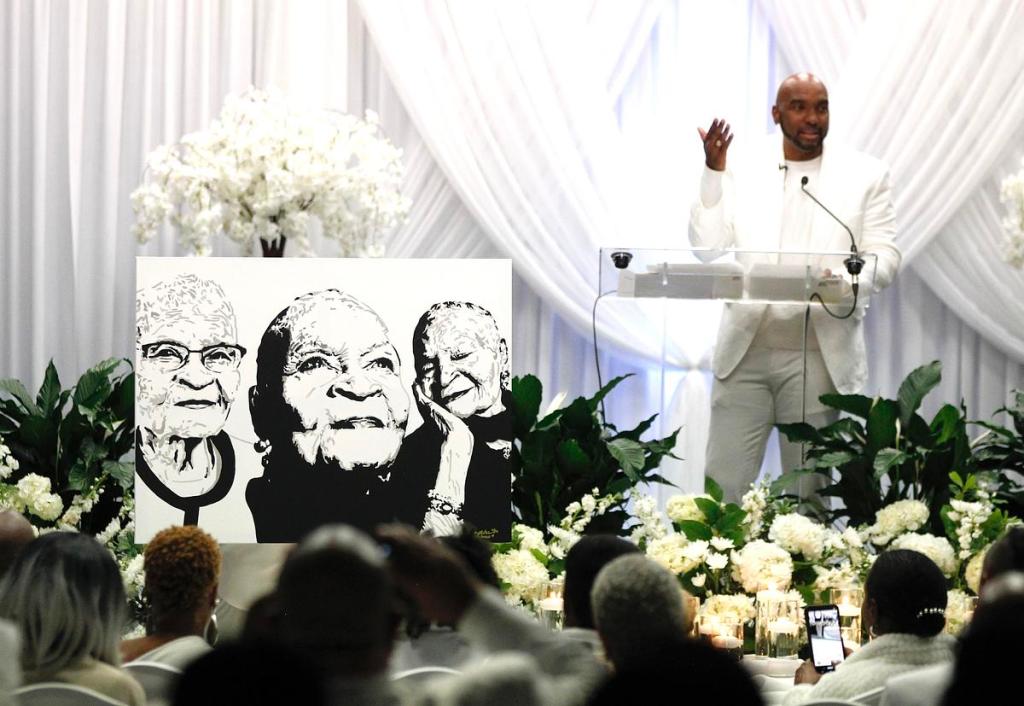
Williams hopes the conference will reignite conversations about what reparations could look like. But she knows the process isn’t simple.
Even if lawmakers decide restitution is owed, there is still the threat of legal challenges. In March, a judge ruled a lawsuit claiming that Evanston’s program is unconstitutional can move forward.
“There’s contention that what we’re doing is unfair. We knew all of that was coming. There were potential threats of lawsuits from the very beginning,” Nabors, who leads Evanston’s historic Second Baptist Church, told The Eagle. “There is a strong legal counsel supporting this reparations movement in Evanston. Every community has to work it out for themselves.”
As she prepares for the summit this week, Williams said establishing legal infrastructure that would protect a reparations program in Oklahoma is a priority.
“Let’s just say if we did get cash and we got land, what policy is there to help protect it? Policy is so important,” she said.
“People are going to come for it but we can’t be afraid,” Williams continued.
Tickets are available online for the summit, which is set for April 24-26 at Langston University’s Tulsa campus at 914 N. Greenwood Ave.
The three-day conference — which includes workshops on topics like freedmen’s history, housing and health equity — will kick off at 8:30 a.m. Friday with an opening breakfast and remarks from Nichols.
