


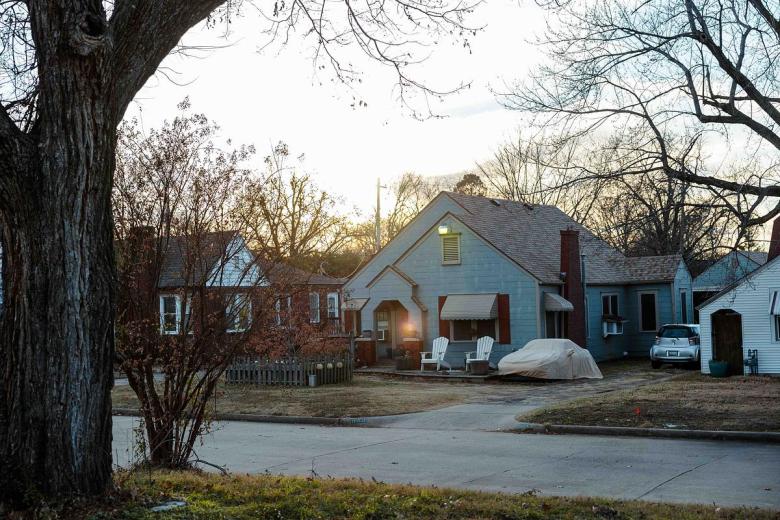
Discriminatory language remains in property records across Tulsa. While city officials say there are no immediate plans to tackle the issue citywide, residents can take action to remove that language on their own.
Last week, the Tulsa Flyer reported dozens of discriminatory housing covenants have been found in deeds across three different neighborhoods in midtown Tulsa. The story garnered attention both nationally and locally.
Several Flyer readers asked for more information on how to remove language restricting who can own land and how it can be used from property records — and what City of Tulsa officials are doing about it.
How to find discriminatory language
The first step is to determine if there is discriminatory language in your property records. One way to find the language is in the abstract of record, a summary of records pertaining to a specific property.
Another way to find the language is by searching online through the Tulsa County Assessor’s page. Start by using the home address and then look through detailed information about the plat where the property is located.
A title company can also assist in locating the language through a title search. Filing a declaration through Tulsa County assures it is attached to your land records. Ultimately, the procedure surfaces the language from your property history.
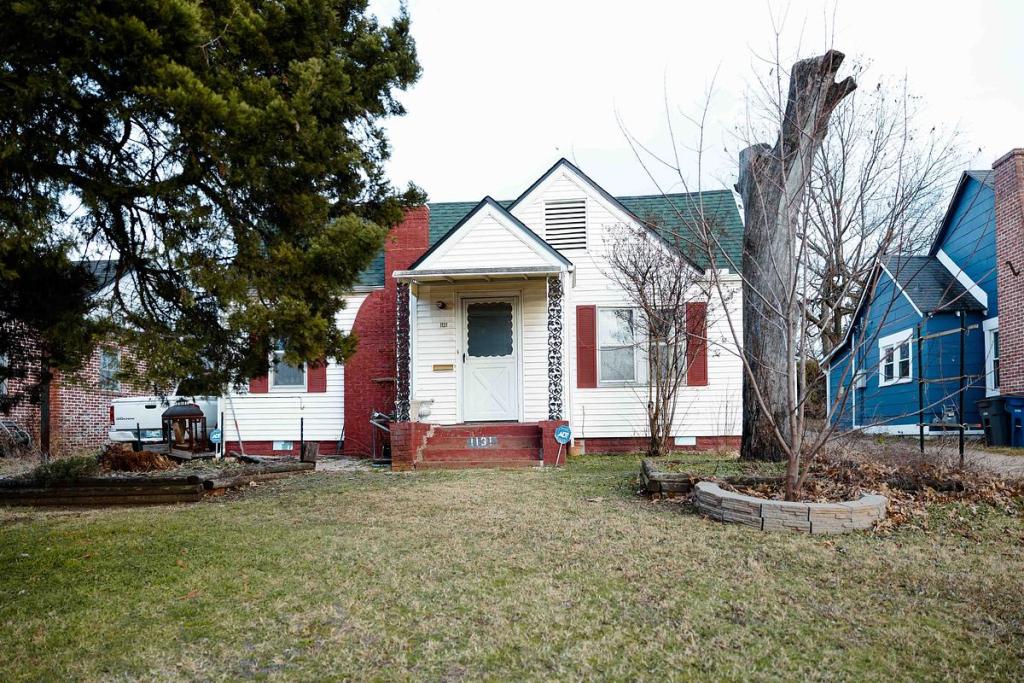

Filing an official declaration
If you find the language, you must file an official declaration, known as a Declaration to Remove Discriminatory Restrictive Covenants. The form must be drafted yourself and match Tulsa County’s recording guidelines and legal language. The clerk’s office also may provide in-person guidance on recording the document if needed. The process can be completed without obtaining an attorney.
The next step is to sign, notarize and take the document to the county clerk’s office. Recording the document can cost $18 for the first page, with additional pages costing $2 each. This cost could increase if you hire an attorney to be involved.
Tulsa real estate attorney Mark Graddy told the Flyer that forms are not complicated to complete.
“Anybody should be able to go do this,” he said.
Graddy worked on a 2022 case involving a discriminatory covenant in midtown’s Florence Hills neighborhood. His client filed to remove the covenants from his title due to one restricting construction and the other having discriminatory housing language towards Black people, court documents show.
A judge officially sustained the filing in favor of Graddy’s client in October 2025, according to court documents obtained by the Flyer.
“Once the language is removed, it is gone permanently,” Graddy said.
How Tulsa’s approach differs from OKC
Housing documents that discriminate based on race, sex or religion are not enforceable nationwide, according to a 1948 Supreme Court ruling on discriminatory housing practices.
Susan Miller, planning director for the city of Tulsa, told the Flyer that the city does not enforce covenant restrictions. The city could have the bandwidth to scrub property records of discriminatory language but many of the covenants are “scattered mainly in the heart of the city, the older parts of the city,” she said.
“We have not done anything yet about that and I am not sure what is feasible to do,” Miller added.
Oklahoma City officials have been more proactive in addressing the covenants issue. Last month, the capital city launched a Plat Amendment Project through the city’s Human Rights Commission. The project offers training sessions for residents to learn about covenants and how to remove the language.
The move came after Gov. Kevin Stitt signed Senate Bill 1617, a 2025 law allowing municipalities to alter plat documents.
The Oklahoma City Human Rights Commission followed up by passing a resolution of the city initiating the process. City councilors also expressed its support in a resolution.
Lana Turner-Addison, president of the nonprofit North Tulsa Economic Development Initiative, told the Flyer she supports an extended effort from city officials removing discriminatory language from city property records.
To her, acknowledging covenant language is about righting the wrongs of the past — not forgetting about it and trying to move on.
“When you take in account of Tulsa’s history and the 1921 Race Massacre, anything that is discriminatory even in language that affects people from a lineage standpoint and ancestral standpoint, we are being disrespectful to people,” Turner-Addison said. “I’m not aligned with keeping things just as they are because in the past it was allowed to put that language in there. We need to live in the present. Words matter.”
Miller told the Flyer that Tulsa is still in the early stages, but officials are well aware of the issue. She said the city has “too many projects” to dedicate much of their time to the issue at the moment, but it is something that would be considered over time.
“Ideally, that would be great to do, but we really have not talked about it,” Miller said.
“We can look at all plats and see languages like that. We know they exist … Ideally, it would be good not to have them on there anymore,” Miller added.
News decisions at the Tulsa Flyer are made independently of our board members and financial supporters. Read more about our editorial independence policy here.