



Lindsay frequently wakes up in tears from chronic jaw pain. Unable to close her mouth, she says it feels like someone’s stabbing her all the way to her ear. So when she found something that would take away all her pain, all her anxiety — she kept going back for more.
For 10 years, Lindsay turned to kratom products for relief. Kratom, a tropical tree native to Southeast Asia, is sold over the counter in the form of tasty shots, tablets, gummies and more at gas stations and vape stores across Tulsa. It’s also easily accessible online.
Lindsay admits she got hooked, but it wasn’t the kratom that did it. It’s a chemical in the plant called 7-OH or 7-hydroxymitragynine.
“The overwhelming, just like debilitating fear of withdrawal that I knew I was gonna have to go through — that felt chaotic,” she said. “My thoughts were consumed by that all the time.”
Synthesized 7-OH products have boomed in recent years, advertised as natural pain medicines. Budding research says it’s 13 times more potent than morphine and has similar withdrawal symptoms as classic opioids like fentanyl and oxycodone.
These products have some legal restrictions in Oklahoma, but they’re still flying off the shelves.
“I would see the same people buying it every day,” Lindsay said. “I know that they sell a lot of it.”

Credit: Courtesy Ilona Jaspers
The researcher
Ilona Jaspers, a professor at the University of North Carolina, studies the effects of inhalants like vape pens. She became aware of kratom when 7-OH was made into vapes. She called it an emerging public health threat in a February study on 7-OH and kratom vaping products.
Kratom use has been around for centuries, used medicinally as treatment and recreationally in teas with powder or extracts. It can both energize and relax you, acting as a stimulant in low amounts and an opioid in high doses.
People sometimes turn to kratom as a natural drug for help with anxiety or recovery from other opioid addictions. Jaspers says there’s not enough research to fully understand whether or not kratom is just as addictive.
“What’s happening now is you are having these semi-synthetic products where you’re just making 7-OH at much higher concentrations,” she said. “That’s the scary part.”
Of all the chemicals contained in kratom leaves, only a small amount — less than 2% — is 7-OH. What starts with pure leaves is extracted and synthesized into fruit-flavored drugs. But teas, powders and natural extracts in normal amounts may have clear benefits, Jasper says.
“Let people like myself figure it out first, making it safe, giving clear instructions, showing what should be outlawed and regulated by the FDA, and how,” she said.
The therapist
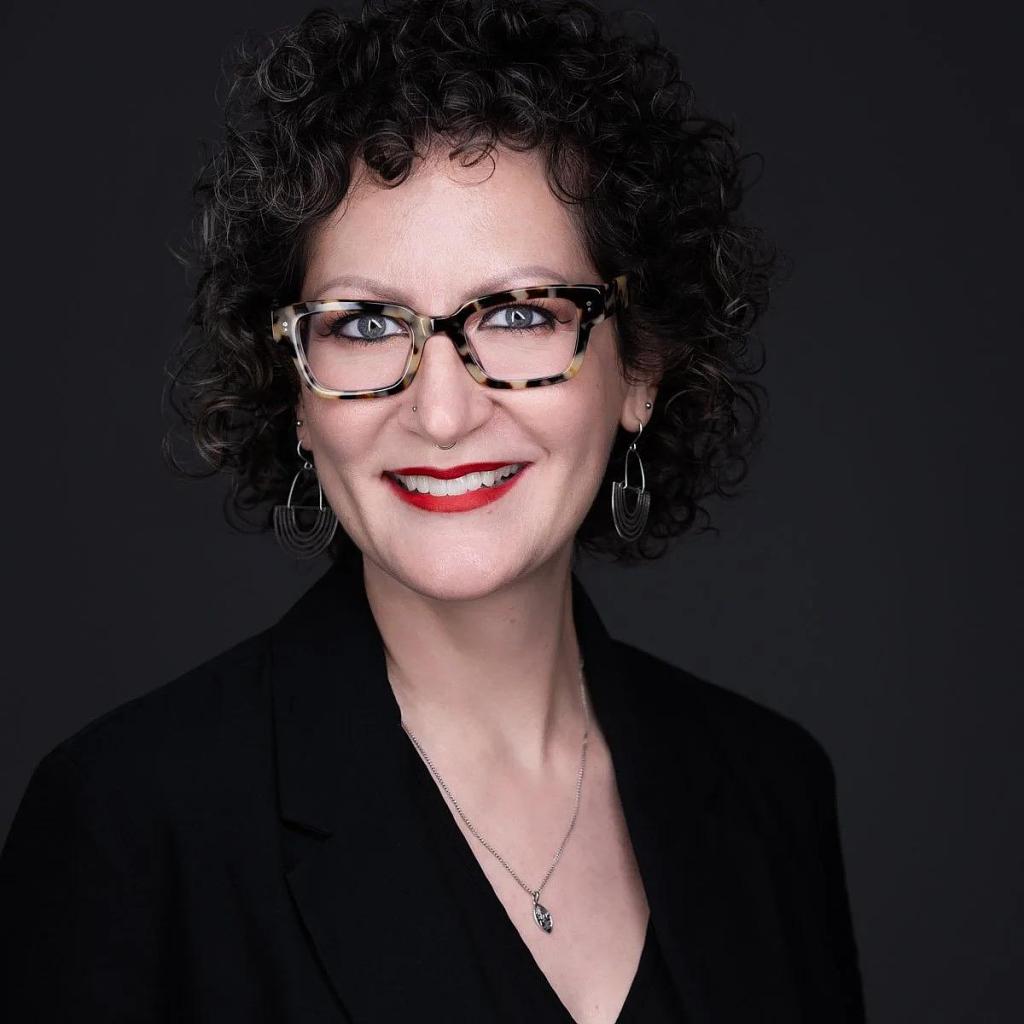
Jessica Collett, who’s based in Norman, is dually certified as a family nurse practitioner and psychiatric mental health nurse practitioner. She specializes in substance abuse disorder and has seen a surge in people trying to get off kratom products — around 30 to 40 more patients than this time last year.
“I think it’ll only continue to grow,” Collett said.
Similarly to Lindsay, a lot of her patients were introduced to kratom products by friends or family who said it would help with energy and mood. When they realized how expensive it was and that withdrawal symptoms would come within a couple of hours without it — they sought help.
Treatment looks different for everyone. Lindsay went cold turkey, quitting 7-OH altogether. Others transition to opioid use treatment products containing buprenorphine, like suboxone, which is covered by most insurances.
The latter is not an FDA-approved method, but Collett says it’s what she can do to help based on what she knows. All of her patients give informed consent.
“What they don’t want to do is to have to go through all the cravings, the withdrawal symptoms and all the urges while they’re trying to work and take care of their family,” Collett said. “(Using buprenorphine products) usually causes minimal disruption to someone’s routine.”
Collett says some of her patients describe coming off 7-OH as worse than withdrawing from fentanyl. Even though buprenorphine helped get the cravings under control, they missed the euphoric high 7-OH products gave them.
Collett says people from all different backgrounds are using kratom products, from athletes working on their performance to stay-at-home moms seeking an energy boost. She pointed to reports of overdoses and some deaths associated with it.
“It can very easily cause dependence and addiction within a matter of days,” Collett said. “You can very easily build up a tolerance to this stuff.”
She says the marketing is misleading and should change, because a lot of people think these products are natural. Customers need an addiction risk warning, she says, beyond just a list of the ingredients.
Despite state legislation tightening restrictions on kratom products, and more specifically 7-OH, Collett says these products get called different names and stay on the shelves.
The legislator
Natural leaf kratom is legal in Oklahoma. Customers must be older than 18 to purchase it, though some businesses might require you to be 21.
On the national level, the U.S. Food and Drug Administration has warned against kratom and restricted it as a dietary supplement or an additive in conventional foods. But its legality is largely left up to the states — six of which, including Arkansas, have made kratom illegal. Several others, like Oklahoma, put regulations in place but haven’t outlawed it.
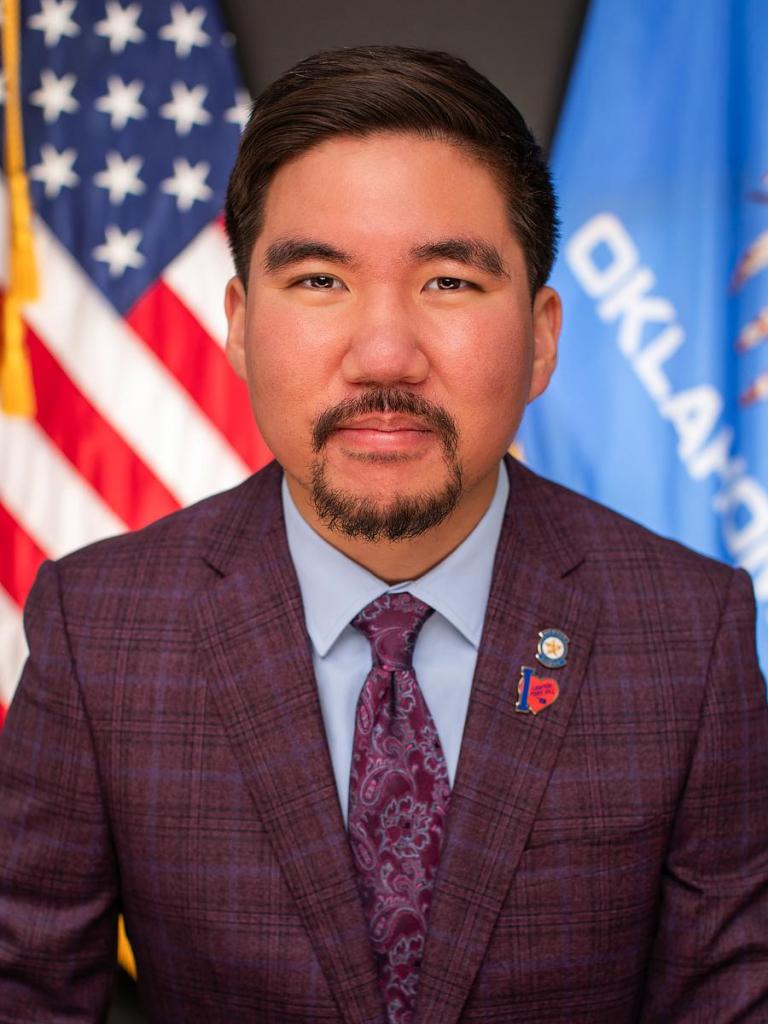
The Oklahoma Kratom Consumer Protection Act passed in 2021 and established labeling and testing standards for these products, according to state Rep. Daniel Pae, R-Lawton, who authored the bill.
“But that’s not doing anything to stop a teenager from buying it from a gas station and overdosing from and then ending up in the hospital,” said Mark Woodward, spokesman for the Oklahoma Bureau of Narcotics.
The law has since been updated with more restrictions. In 2024, House Bill 3574 outlawed any product with more than 1% 7-OH level and all synthesized 7-OH in Oklahoma.
However, the state crime lab’s testing equipment can’t measure the concentration of 7-OH in these products. It can only identify whether or not the drug is kratom powder or a 7-OH product, for example. Pae says how these laws are enforced is still on the table for discussion.
According to the Oklahoma State Bureau of Investigation, they’d need new equipment and accreditation to test these products, which would cost about $1.1 million up front and at least $63,525 each year thereafter.
Woodward says the narcotics bureau gets close to a dozen calls or complaints per month about kratom products. They helped write legislation in 2014 to make kratom illegal altogether but got pushback from the industry.
Pae thinks the laws restricting kratom could be stronger and is open to feedback. And, should the right wording come through, he says he’d be open to a bill that would outright make 7-OH illegal in Oklahoma.
“Obviously the conversation’s about continuing to implement the current laws on the books and making sure that anyone who’s trying to circumvent the law or abuse it is held accountable,” Pae said.
The person in recovery
When Lindsay and I first spoke, she’d only been sober for 17 days. She said she finally felt human again. Three weeks later, she faces the same chronic pain that drove her to kratom products in the first place.
It started with the powder. Later, it evolved into concentrated shots that made her menstrual cramps disappear. As more products hit the shelves, she says businesses had free samples to try. In the end, it was the little 7-OH tablets that triggered a past addiction.
“I stopped for years,” she said about her past use of Percocet, a potent opioid used to treat severe pain. “(The 7-OH tablets) came along and restarted that for me, but way worse.”
Each packet has five tablets, which wouldn’t last her more than one or two days.
“It cost so much money, and (I) constantly (felt) like I might get sick if I don’t get this in a couple of hours,” Lindsay said.
Her ongoing use became expensive and strained her personal relationships. That’s what ultimately drove her to quit 7-OH altogether.
The withdrawals were awful. She spent three days on her own and six more at Laureate Psychiatric Clinic and Hospital. Lindsay says it felt like someone was flipping a switch between extreme depression and anxiety. On top of that, she couldn’t keep any food or water down. By the third or fourth day without 7-OH, she questioned reality.
Lindsay has gaps in her memory from her days in the hospital, including being “obnoxious and combative” to nurses to the point she was placed in a special area for aggressive patients.
“I feel like I became kind of like an animal, honestly,” Lindsay said. “It kind of brings you back to this primitive state of just wanting to survive.”
This was her second attempt at quitting. Months earlier, she showed up at GRAND Addiction Recovery with clothes, a pillow and a book. She says it was one of the scariest, most isolating moments.
“They just expect you to sit there in the dark and suffer,” she said.
Lindsay says it feels intentionally difficult for poor and uninsured people to recover from addiction while still “pretty desperate” for solutions to her debilitating jaw pain. She says it’s been hard to find specialists who take her SoonerCare or have the right equipment — and it feels like nobody can help her.
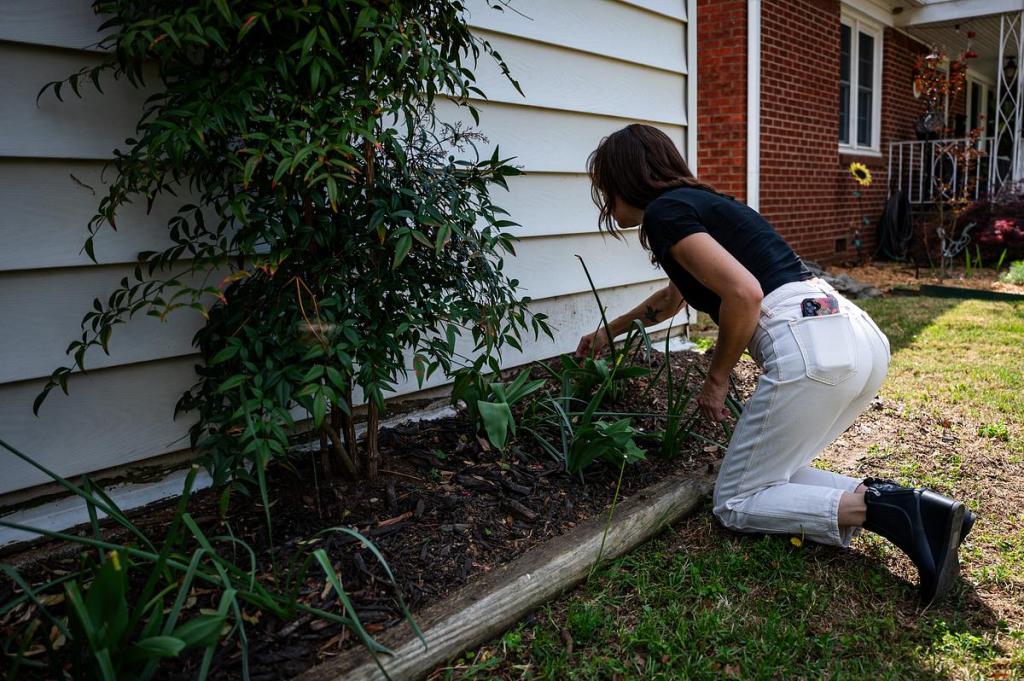
Being clean feels like a huge accomplishment to her. She goes to Narcotics Anonymous meetings and sees a psychiatrist now too. She’s been gardening a lot lately as she processes the lasting impacts of her addiction.
“When you numb yourself for so long and then un-numb yourself, everything comes at you simultaneously, both physically and emotionally,” she said.
While Lindsay continues working on her recovery, she worries kratom products like 7-OH could lead to the next opioid epidemic.
“If they don’t slow it down and stop it, then it is gonna get to the level that the last one was,” Lindsay said.
Editor’s note: Tulsa Flyer is only identifying Lindsay by first name to protect her identity.
News decisions at the Tulsa Flyer are made independently of our board members and financial supporters. Read more about our editorial independence policy here.