

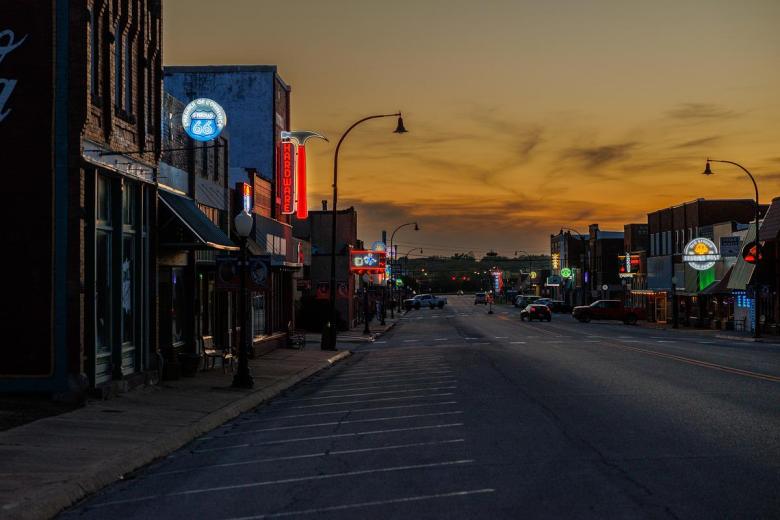
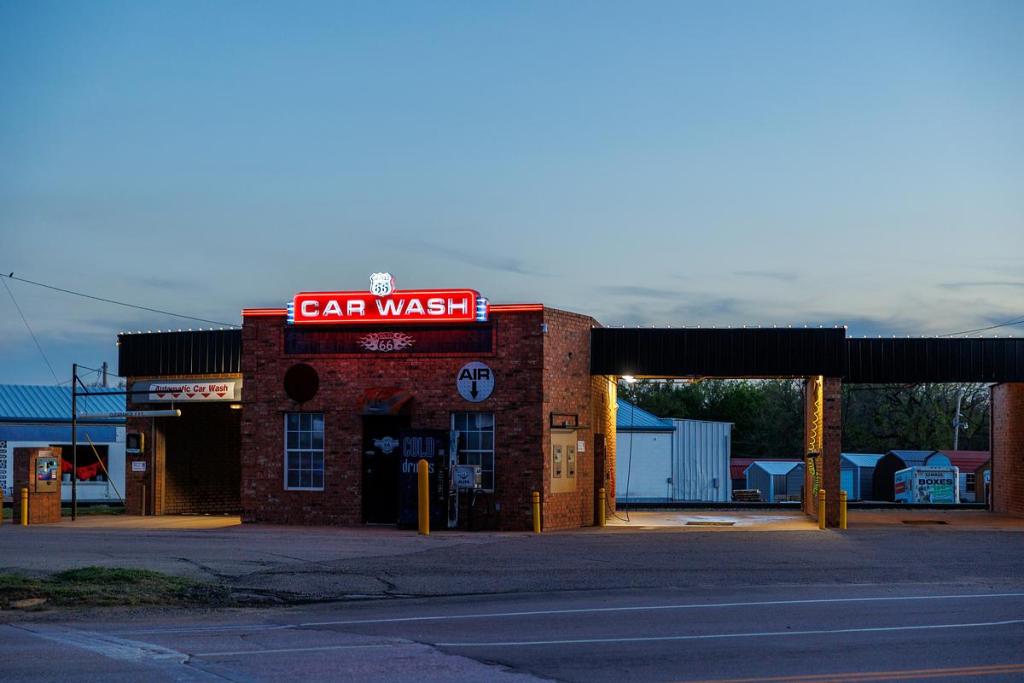
The promise of Oklahoma’s Route 66 multimillion-dollar dream is best seen after dark in the tiny town of Erick, halfway between Oklahoma City and Amarillo. If you don’t want to drive that far, you can see it at night in Stroud.
A state program established in 2019 has awarded nearly $22 million for 47 projects along Route 66 in Oklahoma since then. The goal: make the Mother Road a piggybank that stretches from Quapaw in the northeast to Texola in the southwest and bring money to the communities that line the route, especially during the 2026 centennial.
Oklahoma offers more drivable miles of the original highway alignment of the Mother Road than any other state, and fans come from across the globe to drive. They have to eat and sleep somewhere.
“There is not a day I’m traveling on Route 66 that I don’t meet a tourist,” said Lt. Gov. Matt Pinnell, who oversees the state’s tourism efforts. “The return on investment is real. You can go into restaurants and see pins dotting maps on where people are coming from.”
The grants have primarily gone to rural areas where small investments can have a great impact. Tulsa received about $753,000 in total for four projects, and Oklahoma City was awarded $417,500 for a neon sign and mural.
Stroud received nearly $1 million to install 49 neon signs for businesses lining Route 66 through the heart of the town. When a business changes, the sign will be placed in a city park for preservation. That investment spurred even more. At least four new businesses have opened in downtown Stroud since the program’s launch last year.

“The state grant greatly affected our decision for the motel,” said Charles Palmer, co-owner of the Skyliner Motel.
He invested $500,000 to renovate a 10-room, 1950s-era motel in Stroud after the grant was announced.
“My thinking process was about making Stroud a destination place,” Palmer said. “People are leaving our motel in the evening to walk among the signs. We know people who were going to stay in Joplin or drive through Oklahoma stopped once they heard about Stroud.”
‘Sense of place’
Ken Busby, CEO of the Route 66 Alliance, said Oklahoma spends more on improvements to the Mother Road than any other state.
“These towns have great pride in their Route 66 signs and projects but couldn’t do it by themselves and had to get state money to help,” Busby said. “We are doing a lot of good and cool projects right now.”
A January report from the Kansas City Fed on rural Route 66 investments ranked connectivity among towns and authenticity as top lessons. It uses a literature review, expert interviews and field visits to show where small towns get it right and wrong. Oklahoma plays a big role in the report because it “distinguished itself in its efforts to build rural prosperity along its 432 miles.”
Using Route 66 as a strategic long-term investment could yield between $250,000 to $450,000 per mile per year in tourism spending, the report found. But it can’t be treated as a tourism side hustle, according to the report.
The Route 66 piggybank gets filled when heritage and culture locations are featured, visitors have plenty of places to visit and spend money, unique accommodations and local cuisine are available and the byway is well-promoted.
“People sometimes think of small towns and rural areas as being all the same,” the report states. “But each small town has its origin story, its people and resources that gave it its unique shape, feel and sense of place. When linked along a route — a byway — small towns use what makes them special to enchant visitors and boost prosperity. In doing so, they can improve the quality of life for their residents.”
Giving visitors a reason to stay
This is only Stroud’s latest chapter for Route 66.
The city struggled to regain the economic base it had before an F3 tornado tore apart a Tanger Outlet Mall and Sygma food distribution warehouse in May 1999. No lives were lost, but 800 jobs were gone.
What was left was the town’s strategic location between Tulsa and Oklahoma City — and, especially, its position on the Mother Road.
The grant came. And things changed.

“It almost seemed like we had a cloud over our head,” Palmer said. “This is the first thing I can say has made a big difference. This is economic development. It took convincing people to think outside the box about how to get money coming in. Now we’re definitely getting our money’s worth.“
In Stroud, the Neon on Main program was born out of consistent feedback from Route 66 travelers that they wanted to see more neon signs. The grant pays the full cost of the signs, but participating businesses are required to pay 6% of the cost to go into an investment account for maintenance. The city is seeking another grant to add 17 more businesses to the program for 66 total signs in town.
A new business organization is forming around the neon sign project. Palmer said he’s considering developing more properties along Route 66.
“One business reported a 40% increase in sales after getting a sign because people could find it easier,” said Leslie Wilbourn, grant administrator. “That was the point of the signs on Route 66.
“This is an investment that will last for years to come. For this to come together, we have the Rock Cafe for dining, signs as an attraction and now a place for people to stay. We give them a reason to be in Stroud longer.”
‘Big difference’
Tulsa and Oklahoma City were awarded $1 million for the May 30 Capital Cruise car parade. The cities are splitting the funds. Tulsa is seeking a Guinness World Record for the largest classic car cruise and Oklahoma City is hosting events at a park. But the bulk of the money has gone to small towns.
The smallest grant went to Erick for $35,710 to restore the West Wings motel sign. The town of about 1,000 residents is six miles from the Oklahoma-Texas border and about halfway between Oklahoma City and Amarillo. The motel isn’t open, but a city clerk thought a sign could start something bigger.

“If we had more signs to restore, we would’ve done more,” said City Clerk Megan Wreyford. “We weren’t expecting it. It’s hard for us to compete with large towns able to have engineered plans. We usually get turned down for any grants.”
Erick’s population peaked at 2,231 people in 1930. The following year, Route 66 was paved to the Texas line and brought visitors. It was the hometown to singer-songwriters Roger Miller (“King of the Road”) and Sheb Wooley (“The Purple People Eater”). When Interstate 40 was built just north of the town in June 1975, it hit the town hard.
“It was just like that movie ‘Cars,’” Wreyford said. “It broke a lot of tiny towns along Route 66.”
News decisions at the Tulsa Flyer are made independently of our board members and financial supporters. Read more about our editorial independence policy here.